


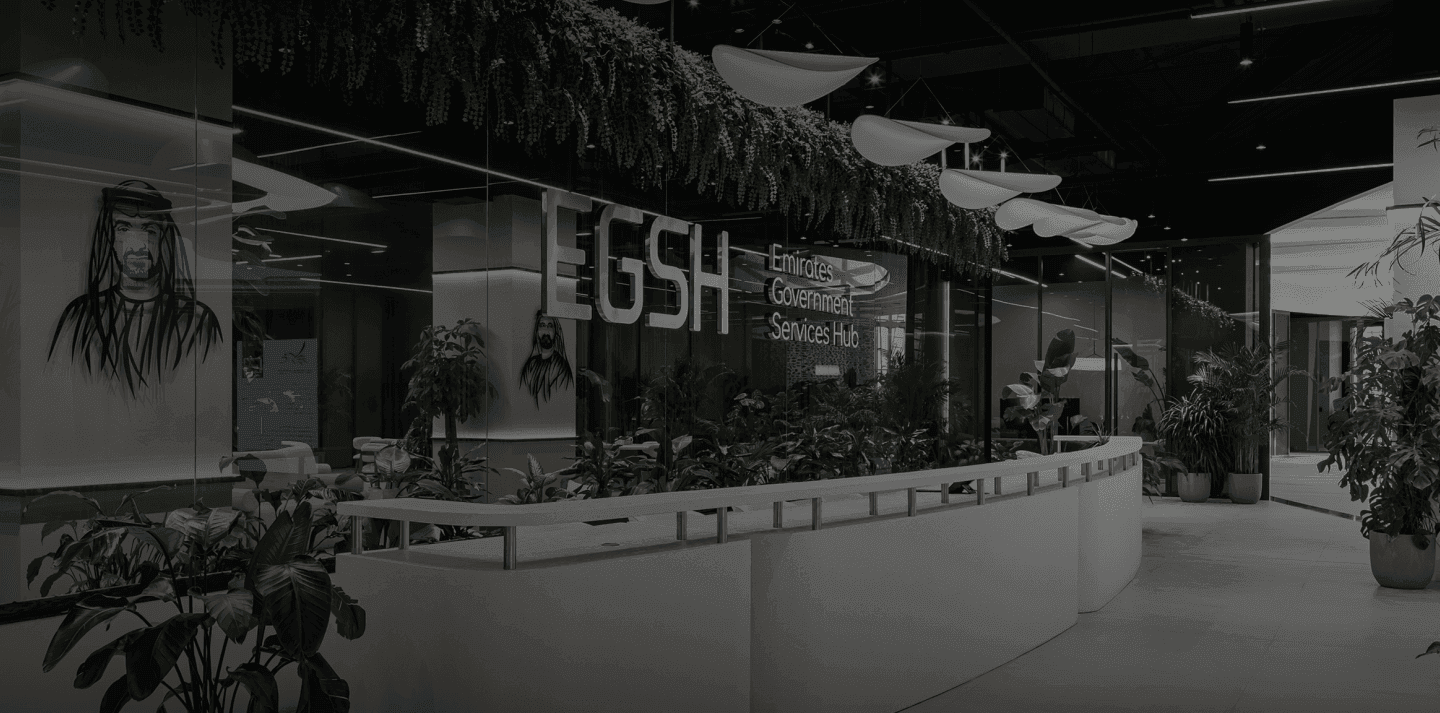
About EGSH
What This Guide Covers
This article explains the three core procedures that apply to an existing commercial permit issued by the Dubai Department of Economy and Tourism (DET): amendment, renewal, and cancellation. Each section covers the eligibility requirements, documents, government fees, and step-by-step process as regulated by the DET.
Whether you need to update a trade name, renew before the expiry date, or close a business and deregister from the commercial register, the procedures follow a defined sequence. Skipping or delaying any of them may result in administrative fines, visa restrictions, or legal liability. The information below applies to Dubai mainland companies. Free zone businesses follow separate procedures set by the relevant free zone authority.
Amend Your Commercial Permit in Dubai
Officially regulated fees
No hidden charges
Queue-free service
VIP support at no extra cost
From AED 120
Commercial Permit Amendment in Dubai
A commercial permit amendment is a formal request to update registered business information with the DET. All changes to a trade licence must be approved and recorded by the DET before they take effect. Operating under incorrect or outdated licence details is a compliance violation.
The Dubai Department of Economy and Tourism licensing framework requires a formal amendment for the following changes:
- Trade name — updating the company's registered name
- Business activities — adding, removing, or changing approved activity codes
- Ownership or shareholders — modifying the shareholding structure
- General Manager or authorised signatory — updating the registered representative
- Registered business address — relocating premises within Dubai
- Local sponsor or service agent — for applicable legal forms
Certain amendments require prior approval from external authorities. Adding a regulated activity may require a No Objection Certificate (NOC) from the relevant sector regulator, such as the Dubai Health Authority (DHA), the Dubai Municipality, or the Roads and Transport Authority (RTA). The DET will not process the amendment without the required external clearance. For a full explanation of the activity amendment process, including NOC requirements and DET activity codes, refer to the Dubai Business Licence Amendment guide.

Get Business Services in Dubai Through EGSH
Authorised One-Stop Government Services Centre
- All government services in one place
- Completed in one visit
- VIP service without queues
- Regulated government fees

Government Fees for Licence Amendment
The standard government fee for a commercial permit amendment is AED 500 per request. An additional AED 10 for the Knowledge Dirham and AED 10 for the Innovation Dirham apply per transaction, bringing the base total to AED 520. Additional costs may apply for external approvals, MoA notarisation, publication fees for name changes, or activity-specific charges. The final amount depends on the licence type and the nature of the amendment.
Amendment Process
- Identify the type of amendment and confirm eligibility with the DET or an authorised service centre.
- Obtain any required external approvals or NOCs from sector regulators.
- Submit the amendment request through the official DET platform with supporting documents.

- Pay the applicable government fees.
- Receive the updated commercial licence with all changes officially recorded.
Processing timelines are subject to DET review and depend on the complexity of the amendment and any pending external approvals.
Penalties for Unauthorised Changes
The DET's Commercial Compliance Manual specifies an administrative fine of AED 2,000 for changing or adding a business activity without prior approval from the competent authority. Businesses must complete the formal amendment before conducting any new activity.



Why Choose EGSH for Government Services in Dubai

VIP Service
Personal assistance and priority processing with no queues.

Affordable Fees
Official government rates with transparent, fixed pricing.

All Services in One Place
Comprehensive range of UAE government services under one roof.

One-Visit Completion
Most procedures are completed in a single visit to the centre.
Commercial Permit Renewal in Dubai
Commercial permits in Dubai must be renewed annually to remain legally valid. Renewal is a distinct government service, separate from the original licence issuance, and carries its own fees, documents, and compliance requirements.
The DET is the competent authority for both issuing and renewing trade licences on the mainland. Failure to renew a licence within the specified time limit is classified as a commercial violation under the DET's Commercial Compliance Manual. The full penalty structure and document checklist are set out in the Trade Licence Renewal in Dubai guide.
Who Must Renew
Every mainland business holding a trade licence issued by the DET must renew before the printed expiry date. The renewal application must be submitted by the General Manager or an authorised representative with a valid Power of Attorney.

Renewal Process
Step 1 — Confirm the Expiry Date and Start Early
Check the expiry date printed on the current trade licence. The DET recommends initiating the renewal process at least 30 days before this date. This buffer accounts for potential document gaps, pending external approvals, or Ejari-related issues that may delay submission. Late renewal triggers an administrative fine from the first day after the expiry period set by the DET.
Step 2 — Verify and Update Company Details
Before submitting the renewal application, confirm that all registered information on the licence matches the company's current status. This includes the trade name, business activities, shareholder structure, General Manager, and registered address. If any details have changed since the last renewal, a formal licence amendment must be submitted to the DET before or alongside the renewal. The DET system will flag inconsistencies between the licence record and supporting documents, which may cause rejection or processing delays.

Step 3 — Ensure the Ejari Tenancy Contract Is Valid
A valid Ejari-registered tenancy contract is a mandatory prerequisite for licence renewal. The tenancy must cover the renewal period and reflect the correct business premises as recorded on the trade licence. If the Ejari has expired or the company has relocated, the tenancy registration must be updated through the Dubai Land Department (DLD) before the renewal application can proceed. The DET system cross-references the Ejari data with the licence record during processing.
Step 4 — Obtain External Approvals Where Required
If the licensed activities are subject to regulation by an external authority, the business must hold a current NOC or approval from that authority. Examples include approvals from the Dubai Health Authority (DHA) for healthcare-related activities, the Dubai Municipality for food-related operations, and the Knowledge and Human Development Authority (KHDA) for education and training services. Expired external approvals will block renewal processing within the DET system.

Step 5 — Submit the Renewal Application
The renewal application is submitted through the DET's official online platform or through EGSH, an authorised DET service centre. The applicant uploads the required documents, and the system automatically validates company information, checks for trade name conflicts or outstanding obligations, and calculates the applicable government fees based on the business activity and licence category. Applicants who renew through an authorised centre can complete document verification, submission, and payment in a single visit.
Step 6 — Pay Government Fees
Once the system confirms eligibility and document completeness, the applicant pays the renewal fee. Payment can be made via the DET online portal, direct debit through participating banks, or at the authorised service centre. The renewal fee includes the base DET tariff for the licensed activity plus AED 10 for the Knowledge Dirham and AED 10 for the Innovation Dirham.

Step 7 — Receive the Renewed Licence
After payment is confirmed and the application is approved, the updated trade licence is generated electronically and can be accessed through the DET portal. The digital licence is legally valid and can be verified at any time through the DET's official search tools or the National Economic Register.
Consequences of Late Renewal
Failure to renew on time triggers several consequences:
- Administrative fines — The DET imposes a fine for failure to renew within the specified time limit. Late renewal penalties are structured progressively and increase with the duration of non-compliance.
- Suspension of business activities — An expired licence does not permit the holder to conduct any commercial operations legally.
- Visa restrictions — The company's immigration file may be restricted, blocking new visa applications, renewals, and cancellations through the General Directorate of Residency and Foreigners Affairs (GDRFA).
- Banking limitations — Banks may restrict transactions on the company's corporate account if the licence is expired.
Businesses that neither renew nor cancel their licence remain legally active and continue to accumulate penalties.

Visit EGSH for VIP Service Without Queues
You can stop by EGSH during working hours without an appointment or book your visit at a time that suits you best.
Address
Art of Living Mall, Al Barsha 2, Dubai
Operating hours
Monday–Thursday, Saturday: 9:00 am–5:00 pm
Friday: 9:00 am–12:00 pm, 2:00 pm–5:00 pm
Sunday: Closed

Commercial Permit Cancellation in Dubai
Commercial permit cancellation is the legal procedure for closing a business and removing it from the DET's commercial register. It is a mandatory step for all mainland companies that cease operations. Stopping business activities without formally cancelling the licence does not end the company's legal existence.
The UAE Government portal sets out the requirement that every business owner must cancel the business licence and all related permits when the decision to close is made. The procedure varies by legal structure. For a complete overview of the closure process across both mainland and free zone entities, refer to the How to Close a Business in Dubai guide.
When Cancellation Is Required
The following situations require licence cancellation:
- Voluntary closure — the owners decide to stop operations
- Liquidation — the company is dissolved and assets distributed
- Branch closure — the parent company resolves to close its Dubai branch
- Dormant or non-operational entities — inactive companies must still cancel to avoid penalties
- Expired licences over two years — a special DET procedure applies

Cancellation Process by Legal Structure
The process differs depending on whether the company requires formal liquidation.
Sole establishments and civil companies do not require a liquidator or formal liquidation. The owner or partners must first prepare a written cancellation decision. For civil companies, a partnership cancellation contract authenticated by a notary public is required. All sponsored visas must be cancelled before submission. The Ministry of Human Resources and Emiratisation (MOHRE) issues a clearance letter confirming that no employees remain on the company's labour file. The General Directorate of Residency and Foreigners Affairs (GDRFA) confirms that all residence visas linked to the establishment have been cancelled or transferred.
For sole proprietorships held by non-GCC nationals, residence cancellation proof is required alongside the MOHRE clearance. The owner must also settle all DEWA utility accounts, cancel the Ejari tenancy contract through the DLD, and — if the business is registered for VAT or Corporate Tax — submit a deregistration application to the Federal Tax Authority (FTA) and clear any outstanding tax obligations.

Once all clearances are in hand, the owner submits the commercial permit cancellation application to the DET with the supporting documents: original trade licence, MOHRE and GDRFA clearances, DEWA settlement, Ejari cancellation, and FTA deregistration confirmation where applicable. The DET verifies that no outstanding dues or fines remain, collects the cancellation fee, and issues the official Trade Licence Cancellation Certificate.
Preparing all clearances in parallel before approaching the DET is the most efficient approach.
Companies with share capital (LLCs, partnerships, joint stock companies) must undergo a two-stage process:
Stage 1 — Liquidation
- Prepare notarised minutes of the general assembly confirming the decision to liquidate and appointing a liquidator.
- Obtain an official acceptance letter from the appointed liquidator.
- Submit the cancellation application to the DET.
- Receive a liquidation certificate from the DET.
- Publish the liquidation notice in two local newspapers (one in Arabic, one in English).
- Allow a 45-day grace period for creditors to submit claims.
Stage 2 — Final Cancellation
- Submit a declaration letter from the liquidator and partners confirming no objections were raised during the grace period.
- Cancel the firm card at the MOHRE.
- Cancel all employee and partner visas through the GDRFA.
- Obtain clearance certificates from the DET, MOHRE, Dubai Customs, DEWA, and the FTA where applicable.
- Submit all documents to the DET for final cancellation approval.
- Pay the applicable fees.
- Receive the Trade Licence Cancellation Certificate.
Businesses requiring licence cancellation support can process the full procedure through EGSH, an authorised DET service centre.

Key Compliance Rules for Commercial Permits
Several compliance rules apply across all three procedures.
Activity restrictions. A business may only perform the economic activities listed on its trade licence. Conducting unlicensed activities, even closely related ones, is a regulatory violation subject to fines.
Tenancy requirements. A valid Ejari-registered tenancy contract is required for both renewal and many amendments. The premises must match the business address recorded on the licence.

Immigration file alignment. The company's immigration file at the GDRFA is linked to its trade licence. An expired or cancelled licence directly affects the ability to sponsor, renew, or cancel visas.
Tax obligations. Companies registered for VAT or Corporate Tax with the FTA must update their tax records within 20 working days of any material change to the licence, including amendments to the trade name, activity, address, or ownership. Missing this deadline may trigger administrative penalties under UAE tax regulations.
MOA consistency. Changes to activities, ownership, or capital require corresponding updates to the company's Memorandum of Association. The MoA and the trade licence must remain aligned at all times.
Related Government Services
Frequently Asked Questions
What is the government fee for a commercial permit amendment in Dubai?
The standard DET fee is AED 500 per amendment request. An additional AED 10 Knowledge Dirham and AED 10 Innovation Dirham apply per transaction, bringing the base total to AED 520. Additional charges may apply for external approvals or document updates.
How often must a commercial permit be renewed in Dubai?
All Dubai mainland commercial permits must be renewed annually. The renewal must be completed before the expiry date printed on the licence to avoid fines and operational suspension.
Can I add new business activities without cancelling my existing licence?
Yes. New activities can be added through a formal licence amendment with the DET. The proposed activity must be compatible with the current licence category and may require an NOC from the relevant sector regulator.
What happens if I do not renew my commercial permit on time?
Late renewal is classified as a commercial violation by the DET. Consequences include administrative fines, suspension of business activities, visa restrictions through the GDRFA, and potential freezing of corporate bank accounts.
How long does trade licence cancellation take in Dubai?
The cancellation timeline depends on the company's legal structure. Sole establishments and civil companies follow a shorter process. Companies requiring formal liquidation typically complete the procedure within 40 to 60 days, including the mandatory 45-day creditor notice period.
What is the difference between licence cancellation and licence freezing?
Cancellation permanently removes the business from the DET's commercial register. Freezing temporarily suspends the licence for up to three years while the company remains legally registered. Freezing requires no sponsored employees and no pending legal actions.
Do I need a liquidator to cancel a trade licence in Dubai?
A liquidator is required for companies with share capital, including LLCs, general partnerships, limited partnerships, and joint stock companies. Sole establishments and civil companies do not require a liquidator.
What clearances are needed before a trade licence can be cancelled?
Before the DET issues the cancellation certificate, businesses must obtain clearances from the MOHRE, the GDRFA, DEWA, the landlord or leasing entity, and the FTA where the company is registered for VAT or Corporate Tax. All employee visas must be cancelled.
Can I amend my commercial permit during the renewal process?
Yes. Amendments to company details such as address, activities, or partners can be submitted alongside the renewal. Any changes must be regularised with the DET before or during the renewal to ensure the updated licence reflects accurate information.
What is the penalty for operating with an unauthorised business activity in Dubai?
The DET's Commercial Compliance Manual specifies an administrative fine of AED 2,000 for changing or adding an activity without prior approval from the competent authority. Additional fines may apply for operating outside the licensed facility.

Explained by
Shaimaa Sayed Awais
Dubai Economy & Tourism (DET) Services Consultant
Shaimaa Sayed Awais is a DET Services Consultant with 7 years of experience in business setup in Dubai. She specialises in trade licence procedures, including trade name reservation, initial approval, MOA preparation, and licence issuance, ensuring compliant and efficient company formation.
Official Sources and References
The following government authorities were referenced in producing this article.
- Dubai Department of Economy and Tourism (DET) — Licensing authority for all Dubai mainland commercial permits, including issuance, amendment, renewal, and cancellation.
- UAE Government Portal — Official federal platform providing procedures and requirements for closing a mainland business in the UAE.
- Ministry of Human Resources and Emiratisation (MOHRE) — Federal authority responsible for labour file clearances, establishment cards, and work permit cancellations.
- General Directorate of Residency and Foreigners Affairs, Dubai (GDRFA) — Immigration authority managing visa issuance, renewal, and cancellation linked to the company's trade licence.
- Federal Tax Authority (FTA) — Responsible for VAT and Corporate Tax registration, deregistration, and compliance.
Important Notice
The information in this article reflects regulations and fee structures applicable at the time of writing. Government fees, procedures, and document requirements are subject to change at the discretion of the relevant UAE authorities. Final approval of all licensing transactions rests with the DET or the applicable government body. Businesses should confirm current requirements directly with the DET or through an authorised service centre before initiating any procedure.



