



About EGSH
Converting a Tourist Visa to a Residence Visa in the UAE: Legal Process and Eligibility
Many visitors receive job offers, wish to stay with family, or gain university admission while already in the UAE. Visit and tourist visas are temporary entry permits and do not allow residence or employment, yet UAE regulations do offer structured methods to move to a residence visa without exiting, if specific conditions are met. EGSH, as a licensed government services centre in Dubai, helps clients complete these procedures in close cooperation with the competent authorities.
This article explains the legal difference between visit/tourist and residence visas, whether you can convert a tourist visa to residence without leaving the UAE, the main qualifying routes (work, family, study and self‑sponsored residence), how UAE visa status modification works in practice, what happens in case of overstay, and how to plan your transition from visitor to resident.
Change Your Visit Visa Status to Residence in Dubai
Officially regulated fees
No hidden charges
Queue-free service
VIP support at no extra cost
From AED 600
Visit/Tourist Visa vs Residence Visa – Legal Difference
Visit and tourist visas are UAE entry permits issued for a limited, temporary stay for tourism, family visits or short business. They are not residence visas and do not grant any right to live in the country long term. Holders cannot legally work in the UAE, and accepting employment without a work permit and residence visa breaches immigration and labour rules.
Residence visas, by contrast, are issued after an underlying residence basis is approved, such as employment, family sponsorship, study, or special self‑sponsored categories like specific long‑term schemes. A residence visa allows the holder to live in the UAE, and, where linked to a work permit, to work for the sponsoring employer. At the federal level, these processes are overseen by the Federal Authority for Identity, Citizenship, Customs & Port Security (ICP), while in Dubai, they are implemented through the General Directorate of Residency and Foreigners Affairs (GDRFA) and its Amer centres.

Get Visa Services in Dubai Through EGSH
Authorised One-Stop Government Services Centre
- All government services in one place
- Completed in one visit
- VIP service without queues
- Regulated government fees

Can You Convert a Tourist or Visit Visa to a Residence Permit Without Leaving the UAE?
Federal rules provide an official mechanism known as status modification, sometimes referred to as UAE visa status modification, which allows changing from one entry or visa category to another from within the country. Instead of exiting and re‑entering on a new entry permit, the applicant (or their sponsor) can request an in‑country status change, paying the prescribed fees and meeting all applicable conditions.
The ICP has confirmed, through Cabinet‑based announcements, that visitors may, in some instances, receive a new visit entry permit after expiry “without the necessity to leave the State”. Earlier initiatives, such as “Protect Yourself by Modifying Your Status,” explicitly allowed people who entered on a visit or tourist visas to regularise their status internally on payment of a fee, showing that UAE status change from visit to residence is an accepted legal pathway when regulations enable it.

You can convert a tourist visa to a residence permit without leaving the UAE in many scenarios, but this is never automatic. You must have an approved residence category (for example, a work permit, approved family sponsorship, university sponsorship, or self‑sponsored residence), your current status must be regular or brought into compliance, overstay fines must be addressed where applicable, and the ICP or GDRFA must approve the specific status change request at the time of application.



Why Choose EGSH for Government Services in Dubai

VIP Service
Personal assistance and priority processing with no queues.

Affordable Fees
Official government rates with transparent, fixed pricing.

All Services in One Place
Comprehensive range of UAE government services under one roof.

One-Visit Completion
Most procedures are completed in a single visit to the centre.
Main Routes from Tourist/Visit Visa to Residence
To convert a tourist visa to a residence visa in the UAE, you first need a lawful basis for residence. The main routes are:
Employment‑based residence. For a typical tourist visa to work visa UAE scenario, the employer applies for a work permit and residence entry permit through the Ministry of Human Resources and Emiratisation and ICP or GDRFA. Once the work permit and entry permit are approved, many applicants can request in‑country status modification instead of exiting, then complete the UAE work permit and residence visa process (medical fitness, Emirates ID, and visa stamping). This is often described as moving from a visit visa to an employment visa in the UAE.
Family‑based residence. Expatriate residents who meet income and other criteria may sponsor spouses, children and, under specific rules, parents. A family member who entered on a visit permit can usually be issued a family residence entry permit and then complete the application for a visit visa to a family residence visa in the UAE while remaining in the country, provided all requirements are met. The application must be finalised within the time window (commonly 60 days from entry for dependants).

Student residence. Licensed universities and educational institutions may sponsor international students. A visitor who secures admission can be issued a student entry permit and apply for a residence visa as a student from within the UAE, subject to the ICP/GDRFA procedures and the institution’s sponsorship.
Self‑sponsored and long‑term residence. Specific categories, such as some Green and Golden Residence schemes approved by Cabinet decisions, allow qualified investors, specialised professionals or other eligible groups to obtain residence without a traditional employer sponsor. In many such cases, applicants already in the country can apply to convert a tourist visa to residency in Dubai or in other emirates via status modification once their long‑term residence approval is issued.
Each route has its own UAE residence visa requirements, including documentation, financial thresholds and specific conditions. These are updated periodically, so sponsors and applicants must always confirm current criteria on u.ae, ICP or GDRFA platforms before proceeding.

Visit EGSH for VIP Service Without Queues
You can stop by EGSH during working hours without an appointment or book your visit at a time that suits you best.
Address
Art of Living Mall, Al Barsha 2, Dubai
Operating hours
Monday–Thursday, Saturday: 9:00 am–5:00 pm
Friday: 9:00 am–12:00 pm, 2:00 pm–5:00 pm
Sunday: Closed

How Status Modification Works in Practice
Although exact forms and channels vary, the core steps to change a visit visa to a residence visa in the UAE from within the country are broadly similar across categories.
First, you or your sponsor must confirm eligibility and secure the underlying approval: this may be a labour approval and work permit for employment, a family sponsorship application for dependants, an admission letter and sponsorship request from a university, or approval for a self‑sponsored scheme. Without this basis, a status change is not possible. At the same time, check that your current visit or tourist visa is still valid; if there is any overstay, calculate potential fines and how they will be settled.
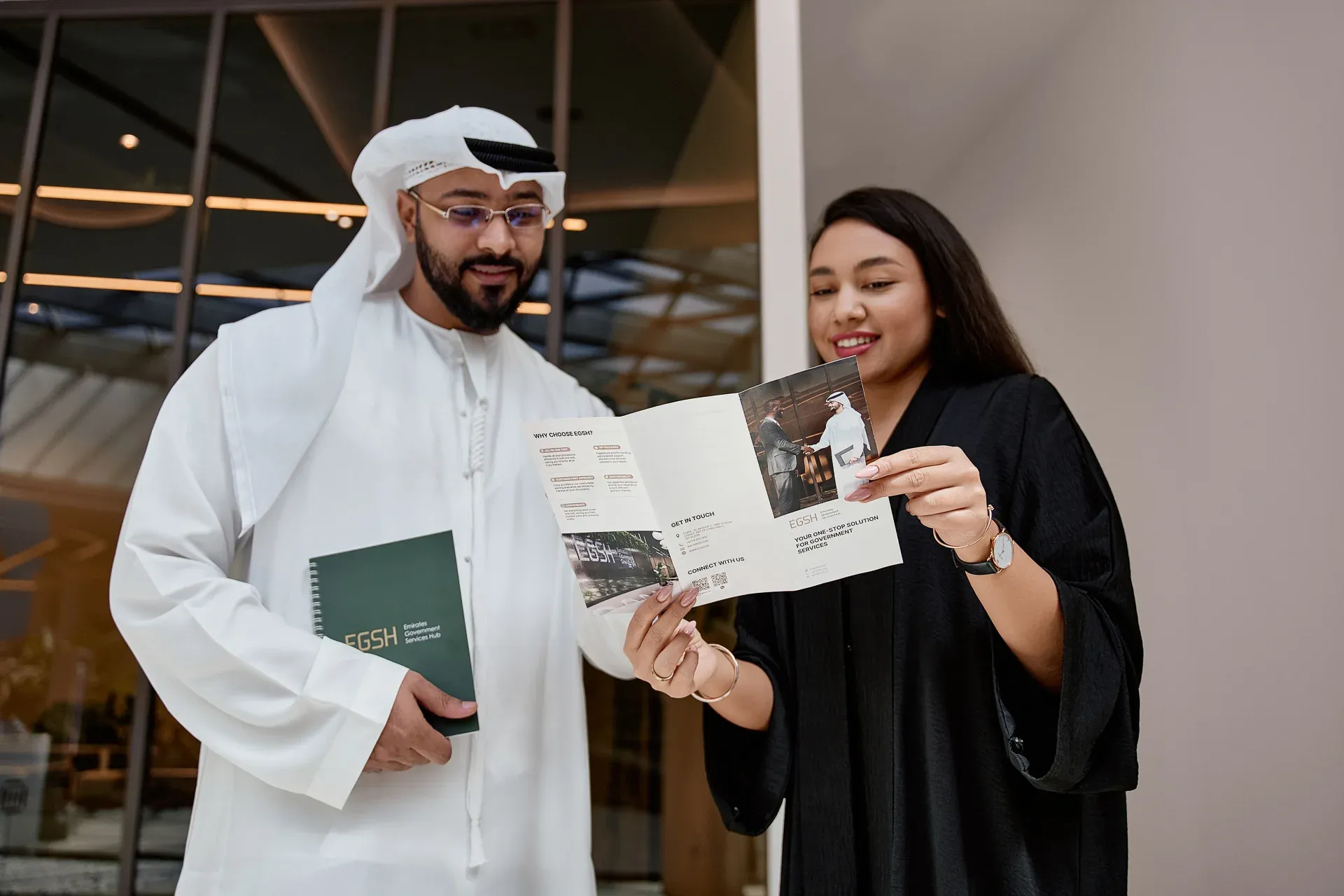
Next, the sponsor or applicant submits the residence entry permit application through the ICP eServices, smart applications, or, in Dubai, via the GDRFA online services or a GDRFA Amer Centre visa services counter. Once the residence entry permit is approved, the sponsor typically requests an in‑country status modification (sometimes called an in-country status change) instead of arranging an exit and re‑entry. The ICP treats this as a separate service with specific fees; in practice, you may see it referred to as “modify visa status ICP”.
After the status change visa via the Dubai GDRFA or the equivalent ICP service is completed, you are considered to have entered on the new residence entry permit without physically leaving the UAE. You must then complete the remaining procedures within the statutory timeframe: medical fitness test at an authorised centre, Emirates ID biometrics, and final residence visa stamping (or electronic issuance) on your passport. Missing these steps or deadlines can lead to application cancellation and potential penalties, so timelines demand close monitoring.

Overstay, Fines and Grace or Amnesty Initiatives
If a visit or tourist visa expires and the person remains in the UAE without renewal or status change, they become an immigration violator and daily overstay fines accrue from the first day after expiry. According to the ICP announcements, these fines generally must be settled or formally resolved under a grace measure before a new visit or residence status can be granted. Overstay may also complicate future applications, so it is safer to act before expiry wherever possible.
Cabinet decisions implemented by the ICP have, at times, introduced special grace or amnesty programmes, such as the extended “Protect Yourself by Modifying Your Status” campaign. These initiatives allowed certain categories of violators to regularise from inside the UAE, either by leaving with reduced or waived fines or by obtaining new temporary or residence permits without exiting. Such programmes are strictly time‑bound, with conditions that change from one initiative to another, so you should always rely on current ICP and GDRFA announcements when assessing whether any exceptional relief applies.

Planning Your Transition from Visitor to Resident
Anyone hoping to convert a tourist visa to a residence visa in the UAE should plan early. If you receive a job offer, decide to study, or wish to remain with family, start the relevant residence procedures well before your visit or tourist visa expires. This reduces the risk of overstay fines, last‑minute travel, or gaps in lawful status while your application is being processed.
Coordinate closely with your sponsor. Employers, family members or universities are usually responsible for submitting many of the applications, and they will need your passport, photos, all required attested certificates and other supporting documents. Procedures and fees differ between emirates and visa categories, and processing rules can change; checking ICP and GDRFA guidance before you apply helps you avoid outdated assumptions about costs or timeframes.
Through EGSH, you can complete all steps of UAE status change from visit to residence in Dubai, including document verification, fee collection and submission of applications to GDRFA or other authorities on your behalf. Some applicants may still be required to exit the country in specific circumstances, for example, if a particular category does not allow in‑country status modification at the time you apply or if previous violations prevent internal change. A case‑by‑case assessment with an authorised service centre, therefore, remains essential.

FAQ
Can I work in the UAE while my status is being changed from tourist to resident?
No. You cannot work on a tourist or visit visa, and you may only start employment once a work permit and corresponding residence visa are issued under your employer’s sponsorship. Working before that point risks fines, bans and rejection of your future applications.
Do I always need to exit the UAE to get a new residence visa?
You do not always need to leave; many applicants can use the in‑country UAE visa status modification route, where the ICP or GDRFA processes a status change in return for a fee. Whether this is available in your case depends on your residence category, current status, and the regulations in force at the time of application.
How long do I have after entering to complete my residence visa procedures?
For many family‑sponsored dependants, residence formalities must be completed within 60 days of entry on the relevant permit, or the application may be cancelled and fines may apply. Employment and other categories follow similarly defined windows set by the ICP or GDRFA, so you should confirm the exact deadline tied to your entry permit.
What happens if my tourist visa expires while I am applying for residence in the UAE?
If your tourist visa expires before your status is modified, you start accumulating visa overstay fines levied by UAE authorities for each day of overstay, and you will usually need to settle these before a residence visa can be issued. If your sponsor expects delays, they may instead extend or renew your visit status, where possible, to keep you lawful during processing.
Can I get a residence visa in Dubai while on a tourist visa?
You can often obtain residence without leaving if you have a valid basis such as a job offer, family sponsor, or special residence approval, and GDRFA approves a converted tourist visa to residency Dubai status‑change request. Applications are generally submitted through online channels or Amer centres, and all standard residence steps, including medical and Emirates ID, still apply.
How can I regularise my visa status after an overstay in the UAE?
You usually need to clear outstanding fines and, where eligible, apply for a new visit or residence permit using official ICP or GDRFA channels, possibly combined with a status change from visit to residence. During special UAE visa amnesty and grace period programmes, some violators may instead be allowed to leave or modify their status on more favourable terms announced at that time.
Where can I verify current fees, fines and conditions for status change?
Current fees, overstay penalties and conditions for services such as converting a tourist visa to a residence permit without leaving the UAE are published on the ICP and GDRFA official websites and electronic platforms. You can also obtain up‑to‑date figures and confirm document requirements by visiting authorised centres such as EGSH, which work directly with these authorities.




