



About EGSH
Why a Corporate Bank Account Is Mandatory for UAE Businesses
Every company registered in the UAE must maintain a separate corporate bank account. Using a personal account for business transactions is not permitted under UAE banking and commercial regulations. Minimum deposits range from AED 25,000 to AED 500,000 depending on the bank and account type, and most applications are processed within three to ten business days once all compliance requirements are met.
A corporate bank account serves several legally mandated purposes. The Ministry of Human Resources and Emiratisation (MOHRE) requires all private-sector employers under its jurisdiction to process employee salaries through the Wage Protection System (WPS). WPS registration is only possible through a CBUAE-approved bank or financial institution, which means a company must hold an active corporate account before it can sponsor employees and issue work permits.
Additionally, companies subject to Federal Decree-Law No. 47 of 2022 on Corporate Tax must file returns and settle tax obligations through a registered corporate account. VAT-registered businesses must similarly use their corporate banking details for tax filings with the Federal Tax Authority (FTA).
Beyond regulatory compliance, a corporate bank account enables businesses to receive payments from government and private-sector clients, process supplier payments, manage multi-currency transactions, and access trade finance instruments — all essential functions for companies operating in Dubai's commercial environment.
Register Your Company in Dubai
Officially regulated fees
No hidden charges
Queue-free service
VIP support at no extra cost
From AED 12,000
Explore EGSH Government Services in Dubai
Get Business Services in Dubai Through EGSH
Authorised One-Stop Government Services Centre
- All government services in one place
- Completed in one visit
- VIP service without queues
- Regulated government fees

Required Documents for Corporate Bank Account Opening
Banks in the UAE follow a standardised KYC framework set by the CBUAE under Federal Decree-Law No. 20 of 2018 on Anti-Money Laundering and Combating the Financing of Terrorism. While each bank may request additional items, the core documentation remains consistent.
Company documents:
- Valid trade licence (mainland or free zone)
- Certificate of incorporation or commercial registration
- Memorandum of Association (MoA) and any amendments
- Shareholder certificate or share register
- Board resolution authorising account opening and designating signatories
- Ejari-registered tenancy contract (for mainland companies) or lease agreement (for free zone companies)
- MOHRE establishment card (if employees are sponsored)

Shareholder and signatory documents:
- Passport copies of all shareholders and authorised signatories
- Emirates ID copies (for UAE residents)
- Proof of residential address (utility bill or bank statement from the home country for non-residents)
- Curriculum Vitae (CV) of shareholders and key directors
Financial and compliance documents:
- Business plan or description of proposed activities
- Source of funds declaration
- Projected annual turnover and transaction volumes
- Audited financial statements (for established companies or branches)
- Ultimate Beneficial Owner (UBO) declaration — any natural person holding 25% or more of the company must be disclosed, as required under Cabinet Decision No. 109 of 2023 on UBO registration
Banks may request additional documents for companies engaged in high-risk activities, those with complex ownership structures, or entities with shareholders from jurisdictions flagged under international AML watchlists.



Why Choose EGSH for Government Services in Dubai

VIP Service
Personal assistance and priority processing with no queues.

Affordable Fees
Official government rates with transparent, fixed pricing.

All Services in One Place
Comprehensive range of UAE government services under one roof.

One-Visit Completion
Most procedures are completed in a single visit to the centre.
Step-by-Step Account Opening Process
The corporate bank account opening process follows a defined sequence, regardless of which bank the applicant chooses.
Step 1 — Select a Bank
Compare banks based on minimum balance requirements, fee structures, digital banking capabilities, multi-currency account options, and trade finance services. Companies with specific needs — such as WPS integration, letter of credit facilities, or Islamic banking — should confirm these services are available before applying.
Step 2 — Submit the Application
Most banks accept applications through branch visits, relationship managers, or online portals. The CBUAE requires personal presence for account opening in most cases, although some digital banks offer remote onboarding for UAE residents.
Prepare the full document set listed above. Incomplete submissions are the primary cause of delays and rejections.

Step 3 — KYC and Compliance Review
The bank's compliance department verifies shareholder identities, screens against sanctions lists, and assesses the company's risk profile. The CBUAE's CDD/KYC Guidance requires banks to complete this review before activating any account.
For low-risk applications, the CBUAE's SME Market Conduct Regulation specifies that banks should aim to complete account opening within three business days. In practice, standard processing takes five to ten business days for mainstream applications.
Step 4 — Interview with the Relationship Manager
Many banks require a face-to-face or video meeting with the company's authorised signatory. The relationship manager will discuss the company's activities, expected transaction patterns, and banking needs.

Overview of Major Banks for Corporate Accounts in Dubai
The UAE banking sector includes over 20 national banks and 28 foreign banks licensed by the CBUAE. The following overview covers the banks most commonly used by Dubai-registered businesses.
Emirates NBD is the largest banking group in the UAE by total assets. It offers a comprehensive corporate banking suite with WPS integration, multi-currency accounts, trade finance, and digital banking through its business portal. Emirates NBD is widely used by mainland companies, trading firms, and businesses with high transaction volumes. Minimum balance requirements are typically higher than mid-tier banks.
Abu Dhabi Commercial Bank (ADCB) provides corporate accounts with competitive fee structures and a strong digital banking platform. ADCB is favoured by SMEs and professional services firms. The bank offers both conventional and Islamic corporate accounts.
Mashreq Bank is one of the oldest privately owned banks in the UAE and offers dedicated SME banking packages, including streamlined account opening for startups and newly licensed companies. Mashreq's digital platform supports online account management and payment processing.

RAKBANK (National Bank of Ras Al Khaimah) is known for accessible account opening requirements and lower minimum balance thresholds, making it a common choice for small businesses, freelancers with company licences, and free zone entities.
Wio Business is a digital-first bank launched in collaboration with Abu Dhabi's sovereign wealth entities. It offers fully digital onboarding, no minimum balance requirement for certain account types, and integration with accounting software. Wio is increasingly popular among startups and e-commerce businesses.
HSBC and Standard Chartered operate as licensed foreign banks in the UAE and cater to international businesses, holding companies, and firms with cross-border banking needs. These banks typically require higher deposits and more extensive due diligence documentation.
The choice of bank should align with the company's operational profile. Trading and manufacturing businesses may prioritise banks with strong trade finance services, while professional services firms may value lower fees and digital functionality.

Visit EGSH for VIP Service Without Queues
You can stop by EGSH during working hours without an appointment or book your visit at a time that suits you best.
Address
Art of Living Mall, Al Barsha 2, Dubai
Operating hours
Monday–Thursday, Saturday: 9:00 am–5:00 pm
Friday: 9:00 am–12:00 pm, 2:00 pm–5:00 pm
Sunday: Closed

Common Reasons for Account Rejection
Bank account applications in Dubai are rejected more frequently than in many other jurisdictions, primarily due to the UAE's strengthened AML/CFT framework following the FATF's increased monitoring period (concluded in February 2024). Common reasons include incomplete documentation, unclear business models, complex or opaque ownership structures, shareholders from high-risk jurisdictions, and insufficient proof of source of funds.
Companies can reduce rejection risk by preparing a clear business plan, ensuring all corporate documents are current and properly attested, providing a complete UBO declaration, and securing an Ejari-registered physical office before applying. A registered company address with valid Ejari significantly strengthens the application, as banks view physical presence as evidence of genuine commercial activity.

Role of EGSH in Business Setup and Account Preparation
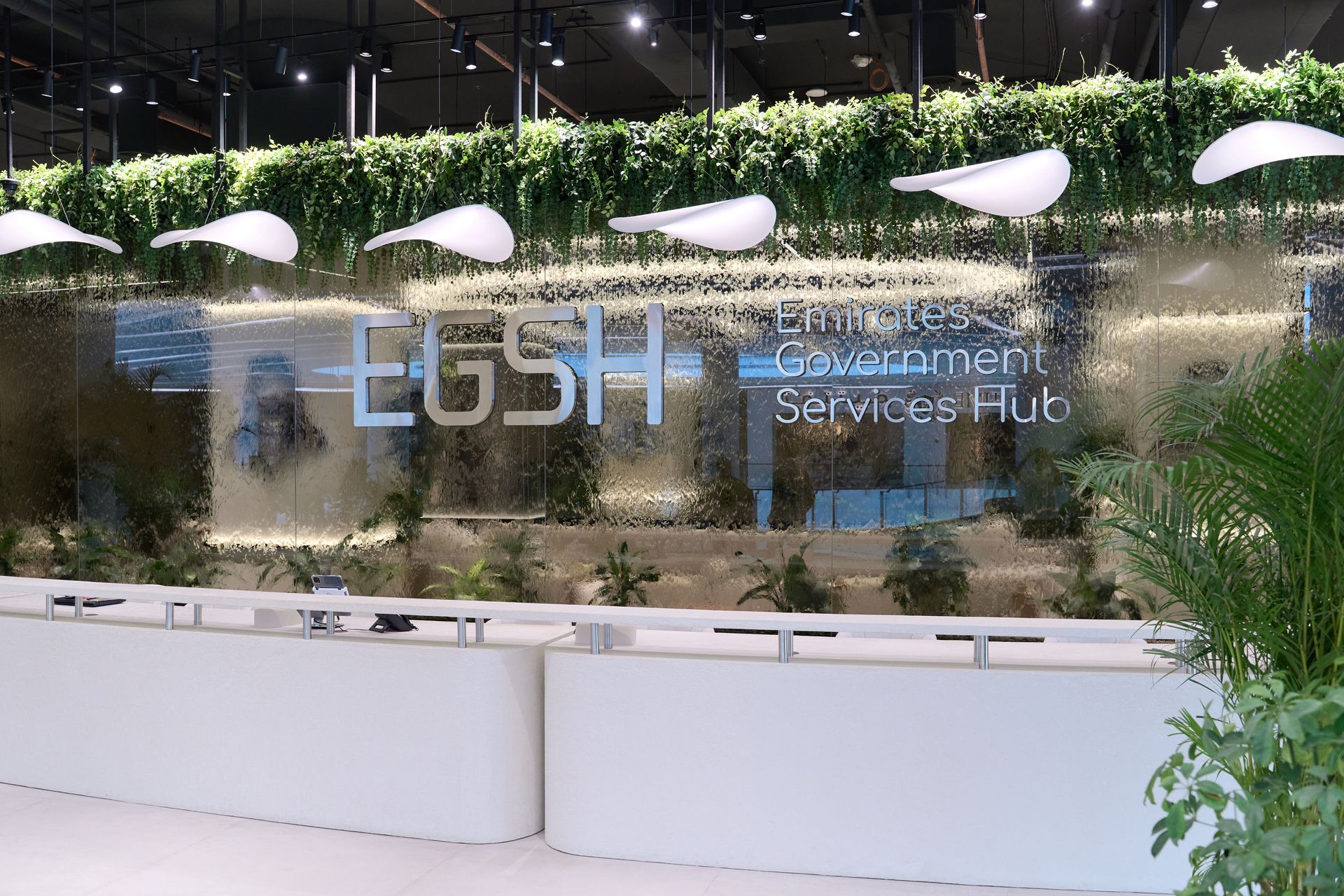
The Emirates Government Services Hub (EGSH) is an authorised government services centre in Dubai. Businesses can complete company registration and trade licence issuance at EGSH through official DET channels.
The centre also processes Ejari registration for commercial tenancy contracts, which banks require as proof of a physical business address. For companies that need to sponsor employees, EGSH handles the opening of a new MOHRE establishment file and the issuance of the establishment card — a document that banks often request during the KYC review. Investors entering the UAE through a business setup pathway can also process their investor residence visa through EGSH's authorised GDRFA channels.
By consolidating these government procedures in a single centre, EGSH helps businesses assemble the complete document set required for bank account opening — including trade licence, Ejari certificate, establishment card, and shareholder visas — before approaching the bank.

Mainland vs Free Zone: Banking Implications
The choice between a mainland and a free zone company affects the banking experience in several ways.
Mainland companies registered with the DET have the widest bank access. All national and foreign banks operating in the UAE accept mainland licence holders, and the onboarding process is generally faster because DET licensing is perceived as providing the strongest regulatory integration. Mainland companies with Ejari-registered offices and active MOHRE establishment cards face the fewest compliance barriers.
Free zone companies can open corporate bank accounts with most banks, but the process may involve additional steps. Some banks limit account opening to companies from specific free zones with which they maintain operational relationships. Free zone entities that lack a physical office (using only a flexi-desk or virtual address) may face difficulty, as banks increasingly require evidence of substantive operations.
Offshore companies (RAK ICC, JAFZA Offshore) have the most restricted access to banking services. Most major banks in the UAE have reduced their appetite for offshore company accounts due to compliance concerns. Only a limited number of banks accept these applications, and enhanced due diligence — including audited financial statements, detailed transaction projections, and verified source of funds — is mandatory.
Understanding these distinctions is essential when choosing a company structure. Detailed guidance on the different licensing pathways is available in the mainland company formation in Dubai.

Related Government Services
Post-Opening Compliance Obligations
Opening a corporate bank account is not a one-time event. The CBUAE requires banks to conduct ongoing due diligence on all corporate customers, and businesses must cooperate with periodic KYC reviews.
Ongoing obligations include maintaining the minimum balance, promptly responding to bank requests for updated documents (such as renewed trade licences, updated shareholder information, or revised financial statements), registering Ultimate Beneficial Owners with the relevant licensing authority, and ensuring all transactions are consistent with the declared business activity.
Failure to respond to KYC review requests can result in account restrictions, transaction freezes, or account closure. Companies that undergo changes in ownership structure, business activities, or authorised signatories must notify the bank immediately.

For businesses registered under MOHRE, WPS compliance is monitored through the corporate bank account. Salary payments must be processed within the deadlines specified by Ministerial Decree No. 788 of 2009, and the employer must submit a Salary Information File (SIF) to the bank's WPS system each payroll cycle.
Companies subject to Corporate Tax under Federal Decree-Law No. 47 of 2022 must also maintain proper financial records linked to their banking transactions. The standard Corporate Tax rate is 0% on taxable income up to AED 375,000 and 9% on income above this threshold, as published by the Federal Tax Authority. A detailed breakdown of business setup costs, including post-licensing financial obligations, is available in the overview of business setup costs in Dubai.

Key Considerations for Foreign Investors
Foreign investors establishing a business in Dubai should plan the bank account opening as an integral part of the company formation process — not as an afterthought. Several practical points can improve the outcome.
- Prepare all documents before arriving in the UAE. Banks require original or certified copies of passports, attested corporate documents, and proof of funds. Having these ready avoids delays. Second, choose the company structure with banking in mind. A mainland LLC formation through DET offers the broadest banking access. Free zone structures should be chosen only when the specific benefits of the zone outweigh the narrower bank options.
- Secure a physical office and register the lease through Ejari before approaching the bank. The Ejari certificate is one of the most commonly requested documents during KYC review, and its absence frequently delays applications.

- Prepare a clear source of funds declaration. Banks must verify the origin of the capital used for the initial deposit and ongoing operations. Audited financial statements from the shareholder's existing business, bank statements from the past six to twelve months, or documented investment income provide the strongest evidence.
Finally, expect the process to take longer than anticipated. While the CBUAE framework targets three business days for low-risk applications, complex structures, non-resident shareholders, or unusual business activities can extend the timeline to several weeks. A comprehensive overview of the entire company formation lifecycle, from activity selection to post-licensing registrations, is available in the setting up a company in the UAE.

Frequently Asked Questions
What is the minimum deposit to open a corporate bank account in Dubai?
Minimum deposits range from AED 0 (for select digital banks such as Wio Business) to AED 500,000 (for premium accounts at major national banks). Most SME accounts require an initial deposit of AED 25,000 to AED 100,000.
Can a non-resident open a corporate bank account in Dubai?
Yes. A non-resident who owns a UAE-registered company can open a corporate bank account. However, the CBUAE generally requires the account holder to be physically present in the UAE for the initial meeting. Enhanced due diligence applies to non-resident applications.
How long does it take to open a corporate bank account?
The CBUAE's regulatory framework targets completion within three business days for low-risk applicants. In practice, the timeline ranges from five business days for straightforward mainland companies to four weeks or more for complex structures.
Which documents are most critical for approval?
The trade licence, Memorandum of Association, shareholder passport copies, Ejari certificate, and UBO declaration are the documents most frequently cited as reasons for rejection when missing or incomplete.
Do I need an Ejari certificate to open a corporate bank account?
Most banks require an Ejari-registered tenancy contract for mainland companies. Free zone companies must provide an equivalent lease agreement issued by the free zone authority. EGSH processes Ejari registration for commercial tenancy contracts through the official DLD system.
Is a corporate bank account required for WPS salary payments?
Yes. The Wage Protection System, regulated jointly by MOHRE and the CBUAE, mandates that all private-sector employers under MOHRE jurisdiction process salaries through a CBUAE-approved bank or financial institution.
Can I open a corporate bank account before receiving my trade licence?
No. Banks require a valid, issued trade licence as a primary KYC document. The licence must be active at the time of application. Companies in the setup phase should complete licensing first — EGSH processes trade licence registration through official DET channels.
What happens if my account application is rejected?
Rejection does not prevent future applications. Companies should request feedback from the bank, address the identified gaps (such as missing documents or an unclear business plan), and reapply to the same or a different institution.

Explained by
Shaimaa Sayed Awais
Dubai Economy & Tourism (DET) Services Consultant
Shaimaa Sayed Awais is a DET Services Consultant with 7 years of experience in business setup in Dubai. She specialises in trade licence procedures, including trade name reservation, initial approval, MOA preparation, and licence issuance, ensuring compliant and efficient company formation.
Official Sources and References
- Central Bank of the UAE (CBUAE) — Regulator of all banks and financial institutions in the UAE; oversees KYC/AML compliance and the Wage Protection System.
- CBUAE Rulebook: Account Opening — Regulatory standards for bank account opening timelines and conduct.
- CBUAE Rulebook: CDD/KYC Guidance — Detailed guidance on customer due diligence procedures for licensed financial institutions.
- Federal Tax Authority (FTA) — Administers VAT and Corporate Tax in the UAE.
- Ministry of Human Resources and Emiratisation (MOHRE) — Regulates labour relations, WPS compliance, and establishment registration.
Important Notice
The information in this article is current as of the date of publication and is provided for general guidance only. Bank requirements, government fees, and regulatory procedures may change without prior notice. The CBUAE, individual banks, and licensing authorities retain the right to amend their requirements at any time. Applicants should confirm the latest requirements directly with their chosen bank and the relevant government authorities before proceeding. EGSH facilitates government service procedures and does not act as a banking intermediary, financial adviser, or approval authority.



