


About EGSH
Off-Plan Property Delays in Dubai: Buyer Rights, RERA Regulations and Legal Remedies
This guide covers the regulatory framework under RERA and the DLD, escrow account protections, compensation mechanisms, and step-by-step dispute resolution procedures. The Sale and Purchase Agreement typically allows developers a 6–12 month grace period beyond the anticipated completion date before buyers may pursue formal remedies.
Off-plan property delays in Dubai are governed by a comprehensive legal framework administered by the Real Estate Regulatory Agency (RERA) and the Dubai Land Department (DLD). Under Law No. 13 of 2008, as amended by Law No. 19 of 2017, buyers whose developers fail to deliver on schedule have defined rights to seek compensation, contract termination, or full refund of payments held in mandatory escrow accounts. The Sale and Purchase Agreement (SPA) forms the contractual foundation of the buyer–developer relationship, typically allowing a grace period of 6–12 months beyond the anticipated completion date before triggering formal remedies. Understanding these protections is essential for any investor navigating the off-plan market in Dubai.
Register Your Initial Sale in Dubai
Officially regulated fees
No hidden charges
Queue-free service
VIP support at no extra cost
From AED 2,625
Legal Framework Governing Off-Plan Property Delays in Dubai
Dubai's off-plan property market operates under a layered regulatory structure designed to protect buyers and developers. Three primary pieces of legislation define the rights and obligations of each party when construction timelines are not met.
Law No. 8 of 2007 (Escrow Account Law) established mandatory project-specific escrow accounts for all off-plan developments. Under this law, every developer selling off-plan units must open a dedicated escrow account with a DLD-approved bank, and all buyer payments must be deposited directly into this account. Funds may only be released to the developer upon verified completion of construction milestones approved by RERA inspectors. This mechanism prevents developers from diverting buyer funds to other projects or operational expenses.
Law No. 13 of 2008, concerning the Interim Real Property Register, requires all off-plan property sales to be registered with the DLD through the Oqood system. This registration legally recognises the buyer's interest in the property and prevents the developer from selling the same unit to another party. Article 11 of this law, as amended by Law No. 19 of 2017, outlines specific procedures for contract termination and the maximum amounts developers may retain depending on the project's completion percentage.

Get DLD Services in Dubai Through EGSH
Authorised One-Stop Government Services Centre
- All government services in one place
- Completed in one visit
- VIP service without queues
- Regulated government fees

Common Causes of Off-Plan Property Delays
Off-plan project delays occur for various reasons, and distinguishing between justified and unjustified delays is essential when assessing legal remedies. Not all delays carry the same legal consequences, and RERA evaluates each case individually.
Developer-Related Causes
Financial mismanagement remains one of the most common reasons for delays. Developers who overextend across multiple projects may face cash-flow constraints that slow construction progress. Design changes requested after approvals have been granted, contractor disputes, and inadequate project planning also contribute to delays attributable to the developer. Under UAE law, these causes do not qualify as force majeure and leave the developer liable for breach of contractual obligations.

External and Force Majeure Causes
Force majeure events — circumstances genuinely beyond the developer's control — may provide a legitimate defence against liability for delays. Under Article 21 of Executive Council Resolution No. 6 of 2010, developers may claim that events such as government-imposed restrictions, natural disasters, global supply chain disruptions, or pandemic-related shutdowns prevented timely completion. However, the burden of proof lies with the developer, and RERA and the courts assess each claim individually to determine whether the delay genuinely resulted from unforeseeable circumstances rather than negligence or poor planning.
Regulatory and Administrative Causes
Changes to planning regulations, delays in obtaining permits from government authorities, and infrastructure modifications by master developers can also affect project timelines. Whilst these causes may partially excuse certain delays, developers are generally expected to account for reasonable regulatory processing times within their original project schedules.



Why Choose EGSH for Government Services in Dubai

VIP Service
Personal assistance and priority processing with no queues.

Affordable Fees
Official government rates with transparent, fixed pricing.

All Services in One Place
Comprehensive range of UAE government services under one roof.

One-Visit Completion
Most procedures are completed in a single visit to the centre.
How Escrow Accounts Protect Buyers During Delays
The escrow account system is the primary financial safeguard for off-plan property buyers in Dubai. Established under Law No. 8 of 2007, this mechanism ensures that buyer payments are ringfenced and used exclusively for the intended construction project.
Each off-plan project must maintain a separate escrow account with a RERA-approved bank. The developer cannot access buyer funds at will — withdrawals are permitted only after independent engineers verify that specific construction milestones have been achieved and RERA approves the release. This milestone-linked payment structure ties every disbursement to tangible construction progress.

If construction stalls or the project is cancelled, unreleased funds remain protected in the escrow account. RERA has the authority to freeze the account, halt all withdrawals, and instruct the escrow agent to refund buyers directly from the remaining balance. Article 14 of Law No. 8 of 2007 also requires the escrow agent to retain 5% of total project funds for one year after completion as a warranty guarantee against structural defects.
Buyers can verify their project's escrow account status through the Dubai REST app or the DLD's official website. Confirming that the project is properly registered and that the escrow account is active provides an additional layer of due diligence before and during the investment period. For buyers who have already completed the initial sale registration through the DLD, the Oqood system provides a documented record of their ownership interest in the off-plan unit. Those needing to complete their initial sale registration should ensure this is finalised before pursuing any dispute resolution.
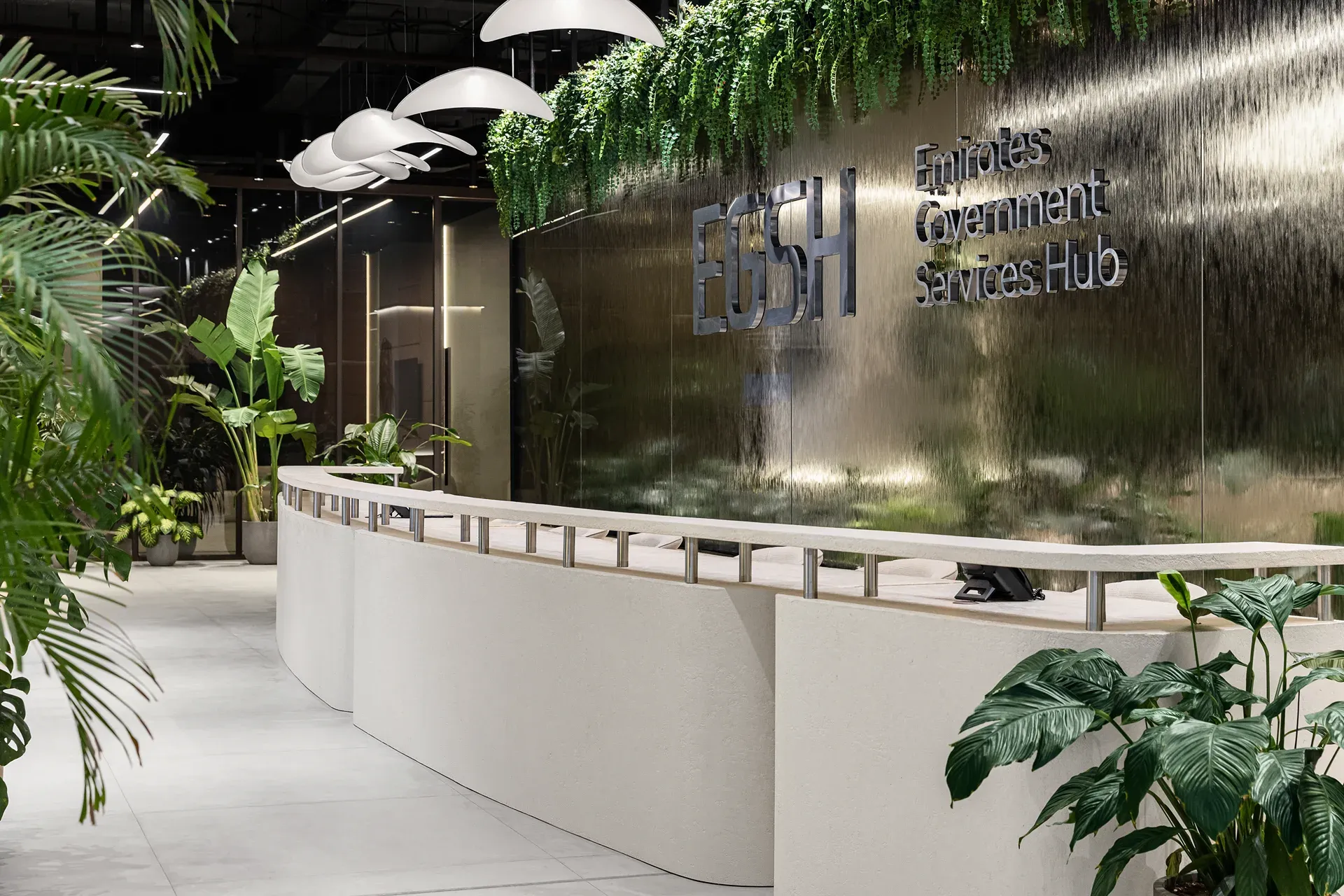
Visit EGSH for VIP Service Without Queues
You can stop by EGSH during working hours without an appointment or book your visit at a time that suits you best.
Address
Art of Living Mall, Al Barsha 2, Dubai
Operating hours
Monday–Thursday, Saturday: 9:00 am–5:00 pm
Friday: 9:00 am–12:00 pm, 2:00 pm–5:00 pm
Sunday: Closed

Buyer Rights When a Developer Delays Handover
The SPA is the contractual foundation that governs the buyer–developer relationship in Dubai's off-plan market. When a developer fails to deliver on time, the buyer's rights depend on the specific terms of the SPA, the applicable legislation, and the circumstances of the delay.
Grace Period and Extension Clauses
Most SPAs in Dubai include a completion and passing of risk clause that specifies the anticipated completion date and permits an extension of 6–12 months for reasons outlined in the agreement. This grace period is standard practice and does not, by itself, constitute a breach of contract. The SPA should clearly define the conditions under which extensions apply and the notice requirements for both parties.
Compensation for Delays Beyond the Grace Period
If the developer fails to deliver the property after the contractual grace period has expired, buyers may be entitled to financial compensation. Article 295 of the UAE Civil Transactions Law (Federal Law No. 5 of 1985) provides that damages for breach of contract may take the form of monetary payment, including compensation for actual losses and lost profits directly resulting from the delay. This may include temporary accommodation costs incurred while waiting for handover and lost anticipated rental income from the delayed property.
The SPA itself may contain specific penalty clauses for late delivery, such as a percentage of the purchase price for each month of delay. Buyers should review their SPA carefully to understand the compensation mechanisms specified in their individual agreement.
Right to Terminate the SPA
If the delay extends significantly beyond the grace period and the developer shows no realistic prospect of completing the project, the buyer may have grounds to terminate the SPA entirely. Under Law No. 13 of 2008, as amended, the termination process and the amounts retained by the developer depend on the project's completion percentage at the time of cancellation.
Step-by-Step Dispute Resolution Process
When an off-plan property handover is delayed beyond the contractual deadline, buyers should follow a structured approach to protect their investment and pursue available remedies.
Step 1 — Review the Sale and Purchase Agreement
The first action is to re-read the SPA thoroughly, focusing on the anticipated completion date, grace period provisions, penalty clauses for late delivery, force majeure definitions, and termination conditions. The SPA determines the baseline for all subsequent actions.
Step 2 — Contact the Developer
Before escalating, buyers should formally contact the developer in writing to request an explanation for the delay and an updated completion timeline. All communication should be documented — emails, letters, and meeting notes serve as evidence if the matter proceeds to formal dispute resolution.
Step 3 — Verify Project Status with the DLD and RERA
Buyers should check the project's current status on the DLD's official website or through the Dubai REST app. RERA maintains updated records of all registered projects, including construction progress, cancellation notices, and suspension orders. This step confirms whether the project remains active, has been placed under review, or has been cancelled.

Step 4 — File a Complaint with the DLD
Under Article 14 of Executive Council Resolution No. 6 of 2010, the DLD provides a mediation mechanism for buyer–developer disputes. Buyers can approach the DLD to file a formal complaint, after which the department will attempt to facilitate an amicable settlement. If both parties reach an agreement through DLD mediation, the settlement is documented in a binding written agreement approved by the DLD.
Step 5 — Pursue Legal Action if Mediation Fails
If DLD mediation does not resolve the matter, buyers may file a civil case in the Dubai Courts. Under Article 292 of the UAE Civil Transactions Law, buyers can claim compensation for actual losses and lost profits directly resulting from the developer's breach. The court will assess the SPA terms, evidence of delay, and the developer's justifications before issuing a ruling.
For cases involving projects that have been formally cancelled by RERA, Decree No. 33 of 2020 established the Special Tribunal for Liquidation of Cancelled Real Property Projects in Dubai, which has exclusive jurisdiction over disputes and refund proceedings for cancelled developments.

What Happens If RERA Cancels an Off-Plan Project
RERA actively monitors construction progress across all registered off-plan projects. If a project experiences significant, unjustified delays or the developer violates regulatory requirements, RERA may take corrective action, including imposing fines, suspending sales, or ultimately cancelling the project.
Under Article 11(b) of Law No. 19 of 2017, when RERA issues a reasoned decision to cancel a project, the developer must refund all payments made by purchasers in accordance with the procedures established under Law No. 8 of 2007. The escrow account serves as the guaranteed recovery mechanism, with the escrow agent legally obligated to return protected funds to buyers.
The liquidation process follows a defined sequence. RERA first reviews the project's compliance status and construction progress. If the developer's appeal is rejected, RERA's cancellation decision becomes final. The Special Tribunal then oversees the distribution of escrow funds to affected buyers, either in full or on a proportional basis depending on the amounts available in the account. Buyers should file their claims with the tribunal and provide documentation including the SPA, payment receipts, and bank transfer records.
Buyers whose off-plan purchases are connected to property investment visas should note that a project cancellation may affect their visa eligibility. Investors who hold a Golden Visa for property investors should verify their investment status with the relevant authorities if their project is cancelled or significantly delayed.

Force Majeure and Developer Defences
Force majeure is the primary legal defence available to developers when off-plan projects are delayed for reasons beyond their control. Article 273 of the UAE Civil Transactions Law provides that contractual obligations may be suspended where an unforeseen event prevents performance, and Article 21 of Executive Council Resolution No. 6 of 2010 specifically addresses force majeure in the context of off-plan property transactions.
For a force majeure claim to succeed, the developer must demonstrate that the event was genuinely unforeseen, unavoidable, and directly caused the delay. Internal mismanagement, poor financial planning, and contractor disputes do not qualify. The DLD and the courts scrutinise each claim individually, placing the burden of proof squarely on the developer.
Buyers retain the right to dispute a force majeure claim in court. If the buyer can demonstrate that the developer's actions — or inaction — contributed to the delay, the force majeure defence may be rejected. The courts may also consider whether the developer took reasonable steps to mitigate the effects of the force majeure event once it occurred.

How to Protect Your Investment Before Buying Off-Plan
Preventive due diligence is the most effective way to minimise the risk of facing significant delays on an off-plan property purchase. Buyers should take several steps before committing funds to any off-plan development.
Verifying the project's registration with RERA and the DLD is essential. All legitimate off-plan projects must be registered before sales commence, and buyers can confirm registration status through the DLD's website or the Dubai REST app. Checking the developer's track record for delivering previous projects on schedule provides insight into their reliability. Buyers should also confirm that the escrow account is properly registered and active.
Reviewing the SPA with a qualified legal professional before signing ensures that the buyer understands all terms, including grace periods, penalty clauses, termination conditions, and force majeure definitions. The SPA should specify clear compensation mechanisms for late delivery and define the buyer's right to cancel if the delay extends beyond a reasonable period.
For investors who plan to complete a property ownership transfer upon handover, understanding the registration process in advance ensures a smoother transition from Oqood registration to title deed issuance. Buyers financing their purchase through a mortgage should also be aware that significant delays may affect their mortgage registration timeline and interest rate terms.

Checking Your Off-Plan Project Status
The DLD and RERA provide several channels for buyers to monitor the status of their off-plan property and verify construction progress.
The DLD's official website maintains a database of all registered real estate projects in Dubai, including their current construction status, anticipated completion dates, and any cancellation or suspension notices. The Dubai REST app, developed by the DLD, offers mobile access to project information, Oqood registration status, and escrow account verification.
Buyers can also visit a DLD customer service centre in person to request a detailed update on their project. Bringing the SPA and proof of payment allows DLD staff to look up the specific unit and provide accurate status information. For buyers who wish to formally verify their property ownership records, the title deed verification service confirms whether a property is registered in the buyer's name.
RERA publishes updates on project statuses, including whether a development has been placed under review or is undergoing cancellation proceedings. Regularly checking these sources ensures that buyers are informed of any changes that may affect their investment.

Key SPA Clauses to Review for Delay Protection
The Sale and Purchase Agreement is the single most important document governing the buyer's rights in an off-plan transaction. Several specific clauses directly affect the buyer's position when a delay occurs.
The completion and passing of risk clause specifies the anticipated completion date and the permitted grace period. Buyers should confirm that this clause clearly defines what constitutes a valid reason for extension and what the developer's obligations are if the extended deadline is also missed.
The cancellation of the SPA clause outlines the buyer's right to terminate the agreement if the developer fails to deliver by the agreed date, including after any permitted extensions. Typically, SPAs in Dubai allow for a 12-month extension beyond the anticipated completion date. If the property remains incomplete after this extension, the buyer may cancel the agreement.

Late delivery penalty clauses specify the financial compensation payable to the buyer for each period of delay beyond the contractual deadline. Not all SPAs include identical penalty provisions, and buyers should negotiate these terms before signing.
The force majeure clause defines which events qualify as force majeure under the specific agreement. Buyers should ensure this clause is not drafted so broadly that it could be invoked for events that should reasonably be within the developer's control.
The dispute resolution clause specifies whether disputes are to be resolved through DLD mediation, arbitration, or court proceedings. Understanding this clause in advance helps buyers prepare an appropriate legal strategy if a delay dispute arises.

Frequently Asked Questions
Can I get a refund if my off-plan property is delayed in Dubai?
Delays alone do not automatically trigger refund rights. Buyers must first check the SPA terms, including the grace period and penalty clauses. If the delay extends significantly beyond the contractual deadline without valid justification, buyers may negotiate a refund or file a complaint with the DLD. If RERA cancels the project, the developer is required to refund all payments under Article 11(b) of Law No. 19 of 2017.
What is the typical grace period for off-plan property handover in Dubai?
Most Sale and Purchase Agreements in Dubai include a grace period of 6–12 months beyond the anticipated completion date. During this period, the delay does not constitute a breach of contract. Buyers should review the specific terms of their SPA to confirm the applicable extension period.
How do I check if my off-plan project has been cancelled by RERA?
Buyers can check their project's status on the DLD's official website or through the Dubai REST app. The project status will indicate whether the development is active, under review, or cancelled. Visiting a DLD customer service centre with the SPA provides additional verification options.
Can a developer claim force majeure for any type of delay?
Force majeure applies only to events that are genuinely unforeseen, unavoidable, and directly cause the delay. Under Article 21 of Executive Council Resolution No. 6 of 2010, the developer must prove that the event was beyond their control. Financial difficulties, poor planning, and contractor disputes do not qualify as force majeure.
What compensation can I claim for a delayed off-plan property handover?
Under Article 295 of the UAE Civil Transactions Law, buyers may claim monetary compensation for actual losses and lost profits caused by the delay. This may include temporary accommodation costs and lost rental income. The SPA may also specify additional penalty clauses for late delivery. Buyers should consult a legal professional to assess their specific claim.
How does the escrow account protect me if my off-plan project is delayed?
All buyer payments for off-plan properties must be deposited into a mandatory escrow account under Law No. 8 of 2007. Funds are released to the developer only upon verified construction milestones. If the project stalls or is cancelled, RERA can freeze the account and instruct refunds to buyers from the remaining balance.
Can I sell my off-plan property if the project is delayed?
Yes, buyers may assign or sell their off-plan property to another purchaser, subject to the developer's consent and any applicable conditions in the SPA. The buyer typically needs to have met the developer's minimum payment requirement and obtain a resale No Objection Certificate (NOC). The assignment must be registered with the DLD through the Oqood system.
Where do I file a complaint about a delayed off-plan property in Dubai?
Buyers should first approach the DLD to file a formal complaint under Article 14 of Executive Council Resolution No. 6 of 2010. The DLD will attempt to mediate the dispute. If mediation fails, the buyer may file a civil case in the Dubai Courts or, for cancelled projects, submit a claim to the Special Tribunal established under Decree No. 33 of 2020.
Does a delayed off-plan project affect my Dubai investor visa?
A significant delay or project cancellation may affect the investment value threshold required for certain visa categories. Property investors who hold or are applying for a Golden Visa (minimum AED 2 million) or a 2-year investor visa should verify their eligibility status with the relevant authorities if their project timeline changes substantially.
What role does RERA play when an off-plan project is delayed?
RERA monitors construction progress for all registered off-plan projects and can intervene when significant, unjustified delays occur. RERA has the authority to impose fines, suspend sales, revoke developer licences, and cancel projects. When a project is cancelled, RERA oversees the refund process through the escrow account system and refers complex cases to the Special Tribunal.

Official Sources and References
The following government authorities and legislative references were cited in this article:
- The Dubai Land Department (DLD) — Registration, regulation, and mediation of real estate transactions in Dubai.
- The Real Estate Regulatory Agency (RERA) — Regulatory arm of the DLD responsible for overseeing off-plan property developments, developer compliance, and construction progress monitoring.
- Dubai Legislation Portal — Official repository for Dubai laws, including explanatory notes on Law No. 13 of 2008 and its amendments.
- The Official Portal of the UAE Government — Federal legislation reference, including the UAE Civil Transactions Law (Federal Law No. 5 of 1985).
Important Notice
The information in this article is current as of the date of publication and is provided for general informational purposes only. UAE real estate regulations, fees, and procedures are subject to change without prior notice. Government authorities retain final decision-making power over all property-related matters, including dispute resolution outcomes and project cancellation proceedings. Buyers are advised to verify all information directly with the Dubai Land Department, RERA, or a qualified legal professional before making decisions based on this content.



