



About EGSH
Parent Sponsorship in Dubai: Salary Requirements, Deposits and GDRFA Rules
Parent sponsorship is a specific form of UAE residence visa sponsorship where expatriate residents bring their parents to live with them, subject to higher income thresholds, deposits, and proof of dependency. Dubai applies a higher minimum salary of AED 20,000 for standard parent sponsorship, while GDRFA Dubai also offers a humanitarian residence route with a lower salary requirement of AED 10,000. General family sponsorship for spouses and children still follows the lower AED 4,000 or AED 3,000 plus accommodation rule. The focus here is on Dubai, but rules can differ between emirates and are updated periodically.
Expatriate employees and employers often find parent sponsorship rules confusing, especially when they are familiar only with the standard family salary threshold of AED 4,000 or AED 3,000 plus employer-provided housing. Those seeking to bring elderly parents or parents-in-law to Dubai must also consider requirements such as sponsoring both parents, paying deposits, and proving that no one else in the home country can care for them.
This guide explains how standard UAE family sponsorship works, how Dubai’s AED 20,000 salary rule for parents fits into that framework, and how the humanitarian residence permit with an AED 10,000 salary threshold operates. It also sets out the key documents, step-by-step process through GDRFA Dubai and Amer, emirate-specific variations, and common issues that sponsors need to manage.
Apply for a Family Golden Visa
Officially regulated fees
No hidden charges
Queue-free service
VIP support at no extra cost
From AED 4,500
Family Sponsorship vs Parent Sponsorship
Expatriate residents in the UAE may sponsor family members for residence visas if they earn at least AED 4,000 per month or AED 3,000 plus employer-provided accommodation. This basic income condition applies to standard family sponsorship, mainly for spouses and children, and is implemented through the relevant emirate’s immigration authority, such as GDRFA Dubai.
Parent sponsorship is considered a stricter subcategory of family residence sponsorship. Sponsoring parents must meet additional conditions: a higher minimum salary set by each emirate, a security deposit for each parent, and a general rule requiring both parents to be sponsored together. The sponsor must also show that they are the sole support for their parents and that no one is available to care for them in the home country, usually through an affidavit or similar consular document.
In practice, this means the ordinary AED 4,000 / AED 3,000 + accommodation threshold is only the baseline for family sponsorship, while parents fall under more restrictive local rules. Dubai, through Amer and GDRFA Dubai, applies a salary threshold of AED 20,000 for the standard parent residence visa route, which is substantially higher than for spouses and children.

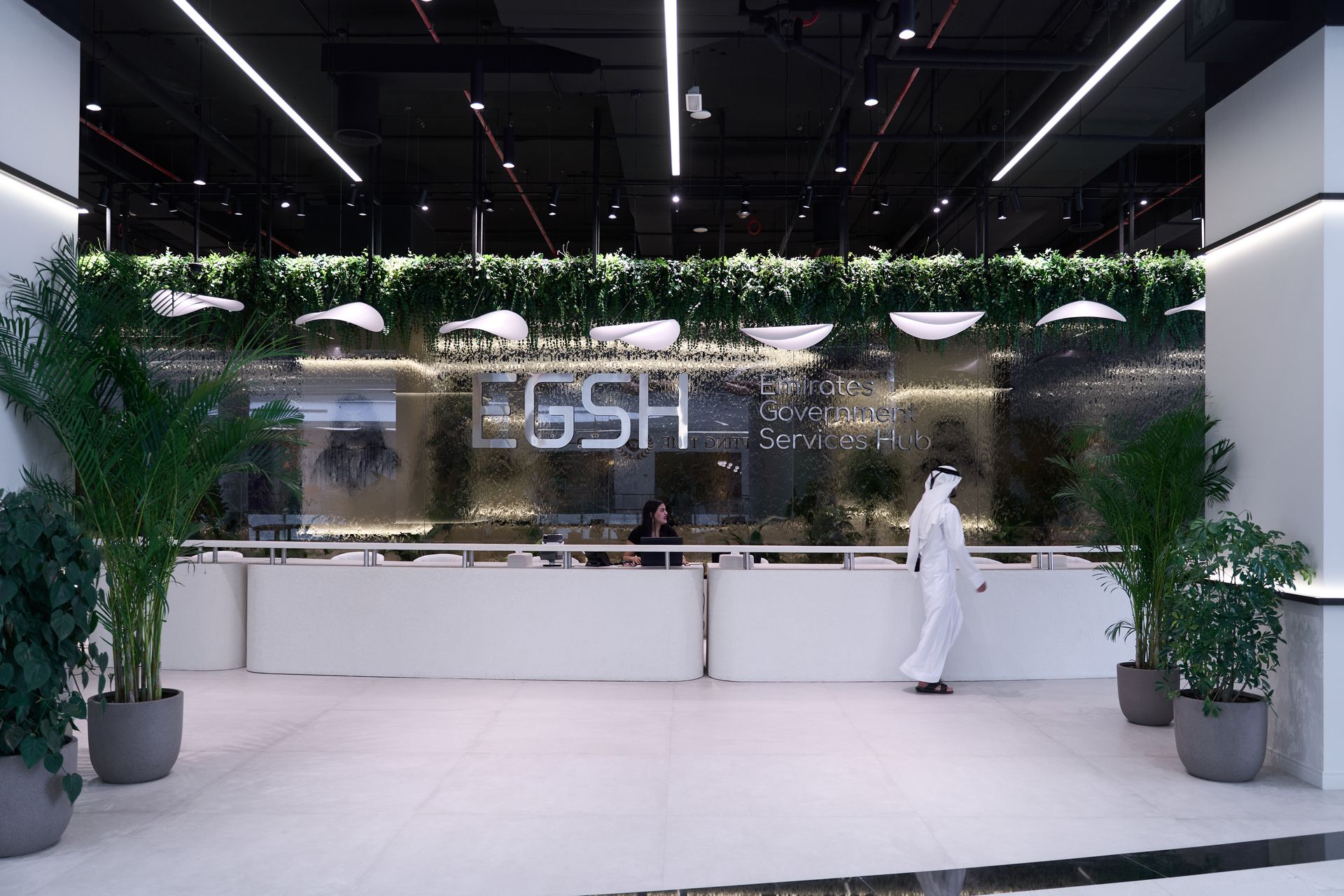
Get Visa Services in Dubai Through EGSH
Authorised One-Stop Government Services Centre
- All government services in one place
- Completed in one visit
- VIP service without queues
- Regulated government fees

Dubai’s AED 20,000 Salary Rule for Sponsoring Parents
Expatriate residents may have a minimum monthly salary of AED 20,000 to sponsor their parents for residence visas under the standard route. This threshold is significantly higher than the general family sponsorship requirement and reflects the additional financial responsibility associated with supporting elderly dependants.
These salary and eligibility conditions for parent sponsorship are set at the emirate level. While Dubai applies the AED 20,000 rule for parents under its regular family residence category, other emirates may use different thresholds, and u.ae explicitly advises residents to check the specific rules for each emirate.
Who Does the AED 20,000 Requirement Apply To
The AED 20,000 minimum salary applies to expatriate residents in Dubai who wish to obtain a one-year, renewable residence visa for their parents under the standard family sponsorship framework. Parents’ residence visas are generally issued for one year at a time and are renewable, subject to the conditions set by the emirate’s immigration department, in this case, GDRFA Dubai.
The sponsor must bring both parents together under this category. Sponsoring only one parent is allowed only if the other parent has died or in cases such as divorce, and these circumstances must be proven with officially attested documents, such as death or divorce certificates.

Income Proof, Deposit and Support Affidavit
To demonstrate compliance with the AED 20,000 threshold, GDRFA Dubai requires evidence of the sponsor’s income. For government, semi-government and free-zone employees, this is typically a salary certificate, while private-sector employees use an attested labour contract, as reflected in GDRFA Dubai’s requirements for individual residence entry permits for relatives.
In addition to income proof, the expatriate employee must pay a deposit as a guarantee for each parent, in an amount determined by the respective immigration department. This deposit is held as financial security, and conditions for its refund depend on the authority’s procedures. Sponsors must also provide an affidavit or equivalent document from their consulate confirming that they are the parents’ sole support and that no one in the home country is available to care for them.
GDRFA Dubai further requires proof of suitable accommodation for the family. Under its individual residence entry permit rules, sponsors must submit an attested tenancy contract and the latest electricity and water bills to confirm that the accommodation is genuine and accessible. All these documents are examined, along with the parents’ passport copies and photos, when GDRFA evaluates the sponsorship application.



Why Choose EGSH for Government Services in Dubai

VIP Service
Personal assistance and priority processing with no queues.

Affordable Fees
Official government rates with transparent, fixed pricing.

All Services in One Place
Comprehensive range of UAE government services under one roof.

One-Visit Completion
Most procedures are completed in a single visit to the centre.
Humanitarian Residence Permit for Parents in Dubai (AED 10,000 Salary)
Alongside the standard family sponsorship route, GDRFA Dubai offers an “Issuance of a residence permit for humanitarian cases”, which can be used in certain situations to sponsor parents or parents-in-law. Under this service, GDRFA Dubai requires the sponsor to provide a minimum monthly salary of AED 10,000, supported by a salary certificate or employment contract.
This humanitarian category is distinct from the regular family sponsorship route that follows the AED 20,000 threshold for parents in Dubai. It is not a general replacement but an additional option for defined humanitarian situations, in which GDRFA Dubai has discretion to grant a one-year, renewable residence permit if the sponsor can meet the applicant's humanitarian needs.

Eligibility and Key Documents Under the Humanitarian Route
The humanitarian residence permit is a one-year, renewable permit issued to foreigners who have a sponsor or host able to meet their humanitarian needs. For parent and parent-in-law cases, the sponsor must fall within the permitted degree of relationship, which includes father, mother, minor siblings, and the spouse’s father and mother, subject to dependency or custody conditions.
Required documents for sponsoring parents or parents-in-law under this route include copies of the sponsored person’s passport, an attested tenancy contract that is suitable for the number of family members, and a bank statement for the last three months to support the declared financial capacity. The sponsor must also provide a salary certificate or employment contract confirming a monthly income of at least AED 10,000. Where the sponsor is a partner or investor, GDRFA Dubai also requires the partnership agreement, trade licence, and partners’ annex to verify business income and status.

Fees, Validity and Grace Period
For humanitarian residence permits, GDRFA Dubai applies a structured fee schedule. The base residence permit fee is AED 200, to which are added the standard AED 10 Knowledge Dirham and AED 10 Innovation Dirham. Where the sponsored person is already inside the UAE at the time of issuance, an additional in-country processing fee of AED 500 applies, and GDRFA also charges approximately AED 20 as a delivery fee for the service outcome.
The humanitarian residence permit is issued for one year and may be renewed; the issuance fee increases by AED 100 for each additional year after the second year. After the expiry or cancellation of the humanitarian residence permit, the sponsored person has a 60-day grace period to regularise their status—by renewal, a change of sponsor, or a change of status—or to leave the UAE without incurring overstay penalties.
Visit EGSH for VIP Service Without Queues
You can stop by EGSH during working hours without an appointment or book your visit at a time that suits you best.
Address
Art of Living Mall, Al Barsha 2, Dubai
Operating hours
Monday–Thursday, Saturday: 9:00 am–5:00 pm
Friday: 9:00 am–12:00 pm, 2:00 pm–5:00 pm
Sunday: Closed

Step-By-Step Process to Sponsor Parents in Dubai
Sponsoring parents in Dubai generally follows the same overall sequence of steps as other residence visas, but with additional evidence and checks. Applications are submitted through GDRFA Dubai’s channels or Amer centres, such as EGSH, either under the standard family sponsorship route (subject to a salary of AED 20,000 for parents) or, where applicable, under the humanitarian residence permit route (AED 10,000 salary). The main stages are entry permit application, arrival or status change, then residence issuance and renewal.
Step 1 – Entry Permit Application
The first step is to obtain an entry permit, usually labelled as an “entry visa for residence without work – family sponsorship” under the standard system, or the corresponding humanitarian entry permit for humanitarian cases. The core documents include the completed application form, one recent photo of the person to be sponsored, and a valid coloured passport copy for each parent. The sponsor must provide their original passport and Emirates ID for verification.
Accommodation and income evidence must also be supplied. This includes an attested tenancy contract, the latest electricity and water bills, and a salary certificate (for government, semi‑government, or free-zone employees) or an attested labour contract (for private-sector employees).
For parent sponsorship, GDRFA Dubai requires an affidavit letter from the sponsor’s consulate confirming dependency and the absence of carers in the home country, as well as evidence that both parents are being sponsored together. If only one parent is to be sponsored, attested documents proving the death or divorce of the other parent must be presented to justify the exception.
Step 2 – Arrival, Status Change And Medical / Emirates ID
Once GDRFA Dubai approves the entry permit, the parents may enter the UAE using that permit if they are outside the country. If they are already in the UAE on another visa, an in-country status change process can be completed through GDRFA Dubai, with the applicable status change fees indicated in the relevant services. In either case, the residence visa cannot be finalised until the parent has a valid entry or status under the sponsorship file.
Standard post-arrival formalities then apply. The sponsored parent must undergo a medical fitness test at an authorised health centre and, where required, arrange health insurance in line with local regulations. Biometric enrolment and application for an Emirates ID card are also required, as the Emirates ID is now central to proving residence status in the UAE.
Step 3 – Issuing And Renewing The Residence Permit
After the medical fitness results, the Emirates ID application, and all documentation checks are complete, GDRFA Dubai issues the parents' residence permits. For the standard parent sponsorship and humanitarian residence permit categories, these residence permits have a one-year validity, renewable upon meeting the relevant conditions. The permit may be issued as a visa sticker on the passport or as a digital residence linked to the Emirates ID, depending on the current implementation.
Sponsors must keep track of expiry dates and renew the parents’ residence permits before they lapse, allowing sufficient time for medicals, Emirates ID renewal and document gathering. For humanitarian permits, the sponsor must also maintain a minimum salary of AED 10,000, provide updated bank statements, and, if applicable, continue to meet the humanitarian justifications on which the permit was granted. If a residence permit is cancelled or expires, sponsors should respect the grace period rules—60 days for humanitarian permits—to avoid overstay fines and compliance issues.
Emirate-Specific Variations and Checking Current Rules
Parent sponsorship rules, including minimum salary and specific eligibility conditions, are set by each emirate’s immigration department. The AED 20,000 salary rule for parents discussed here applies only to Dubai, based on information from Amer and GDRFA Dubai; other emirates may apply different thresholds, deposit amounts, or documentary requirements.
Residents outside Dubai should therefore check the websites of a local GDRFA branch or the Federal Authority for Identity, Citizenship, Customs and Port Security (ICP). Salary thresholds, acceptable documents, online forms and fees are periodically updated on these official platforms, so sponsors should confirm the latest rules before submitting any application or making financial commitments.

Practical Tips and Common Issues for Parent Sponsorship
Many sponsors confuse the rules for standard family sponsorship and visit visas with the stricter conditions for parents’ residence visas. The general AED 4,000 or AED 3,000 + accommodation threshold applies to most spouse and children sponsorships, while GDRFA Dubai’s visit visa service for relatives sets income levels of AED 4,000 for first-degree relatives, AED 8,000 for second- or third-degree relatives, and AED 15,000 for friends. None of these visits or basic family thresholds override the AED 20,000 rule for standard parent sponsorship or the AED 10,000 requirement under the humanitarian residence permit.
Another frequent issue is attempting to sponsor only one parent without proper justification. Sponsoring a single parent is only possible where the other parent is deceased or divorced, and this must be proven with officially legalised and attested certificates. Sponsors should prepare all key documents in advance: a tenancy contract and a recent utility bill; a salary certificate or labour contract; bank statements for humanitarian cases; and a consular affidavit confirming sole support. Keeping organised copies of submissions, approvals, receipts and previous visas helps ensure smoother renewals and allows quick responses if GDRFA Dubai requests clarification or additional evidence.
FAQ
How Much Salary Do I Need to Sponsor My Parents in Dubai?
For standard parent sponsorship in Dubai, the expatriate sponsor must have a minimum monthly salary of AED 20,000. This applies to one-year renewable residence visas for parents under the regular family residence category. Separate rules apply to the humanitarian residence permit route, where the minimum salary is AED 10,000, but is subject to specific humanitarian criteria.
Is the AED 20,000 Salary Rule for Parent Sponsorship Applied Across the UAE?
The AED 20,000 salary rule is specific to Dubai. The conditions and minimum salary for sponsoring parents may differ between emirates, and residents in other emirates must therefore consult their local immigration authority for current thresholds. Sponsors should always verify emirate-specific rules before applying.
Can I Sponsor My Parents in Dubai With a Salary of AED 10,000 Under a Humanitarian Residence Permit?
GDRFA Dubai’s “residence permit for humanitarian cases” allows a sponsor with at least AED 10,000 monthly salary, evidenced by a salary certificate or employment contract, to apply to sponsor parents or parents‑in‑law. However, this is a discretionary humanitarian category, not a general alternative to the AED 20,000 standard route, and GDRFA assesses each case against its humanitarian criteria and documentation. The permit is typically issued for one year and can be renewed if conditions remain satisfied.
Can I Sponsor Only One Parent in the UAE?
Sponsors are generally required to bring both parents together when applying for residence visas. Sponsoring only one parent is permitted only when the other parent is deceased or divorced, and the sponsor must provide officially legalised and attested documents, such as a death or divorce certificate. GDRFA may refuse applications that do not meet this “both parents together” rule or lack proper supporting evidence.
What Documents Are Needed to Sponsor Parents With GDRFA in Dubai?
Core documents include the GDRFA or Amer application form, a recent photo and a coloured passport copy of each parent, and the sponsor’s original passport and Emirates ID. Sponsors must provide an attested tenancy contract, the latest electricity and water bill, and a salary certificate or attested labour contract to prove income, along with a consular affidavit confirming that the sponsor is the parents’ sole support and that no carers are available in the home country. Evidence that both parents are being sponsored, or attested death/divorce documents if one cannot be sponsored, is also required.
What Is the Salary Requirement to Sponsor Parents-in-Law in Dubai?
For parents-in-law under the humanitarian residence permit route, GDRFA Dubai requires a minimum monthly salary of AED 10,000, documented through a salary certificate, employment contract, or, for partners and investors, together with the partnership agreement, trade licence and partners’ annex. Parents-in-law are specifically listed among eligible relatives under the humanitarian category, subject to dependency or custody conditions. Standard parent sponsorship rules with the AED 20,000 threshold apply primarily to parents, not parents-in-law.
How Long Is a Parent’s Residence Visa Valid in Dubai, and What Is the Grace Period?
Parents’ residence visas are generally issued for one year and may be renewed. GDRFA Dubai applies a one-year validity to both standard parent sponsorship and humanitarian residence permits. For humanitarian permits, GDRFA specifies a 60-day grace period after expiry or cancellation during which the sponsored person can regularise their status or depart without overstay fines. Grace periods for other categories should be checked against the current GDRFA Dubai guidance at the time of renewal or cancellation.
How Do Parent Sponsorship Rules Differ From Visit Visa Sponsorship for Parents in Dubai?
Residence sponsorship for parents in Dubai requires meeting the AED 20,000 salary rule (or AED 10,000 under the humanitarian route), paying deposits, providing sole support and usually sponsoring both parents together. By contrast, GDRFA Dubai’s visit visa sponsorship for relatives uses different income thresholds—AED 4,000 for first-degree relatives, AED 8,000 for second- or third-degree relatives, and AED 15,000 for friends—and does not create a long-term residence status. Sponsors should choose between a visit and a residence visa based on the intended duration of stay and their ability to meet the more stringent residence requirements.




