


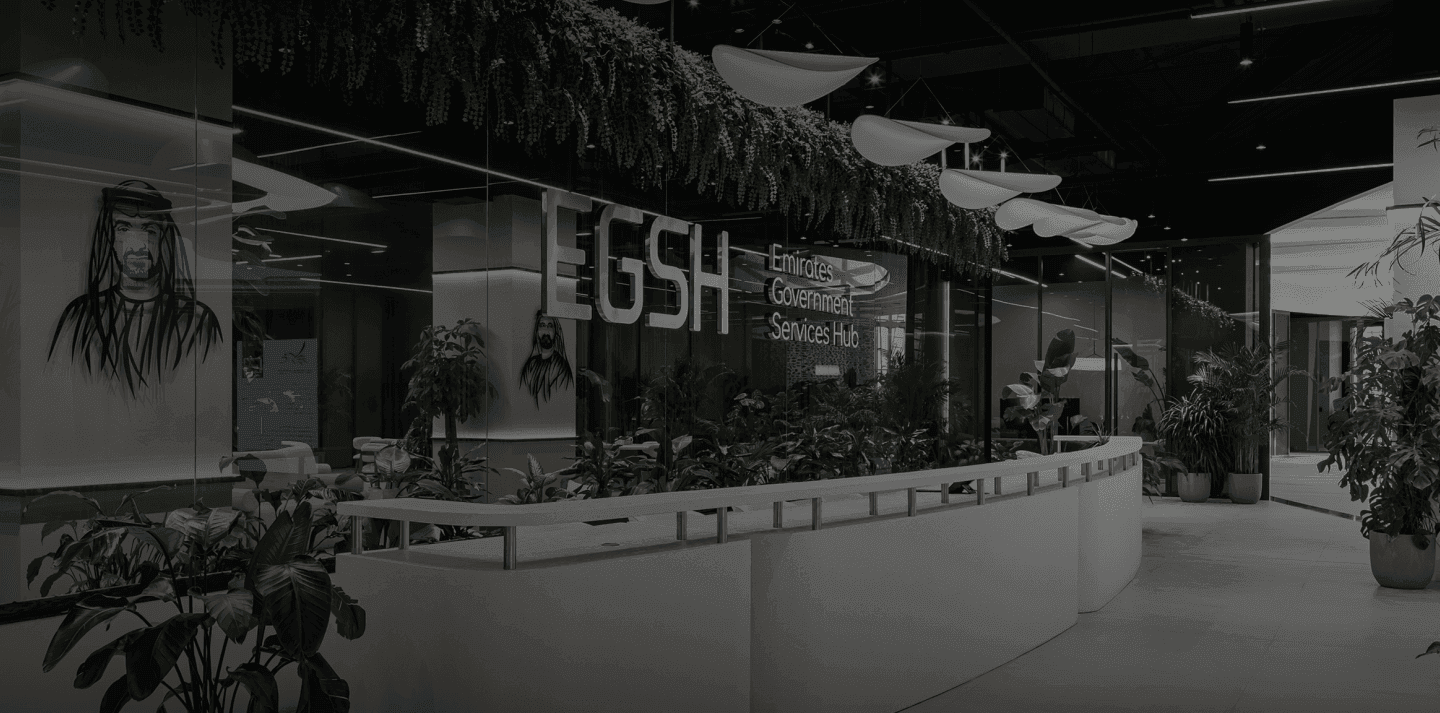
About EGSH
Power of Attorney for Property Transactions in Dubai: Legal Requirements and DLD Compliance
This guide explains how a power of attorney works in Dubai property transactions, covering the types accepted by the Dubai Land Department, DLD Circular No. 29/R/2025 verification requirements, notarisation and attestation procedures, fees, and practical steps for residents and overseas investors.
A power of attorney (POA) for property transactions in Dubai is a notarised legal document that authorises a designated agent to buy, sell, mortgage, or register real estate on behalf of the principal at a Real Estate Registration Trustee centre operated by the Dubai Land Department (DLD).
Following DLD Circular No. 29/R/2025 issued on 16 July 2025, all POAs used in real estate dispositions must undergo mandatory electronic verification, contain transaction-specific wording, and comply with stricter payment disbursement requirements. Whether an overseas investor needs to delegate a property sale remotely or a buyer wants an agent to complete registration formalities, understanding the legal framework governing POAs in Dubai is essential for avoiding delays and ensuring compliance.
Get a Power of Attorney for Property Sale
Officially regulated fees
No hidden charges
Queue-free service
VIP support at no extra cost
From AED 2,200
What Is a Power of Attorney in Dubai Real Estate?
A power of attorney is a written instrument in which one party — the principal or grantor — gives legal authority to another party — the agent or attorney-in-fact — to act on their behalf in a specified matter. In Dubai property transactions, the POA enables the agent to attend a DLD Trustee centre, sign transfer forms, collect or deliver manager's cheques, and finalise registration procedures without the principal being physically present.
For a POA to be legally enforceable in the UAE, it must be prepared in Arabic or accompanied by a certified Arabic legal translation and notarised through the Dubai Courts Notary Public, a licensed private notary, or a competent notarial authority abroad with subsequent attestation. The DLD treats the POA as a delegation of authority, not a transfer of ownership, and the principal retains full legal title until the transaction is formally registered.
The DLD has historically preferred parties to attend in person to minimise the risk of fraud. However, the practical reality of Dubai's international investor base — where property owners frequently reside abroad — has made POAs an essential component of the transaction process. The DLD therefore applies specific rules and restrictions to POAs used in property dispositions, which are significantly stricter than those governing POAs for general legal or administrative purposes.

Types of Power of Attorney Accepted by the DLD
The DLD distinguishes between two primary categories of POA, and the type required depends on the scope and nature of the intended property transaction.
Special Power of Attorney
A Special POA authorises the agent to perform a specific, defined action relating to an identified property. For property sale transactions, the DLD requires a Special POA that explicitly names the property, references the title deed or Oqood certificate number, and includes transaction-specific wording such as "sale of real estate" or "transfer for consideration". The Special POA is the only type accepted by the DLD for sales, purchases, gifts, mortgages, usufruct, and musataha transactions. It must be issued within two years of the date of submission at the Trustee centre, and the principal must present the title deed or initial contract of sale (Oqood) to the notary at the time of notarisation.
General Power of Attorney
A General POA grants the agent broad authority to manage the principal's affairs, including financial, legal, and administrative matters. While a General POA may cover property management activities such as leasing, Ejari registration, and service charge payments, the DLD does not accept a General POA for property sale or transfer transactions. Principals who hold a General POA and intend to sell property must obtain a separate Special POA that satisfies DLD requirements before the Trustee centre will process the transaction.

Get DLD Services in Dubai Through EGSH
Authorised One-Stop Government Services Centre
- All government services in one place
- Completed in one visit
- VIP service without queues
- Regulated government fees

DLD Circular No. 29/R/2025 — Key Requirements
The DLD issued Circular No. 29/R/2025 on 16 July 2025 to introduce comprehensive reforms to the procedures governing POA acceptance and verification in real estate dispositions across Dubai. The Circular applies to all POAs submitted at the DLD or any Real Estate Registration Centre for property transactions including sale, purchase, gift, mortgage, usufruct, and musataha.
Mandatory Electronic Verification
All POAs must now undergo electronic verification through official government portals before the Registrar can proceed with any transaction. QR codes printed on POA documents are no longer sufficient as a standalone method of verification. The Registrar must cross-check the principal's name, Emirates ID number, and passport number against the DLD system to confirm the POA's validity and the principal's identity. If the POA references an expired passport or Emirates ID, the principal must provide a copy of the expired document alongside current identification for verification purposes.

Transaction-Specific Wording
The Circular mandates that every POA submitted for a real estate disposition must contain precise, transaction-specific language. For sale transactions, the POA must explicitly include wording that authorises the agent to sell real estate or transfer property for consideration. Vague or general language that does not clearly reference the intended disposition will result in the POA being rejected at the Trustee centre.
Payment Disbursement Rules
To reduce fraud risk, the Circular prescribes specific rules for the receipt of sale proceeds. When the seller is present, the sale cheque must be issued in the seller's name as recorded on the title deed. When a POA holder is acting on behalf of the seller, the manager's cheque must similarly be issued in the title deed owner's name. A cheque may only be issued in the agent's name if the POA and the sale agreement both explicitly authorise this arrangement and the accompanying receipt confirms that the amount was received on behalf of the seller. This creates a practical challenge for overseas owners who do not maintain a UAE bank account, and such sellers are advised to open a non-resident bank account in the UAE prior to the transaction date.



Why Choose EGSH for Government Services in Dubai

VIP Service
Personal assistance and priority processing with no queues.

Affordable Fees
Official government rates with transparent, fixed pricing.

All Services in One Place
Comprehensive range of UAE government services under one roof.

One-Visit Completion
Most procedures are completed in a single visit to the centre.
How to Obtain a Power of Attorney for Property in Dubai
The process for obtaining a POA depends on whether the principal is located inside or outside the UAE. Both routes require careful attention to language, notarisation, and — where applicable — international attestation.
Step 1 — Draft the POA Document
The POA must be drafted by a qualified legal professional to ensure it meets DLD requirements. The document must be in Arabic or prepared in a bilingual Arabic–English format. It must name the property by reference to the title deed number, plot number, and community, and must include the specific transaction authority required — for example, "sell," "purchase," "mortgage," or "gift." Principals selling property must present the original title deed or electronic title deed confirmation to the notary at the time of drafting.
Step 2 — Notarisation (Inside the UAE)
If the principal is present in the UAE, the POA is notarised at the Dubai Courts Notary Public or through a licensed private notary authorised by the Dubai Courts. The principal must present a valid Emirates ID or passport and the title deed. The notary verifies the principal's identity, witnesses the signature, and registers the POA in the electronic system.

The Dubai Courts Notary Public fees for a General POA are approximately AED 100 per signature, while a Special POA for property transactions is typically AED 100–300 per signature depending on the document value. Licensed private notary fees are higher and include additional service charges of AED 100–1,000 per transaction, plus AED 100 for electronic registration of each party's details and AED 1,000 per transaction as regulated from 2 January 2026.
Step 3 — Remote Notarisation via e-Notary (Inside or Outside the UAE)
The Dubai Courts e-Notary platform allows principals who are unable to attend in person to notarise a POA remotely. The process involves submitting the draft POA and supporting documents by email to the designated Dubai Courts Notary Public address, scheduling a video verification call through the BOTIM application, and presenting identification on camera. Once verified, the notary issues a one-time password (OTP) to confirm the principal's approval. The notarised POA is then issued electronically with a barcode for official verification and emailed to the applicant. Remote notarisation follows the same fee schedule as in-person services, with an additional courier charge if physical delivery is required.
Step 4 — Notarisation and Attestation (Outside the UAE)
If the principal is located outside the UAE, the POA must be notarised by a competent notarial authority in the country where the principal resides. The document then requires legalisation through the following chain: notarisation in the country of origin, attestation by the UAE Embassy or Consulate in that country, and final legalisation by the Ministry of Foreign Affairs and International Cooperation (MOFAIC) in the UAE. MOFAIC attestation fees for personal documents including POAs are AED 150 per document, with standard processing taking one to three working days. Express same-day attestation is available at an additional cost. The original attested document must be presented at the DLD Trustee centre — copies are not accepted.

Visit EGSH for VIP Service Without Queues
You can stop by EGSH during working hours without an appointment or book your visit at a time that suits you best.
Address
Art of Living Mall, Al Barsha 2, Dubai
Operating hours
Monday–Thursday, Saturday: 9:00 am–5:00 pm
Friday: 9:00 am–12:00 pm, 2:00 pm–5:00 pm
Sunday: Closed

Documents Required When Using a POA at the DLD
The agent attending the DLD Trustee centre on behalf of the principal must present a complete set of documents. Missing or incomplete documentation will result in the transaction being delayed or rejected.
The required documents for the POA holder include the original notarised POA (with attestation chain if issued abroad), the principal's Emirates ID or valid passport copy, the original title deed or electronic title deed confirmation, the electronic No Objection Certificate (e-NOC) from the developer, the buyer's identification documents (Emirates ID or passport), the signed Memorandum of Understanding (Form F), and the manager's cheque or cheques for the purchase price and DLD fees.
If the property is subject to a mortgage, additional documentation from the mortgagee bank is required, including a liability letter and discharge confirmation. The DLD Registrar will verify the POA electronically before processing the transaction, and any discrepancies between the POA details and the DLD system records will require resolution before the transfer can proceed.

POA Validity and Restrictions
The DLD applies specific validity rules to POAs used in property transactions that differ from the general rules governing POAs in the UAE.
A Special POA for property sale transactions must have been issued within two years of the date it is presented at the DLD Trustee centre. POAs older than two years will not be accepted, even if the document itself contains no expiry clause. POAs issued inside the UAE and registered in the electronic notary system may technically remain valid indefinitely unless a specific time limit is stated. However, the DLD enforces the two-year window strictly for all sale-related dispositions.
The POA is automatically revoked upon the death of the principal, regardless of whether a specific revocation notice has been issued. The principal may also revoke the POA at any time by executing a notarised cancellation document and submitting it to the Notary Public. If the POA was registered with the DLD, a separate cancellation application must be filed with the Land Department to prevent the agent from using it for further transactions.
Declarations of receiving funds that are included within a POA or submitted as a separate declaration letter are no longer accepted by the DLD following Circular No. 29/R/2025. This means agents cannot unilaterally acknowledge receipt of sale proceeds through a blanket declaration — the specific payment rules outlined in the Circular must be followed.

Common Issues and Misconceptions
Several recurring issues affect POA-based property transactions in Dubai. Understanding these in advance can prevent costly delays.
Using a General POA for Property Sales
One of the most frequent errors is attempting to use a General POA for a property sale. The DLD will reject this outright, and the principal will need to issue a new Special POA before the transaction can proceed. This can cause significant delays, particularly for overseas owners who must go through the embassy attestation and MOFAIC legalisation process again.
Expired Passport Referenced in the POA
If the POA was notarised using a passport that has since expired, the agent must bring both the expired passport copy and the current valid passport to the Trustee centre. The DLD Registrar will cross-reference both documents against the system to verify the principal's identity. Failure to bring the expired document can result in the POA being rejected.

Manager's Cheque in the Wrong Name
Under the DLD's current rules as set out in Circular No. 29/R/2025, the manager's cheque for property sale proceeds must be issued in the name of the title deed owner. Cheques issued in the POA holder's name will be rejected unless the POA and the sale agreement both explicitly authorise payment to the agent and the receipt confirms it was received on behalf of the seller. Overseas sellers who do not hold a UAE bank account should arrange to open a non-resident account well before the transfer date.
Missing Arabic Translation
A POA prepared entirely in English without a certified Arabic translation will not be accepted by the Dubai Courts Notary Public or the DLD. The translation must be prepared by a UAE-licensed legal translator and presented alongside the original document.

Using a POA for Different Types of Property Transactions
The DLD accepts POAs for a range of real estate dispositions beyond standard sales. Each transaction type has specific requirements that the POA must address.
For property purchases, the POA must authorise the agent to purchase real estate, sign the sale and purchase agreement, pay the purchase price, and register the property in the principal's name. For off-plan purchases registered through the Oqood system, the POA must reference the specific project and unit.
For sale registration involving secondary market transactions, the POA must include authority to sign the Form F, attend the Trustee centre, present identification, and receive or deliver manager's cheques in accordance with the Circular's payment rules.

For mortgage transactions, the POA must specifically authorise the agent to execute mortgage documentation, sign bank undertakings, and register the mortgage with the DLD on behalf of the principal.
For gift transactions, the POA must include authority to gift the specified property and must identify the intended recipient. Gift transfers between first-degree relatives benefit from a reduced DLD fee of 0.125% of the property value rather than the standard 4%.
Frequently Asked Questions
What type of POA does the Dubai Land Department accept for property sales?
The DLD requires a Special POA for all property sale and transfer transactions. The document must reference the specific property by title deed number and include transaction-specific wording such as "sale of real estate" or "transfer for consideration." General POAs are not accepted for sales.
How long is a power of attorney valid for property transactions in Dubai?
A Special POA used for property sale transactions must have been issued within two years of the date it is submitted at the DLD Trustee centre. POAs older than two years will be rejected, regardless of whether the document includes an expiry date.
Can I use a POA issued outside the UAE for a Dubai property transaction?
Yes. A POA issued abroad is accepted provided it was notarised by a competent authority in the country of origin, legalised by the UAE Embassy or Consulate, and attested by MOFAIC. The original attested document must be presented at the Trustee centre, and it must include a certified Arabic translation if not originally in Arabic.
Can the manager's cheque be issued in the POA holder's name instead of the property owner?
Under Circular No. 29/R/2025, the manager's cheque must generally be issued in the title deed owner's name. It may only be issued in the agent's name if both the POA and the sale agreement explicitly authorise this and the receipt confirms the amount was received on behalf of the seller.
How much does it cost to notarise a property POA in Dubai?
The Dubai Courts Notary Public fees for a Special POA start at AED 100–300 per signature. Licensed private notary fees are higher, typically AED 1,000–1,900 per transaction plus electronic registration charges. Legal drafting and translation fees are additional.
Can I notarise a power of attorney remotely using the Dubai Courts e-Notary?
Yes. The Dubai Courts e-Notary platform allows remote notarisation through a video verification call via the BOTIM application. The applicant submits documents by email, completes identity verification on camera, and receives the notarised POA electronically.
What happens if the passport referenced in the POA has expired?
If the POA was issued using a passport that has since expired, the agent must present both the expired passport copy and the current valid passport at the Trustee centre. The DLD Registrar will cross-reference both documents to verify the principal's identity before accepting the POA.
Can a POA holder receive sale proceeds on behalf of the property owner?
Only if the POA and the sale agreement both explicitly authorise the agent to receive funds and the payment receipt confirms the amount was received on behalf of the seller. Otherwise, all sale proceeds must be directed to the title deed owner's bank account.

Official Sources and References
The following government authorities were cited in this article:
- Dubai Land Department (DLD) — Regulates property registration, transfer fees, and POA acceptance standards for all real estate transactions in Dubai.
- Dubai Courts — Operates the Notary Public and e-Notary platform for notarisation of POAs and other legal documents in the Emirate of Dubai.
- Ministry of Foreign Affairs and International Cooperation (MOFAIC) — Provides attestation services for documents issued abroad that are required for official use in the UAE.
Important Notice
The information in this article reflects regulations and procedures applicable as of February 2026. Government policies, fees, and procedural requirements are subject to change at any time based on new DLD circulars, Dubai Courts decisions, or federal legislation. All property transactions and POA submissions are subject to approval by the relevant government authority. EGSH, as an authorised DLD trustee centre, facilitates applications through authorised departments but does not guarantee outcomes or override government decisions. Readers are advised to verify current requirements directly with the Dubai Land Department or the Dubai Courts before proceeding with any transaction.



