


About EGSH
Can Foreigners Buy Property on Instalments in Dubai?
Yes. Foreign nationals may purchase freehold property in designated areas of Dubai under Law No. 7 of 2006 Concerning Real Property Registration in the Emirate of Dubai. This legislation grants non-UAE and non-GCC nationals the right to acquire freehold ownership, usufruct, or leasehold interests for up to 99 years within areas designated by the Ruler of Dubai.
Designated freehold areas include Dubai Marina, Downtown Dubai, Palm Jumeirah, Jumeirah Village Circle, Business Bay, Dubai Hills Estate, and Arabian Ranches, among others. The Dubai Land Department (DLD) oversees all property registrations and title transfers, ensuring transparency and legal protection for every buyer regardless of nationality. Foreign nationals can purchase on instalment plans — our guide on buying property in Dubai as a foreigner explains eligibility for instalment and mortgage-backed purchases.
Instalment purchases are available through two primary routes: developer payment plans for off-plan and newly completed properties, and bank mortgage financing for ready properties. Developer plans are the most common route for instalment buyers because they typically require no income verification, no credit checks, and no interest charges. The Real Estate Regulatory Agency (RERA), the regulatory arm of the DLD, monitors all developer sales and enforces mandatory escrow account requirements to protect buyer funds during construction.
Register Your Initial Sale in Dubai
Officially regulated fees
No hidden charges
Queue-free service
VIP support at no extra cost
From AED 2,625
Explore EGSH Services
What Types of Instalment Payment Plans Are Available in Dubai?
Dubai offers several instalment structures, each suited to different buyer profiles and financial circumstances. The three main categories are off-plan construction-linked plans, post-handover plans, and rent-to-own arrangements.
Off-Plan Payment Plans During Construction
Off-plan payment plans link instalments to verified construction milestones. Buyers pay a percentage of the property price at each stage — foundation, structure completion, finishing, and handover. These plans are interest-free and typically span two to three years depending on the project timeline. Common structures include 60/40, 50/50, and 80/20 splits between pre-handover and handover payments.
Post-Handover Payment Plans
Post-handover plans allow buyers to continue paying after receiving their keys. A typical arrangement involves paying 30–40% during construction, settling a portion at handover, and spreading the remaining balance over two to five years after taking possession. Some developers offer 1% monthly payment schemes, extending the total payment period to five to eight years. These plans are interest-free and provide flexibility for buyers who wish to generate rental income from the property while completing their payments.
Rent-to-Own Arrangements
A smaller but growing segment of the market, rent-to-own agreements allow tenants to convert a portion of their monthly rent towards the eventual purchase of the property. Terms and availability vary by developer, and eligibility conditions differ from standard payment plans.

Get DLD Services in Dubai Through EGSH
Authorised One-Stop Government Services Centre
- All government services in one place
- Completed in one visit
- VIP service without queues
- Regulated government fees

How Do Escrow Accounts Protect Buyers in Dubai?
Every off-plan project in Dubai must have a dedicated escrow account before the developer may begin sales or collect any buyer payments. This requirement was established by Law No. 8 of 2007 Concerning Escrow Accounts for Real Estate Development in the Emirate of Dubai.
An escrow account is a segregated bank account opened in the name of a specific development project. All buyer payments must be deposited into this account, and the developer cannot access these funds for unrelated purposes. Funds are released to the developer only after an independent engineer verifies that a construction milestone has been completed and RERA approves the disbursement.
The DLD maintains a register of approved escrow agents. Banks authorised to manage escrow accounts include Emirates NBD, Dubai Islamic Bank, Mashreq Bank, Abu Dhabi Islamic Bank, and Commercial Bank of Dubai.

Article 14 of Law No. 8 of 2007 requires the escrow agent to retain 5% of the total escrow amount for one year after project completion. This retention serves as a defect liability guarantee, ensuring that the developer addresses any construction defects that appear within the first year after handover.
If a project is cancelled or fails to progress, RERA can intervene to freeze the escrow funds, appoint an alternative developer to complete the project, or initiate refunds to buyers directly from the escrow balance. Buyers can verify a project's escrow account status through the Dubai REST app or the DLD website at any time.
Insider Tip: Before signing the Sales and Purchase Agreement (SPA), verify the project's escrow account number through the Dubai REST app or the DLD portal. Every off-plan project has a unique escrow account, and all payments should go directly into it — never to a developer's general account or a sales agent.

Why Choose EGSH for Government Services in Dubai

VIP Service
Personal assistance and priority processing with no queues.

Affordable Fees
Official government rates with transparent, fixed pricing.

All Services in One Place
Comprehensive range of UAE government services under one roof.

One-Visit Completion
Most procedures are completed in a single visit to the centre.
What Is Oqood and Why Does It Matter for Off-Plan Buyers?
Oqood — meaning "contracts" in Arabic — is the DLD's provisional registration system for off-plan property transactions. Managed through RERA's Real Estate Developers Portal, Oqood records every sale contract for properties still under construction.
When a buyer signs an SPA for an off-plan unit, the developer must register the contract via Oqood within the deadline specified by the DLD. Upon successful registration, the system issues a provisional registration e-Certificate (commonly referred to as an Oqood certificate), which confirms that the transaction has been entered into the DLD's provisional register. This certificate serves as interim proof of ownership during the construction phase.

An Oqood certificate enables the buyer to resell the unit (subject to developer requirements and minimum payment thresholds, typically 30–40% of the property value), apply for an investor visa in Dubai, and connect DEWA utilities.
The Oqood registration fee is 4% of the property value, split equally between seller and buyer (2% each) in standard practice, plus AED 10 Knowledge Fee and AED 10 Innovation Fee. Upon project completion and final payment, the Oqood certificate converts to a full title deed issued by the DLD.
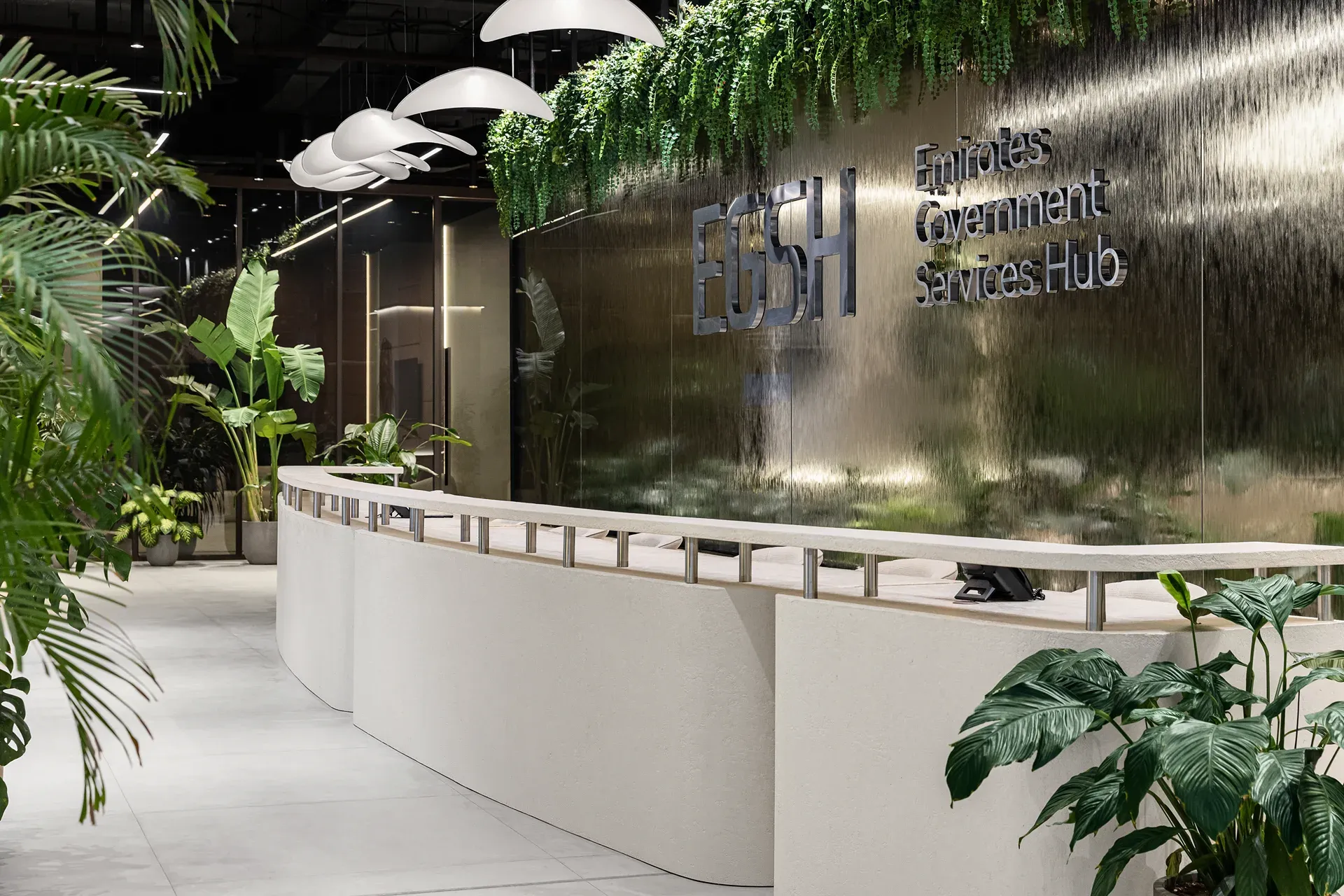
Visit EGSH for VIP Service Without Queues
You can stop by EGSH during working hours without an appointment or book your visit at a time that suits you best.
Address
Art of Living Mall, Al Barsha 2, Dubai
Operating hours
Monday–Thursday, Saturday: 9:00 am–5:00 pm
Friday: 9:00 am–12:00 pm, 2:00 pm–5:00 pm
Sunday: Closed

How to Buy Property in Dubai on Instalments: Step-by-Step Process
Step 1 — Choose the Property and Developer
Research designated freehold areas and shortlist projects. Verify that the developer is registered with RERA and that the project has an approved escrow account. Use the Dubai REST app to confirm the project's registration status.
Step 2 — Reserve the Unit
Pay the booking fee, which typically ranges from 10% to 20% of the property price. This amount is credited towards your total purchase price.
Step 3 — Sign the Sales and Purchase Agreement
The SPA must be signed within 30 days of reservation. Instalment plans typically begin with the Form F (MOU) and a 10% deposit — subsequent payments follow the developer's schedule. Review the payment schedule, handover timeline, cancellation terms, and penalty clauses carefully. RERA has introduced a standardised SPA template for off-plan transactions to ensure fair terms for both parties.
Step 4 — Pay DLD Fees
The 4% DLD registration fee and associated administrative charges are payable at this stage. Payment can be made via the Noqodi payment gateway, manager's cheque, or card, depending on the service type.
Step 5 — Oqood Registration
The developer registers the contract via the Oqood portal. The buyer receives a provisional registration e-Certificate by email, confirming the transaction is recorded in the DLD's provisional register. If you need assistance with off-plan property purchase in Dubai, EGSH can support the registration process.
Step 6 — Make Instalment Payments
Pay according to the agreed schedule. All payments must go directly into the project's escrow account. Retain proof of every payment for your records.
Step 7 — Receive Handover
Upon project completion, conduct a snag inspection to identify any defects. The developer must address reported issues before final handover.
Step 8 — Obtain the Title Deed
The final sale registration in Dubai takes place once all instalments are paid and the developer issues the completion certificate. After final payment, the Oqood certificate converts to a full title deed. The DLD charges AED 250 for the title deed and AED 250 for the property map at this stage. EGSH provides DLD sale registration and title deed services to streamline this final step.
Developer Instalments vs Bank Mortgage: Which Is Better?
The choice between a developer payment plan and a bank mortgage depends on the buyer's financial profile, the property type, and the intended ownership timeline. Each option carries distinct advantages and trade-offs.
Mortgage rates in the UAE vary depending on the lender, borrower profile, property type, and whether the rate is fixed or variable. Buyers should obtain current quotes from multiple banks before committing to a mortgage product. Down payment requirements are guided by UAE Central Bank regulations but may differ depending on the lender, property type, and the applicant's residency status. The mortgage registration fee is 0.25% of the loan amount plus AED 290, payable to the DLD.
Common Mistake: Many buyers assume developer instalment plans are always cheaper than mortgages because they are interest-free. However, developers often price instalment units 5–10% higher than the equivalent cash purchase price. Always compare the total cost of ownership, not merely the payment structure.
What Are the Risks of Buying Property on Instalments?
Instalment purchases, particularly off-plan, carry risks that buyers should assess before committing.
Construction delays remain possible despite RERA oversight. The escrow system mitigates financial exposure, but buyers should review the SPA's delay and compensation clauses carefully.
Developer default is addressed by the escrow framework. If a project stalls, RERA can freeze escrow funds, appoint a replacement developer, or initiate buyer refunds. Decree No. 33 of 2020 established a Special Tribunal for Cancelled Real Estate Projects to manage orderly liquidation and refund processes.
Market value fluctuations affect all property purchases. The purchase price is locked at the time of the SPA, and the property may appreciate or depreciate before handover.
Payment default by the buyer triggers penalties defined in the SPA. The developer must notify the DLD of a buyer's default and provide a 30-day notice to remedy the breach before termination can proceed. Repeated default may result in contract cancellation and a partial refund minus the developer's retention amount.
Higher total price is common with instalment plans. As noted above, developer pricing for instalment units may carry a 5–10% premium over cash purchases.

How EGSH Helps Property Buyers in Dubai
The Emirates Government Services Hub (EGSH) is an authorised government services centre in Dubai that facilitates property-related transactions through authorised DLD departments. EGSH services for property buyers include Oqood registration and amendments, pre-title deed issuance, property sale registration, property ownership transfer, property status inquiries, and escrow account verification assistance.
Final approvals and decisions remain with the relevant UAE government authority. EGSH facilitates the submission and processing of applications to help buyers complete their registration requirements efficiently.
Contact EGSH to complete your property registration in a single visit.

Frequently Asked Questions
Can non-residents buy property on instalments in Dubai?
Yes. Non-residents may purchase off-plan properties on developer payment plans in designated freehold areas under Law No. 7 of 2006. No UAE residency is required for instalment-based purchases through developer plans.
What is the minimum down payment for buying on instalments?
Developer payment plans typically require 10–20% of the property value as an initial down payment. Bank mortgage down payment requirements are guided by UAE Central Bank regulations and vary depending on the lender, property value, property type, and the applicant's residency status. Buyers should confirm current requirements directly with their chosen lending institution.
Are instalment payments to developers interest-free?
Yes. Developer instalment plans are typically interest-free. However, the listed property price under an instalment plan may include a premium of 5–10% compared with the cash purchase price.
What happens if I miss an instalment payment?
Penalties depend on the terms of the SPA. The developer must notify the DLD and issue a 30-day notice for the buyer to remedy the breach. Repeated defaults may result in contract cancellation and a partial refund minus the developer's retention amount.
Can I sell my off-plan property before completion?
Yes. Resale is permitted after meeting the developer's minimum payment requirement (typically 30–40% of the property value) and obtaining a No Objection Certificate (NOC). The property must be registered with Oqood, and the resale must be processed through the DLD system.
What is the difference between Oqood and a title deed?
Oqood is the provisional registration certificate issued by the DLD for off-plan properties during the construction phase. A title deed is the final ownership document issued after project completion and full payment. The Oqood certificate converts to a title deed upon handover and settlement of all outstanding amounts.

Official Sources and References
- The Dubai Land Department (DLD) — Government authority responsible for regulating and overseeing all real estate transactions, registrations, and property-related services in Dubai.
- The Real Estate Regulatory Agency (RERA) — Regulatory arm of the DLD responsible for licensing developers, monitoring escrow accounts, and enforcing off-plan sales regulations.
- Law No. 7 of 2006 Concerning Real Property Registration in the Emirate of Dubai — Governs real estate ownership rights, including foreign freehold ownership in designated areas.
- Law No. 8 of 2007 Concerning Escrow Accounts for Real Estate Development in the Emirate of Dubai — Establishes mandatory escrow account requirements for all off-plan property developments.
- Law No. 13 of 2008 Regulating the Interim Real Estate Register in the Emirate of Dubai — Governs the Oqood provisional registration system for off-plan property transactions.
- The UAE Central Bank — Regulates mortgage lending standards, loan-to-value ratios, and down payment requirements for property financing in the UAE.
Important Notice
The information in this article is accurate as of February 2026 and is provided for general guidance purposes only. Fees, thresholds, eligibility criteria, and regulatory requirements are subject to change at the discretion of the relevant UAE government authorities. Final approval of any property transaction, registration, or visa application rests with the competent government authority. Buyers are advised to verify all information directly with the Dubai Land Department, RERA, or other relevant authorities before making financial commitments. This article does not constitute legal, financial, or investment advice.



