



Musataha and Usufruct Rights in Dubai — Overview
Musataha rights in Dubai allow an investor to construct, own, and benefit from a building erected on land belonging to another party for a maximum term of 50 years, as defined under Article 1353 of the UAE Civil Code (Federal Law No. 5 of 1985). The Dubai Land Department (DLD) registers musataha as a right in rem in the Real Property Register, making it legally enforceable against third parties.
Usufruct rights, by contrast, grant the right to use and benefit from an existing property, without the right to construct, for up to 99 years. Both rights create a legal structure in which the holder owns or occupies a building without holding freehold title to the underlying land, and both must be registered with the DLD to have legal effect under Law No. 7 of 2006 Concerning Real Property Registration in the Emirate of Dubai.

Explore EGSH Government Services in Dubai
What Musataha Means in UAE Property Law
Musataha is a property right rooted in the UAE Civil Code. Article 1353 defines it as a right in rem that confers upon its holder the authority to build a structure or plant on land owned by another party. The musataha holder (musatahee) acquires ownership of the buildings constructed during the term of the agreement, and Article 1357 permits the musatahee to assign or transfer these buildings, together with the musataha right itself, to a third party. Article 1359 further clarifies that the musataha right does not terminate merely because buildings on the land have been removed before the agreement expires.
The maximum duration of a musataha under the Civil Code is 50 years. If the agreement is silent on the term, either party may terminate by giving two years' prior written notice, as stipulated in Article 1356. Failure to pay the agreed consideration for two consecutive years also constitutes grounds for termination unless the parties have agreed otherwise.
For commercial and industrial land owned directly or indirectly by the Government of Dubai, Decree No. 23 of 2022 Regulating the Grant of Musataha Rights over Commercial Land in the Emirate of Dubai introduced additional rules. Under this Decree, the initial musataha term must not exceed 35 years, although it may be extended to a maximum of 50 years with the landowner's consent. The musatahee must complete construction within five years from the date of registration; failure to do so may result in fines or termination of the agreement.

Usufruct Rights — Using Property Without Owning It
Article 1333 of the UAE Civil Code defines usufruct as a right in rem that entitles its holder to use and exploit the property of another, provided the property remains in its original condition. Unlike musataha, usufruct does not grant the right to construct or materially alter the property. Upon termination, Article 1341 requires the usufructuary to return the property in its original state, subject to reasonable wear and tear.
Usufruct rights in Dubai may be granted for up to 99 years, in accordance with Article 4 of Law No. 7 of 2006, which permits non-UAE nationals in designated areas to acquire usufruct or leasehold rights for this maximum duration. A usufruct terminates upon expiry of the agreed term, destruction of the property, waiver by the usufructuary, court order due to misuse, or consolidation of ownership — that is, if the usufructuary purchases the freehold title.
Usufruct is widely used in residential developments where foreign investors acquire long-term usage rights over apartments or villas without holding freehold title to the land. It is also the standard structure in certain older communities and in some free zone developments across Dubai.

Get DLD Services in Dubai Through EGSH
Authorised One-Stop Government Services Centre
- All government services in one place
- Completed in one visit
- VIP service without queues
- Regulated government fees

DLD Registration Process for Musataha and Usufruct Rights
Both musataha and usufruct rights must be registered with the DLD to be legally valid. An unregistered musataha agreement is void under Decree No. 23 of 2022, and unregistered usufruct rights are not enforceable against third parties under Law No. 7 of 2006.
Registration is processed through authorised Real Estate Services Trustee centres.
Required Documents
For individuals, the DLD requires the following documentation: a valid electronic No Objection Certificate (eNOC) from the developer in freehold areas (obtained via the Dubai REST App), the UAE ID of the seller (presented for identification only), or a valid passport for non-resident foreigners. If a representative is acting on behalf of a party, a legal power of attorney valid in the UAE must be submitted.
For companies, an unregistered entity must first complete a company registration procedure with the relevant licensing authority before proceeding with the musataha or usufruct registration.
Processing Steps at a Trustee Centre
The registration follows a standardised procedure at authorised DLD trustee centre:
- The applicant visits the trustee centre and submits all required documents.
- An authorised employee verifies the documentation and confirms that no documents are missing. All required documents are uploaded via the DLD digital safe.
- The transaction details are entered into the DLD system by the employee, and the submission undergoes an audit.
- The applicant pays the applicable fees and receives a payment receipt.
- The title deed, property map, and registration confirmation are delivered to the applicant via email.
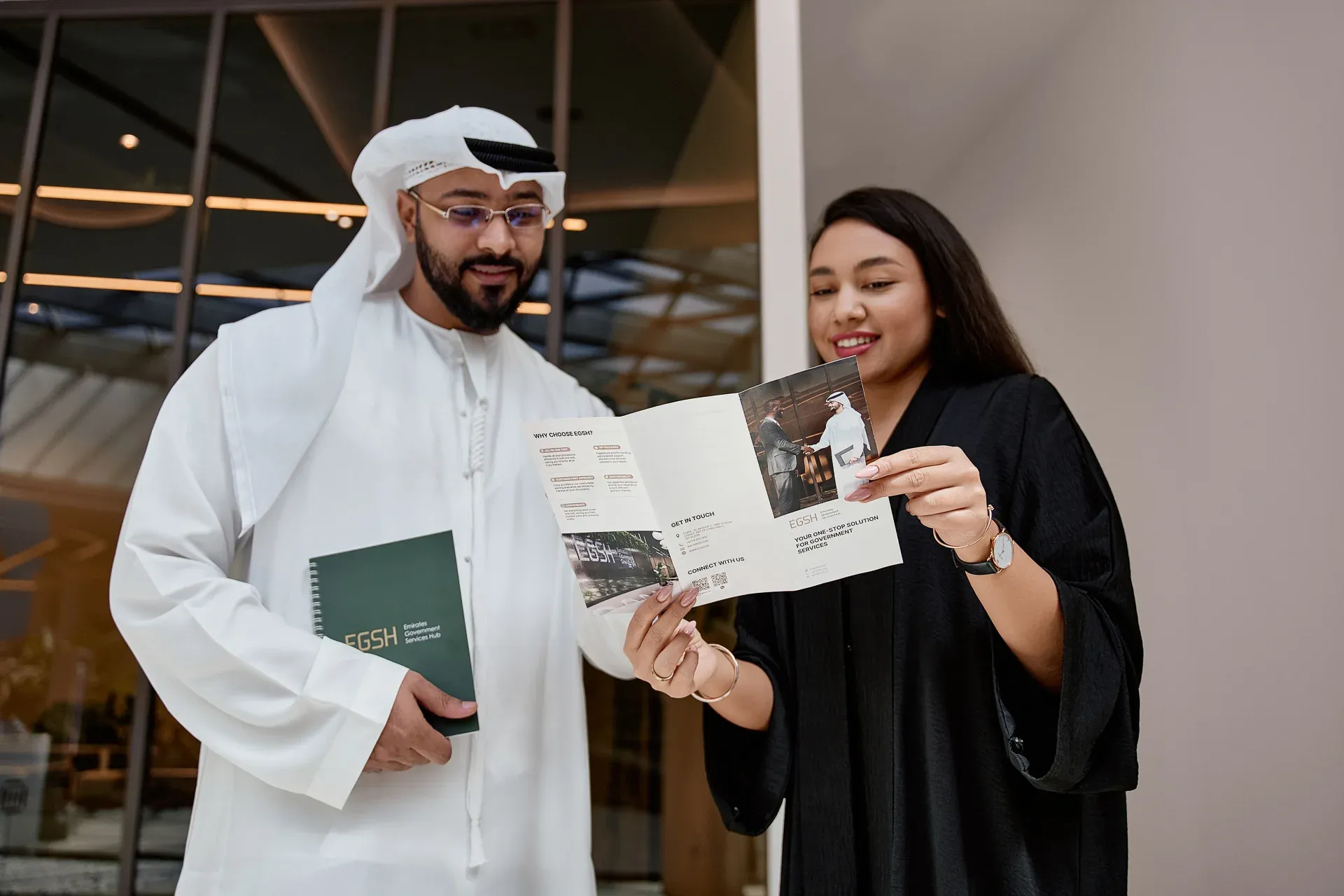


Why Choose EGSH for Government Services in Dubai

VIP Service
Personal assistance and priority processing with no queues.

Affordable Fees
Official government rates with transparent, fixed pricing.

All Services in One Place
Comprehensive range of UAE government services under one roof.

One-Visit Completion
Most procedures are completed in a single visit to the centre.
Mortgage Provisions for Musataha and Usufruct Holders
Building ownership under a musataha arrangement can be financed through conventional bank mortgages, subject to specific legal restrictions. Article 21 of Law No. 14 of 2008 Concerning Mortgage in the Emirate of Dubai permits a musataha holder to mortgage the buildings or plants on the land for the duration of the musataha. However, the musataha holder cannot mortgage the underlying land unless the parties have specifically agreed to this in the musataha contract.
For usufruct holders, Article 22 of the same law allows the holder of a usufruct or long-term lease with a duration between 10 and 99 years to mortgage the real property interest for the remaining term of the agreement. In both cases, Article 23 stipulates that the mortgage terminates automatically upon either repayment of the secured debt or expiry of the musataha, usufruct, or lease term — whichever occurs first.
The mortgage must be registered with the DLD to be enforceable. EGSH processes mortgage registration transactions at standard government fees, including the DLD registration charge of 0.25% of the loan amount.
Lenders evaluating musataha-backed assets should note that the finite term of the musataha directly affects loan-to-value ratios and the maximum mortgage tenure. As the remaining musataha term decreases, refinancing or resale options may narrow. Investors considering financing should also understand the broader mortgage registration process in Dubai.

What Happens When a Musataha Expires
The expiry of a musataha right triggers provisions under Article 1360 of the UAE Civil Code, which refers to Article 785. Under this framework, the landowner may either require the musataha holder to remove the buildings at the holder's expense or choose to retain the structures.
If the landowner opts to keep the buildings, the musataha holder is typically entitled to compensation. If the landowner requires removal, the musataha holder bears the cost of demolition and must restore the land to its original condition. Given the commercial significance of these obligations, it is essential that the musataha agreement explicitly addresses make-good provisions, including the allocation of removal costs, the timeframe for vacating the land, the condition in which the land must be returned, and any compensation payable if the landowner retains the buildings.
Under Decree No. 23 of 2022, which applies specifically to commercial and industrial government-owned land, building ownership transfers to the landowner (the Government of Dubai) upon the end of the musataha term, unless the contracting parties have agreed otherwise. Renewal applications must be submitted to the landowner at least two years before the expiry date, unless alternative arrangements have been agreed.
For usufruct rights, the position is more straightforward: the property is returned to the owner in its original condition, subject to normal wear and tear, and any improvements made by the usufructuary revert to the landowner unless the agreement states otherwise.

When Musataha and Usufruct Structures Are Used in Practice
Musataha agreements are commonly adopted in build-operate-transfer (BOT) projects, where private investors construct facilities — such as hospitals, schools, hotels, or commercial centres — on government-owned or privately held land. The musataha structure allows the developer to own the building, generate revenue from it, and dispose of units during the term, while the landowner retains title to the underlying plot.
In Dubai's free zone framework, some free zone authorities grant occupancy rights structured as musataha or long-term lease arrangements rather than freehold title. Investors in these zones hold development rights and building ownership but do not own the land in perpetuity.
Usufruct rights are frequently used in residential developments in non-freehold areas, where foreign purchasers acquire long-term usage rights over existing units. Some older Dubai communities and several developments in other emirates also operate on a usufruct or long-term leasehold basis. For investors holding property under these arrangements, the title deed will reflect the nature of the right — whether freehold, musataha, or usufruct — and the remaining term.
Investors contemplating a purchase should verify the type of property right being offered and confirm it in the DLD records before completing the transaction. A property advertised as "ownership" may, on closer inspection, be structured as a musataha or usufruct with a finite term.

Visit EGSH for VIP Service Without Queues
You can stop by EGSH during working hours without an appointment or book your visit at a time that suits you best.
Address
Art of Living Mall, Al Barsha 2, Dubai
Operating hours
Monday–Thursday, Saturday: 9:00 am–5:00 pm
Friday: 9:00 am–12:00 pm, 2:00 pm–5:00 pm
Sunday: Closed

Key Legal Considerations for Investors
Due Diligence Before Acquisition
Before acquiring a musataha or usufruct right, investors should verify the remaining term of the agreement, any outstanding obligations owed to the landowner, the existence of registered mortgages or encumbrances, the permitted use of the property under the agreement, and whether the right can be transferred or sub-assigned. A title deed verification through the DLD system confirms the registered right, its holder, and any encumbrances.
Transfer and Resale
Musataha rights, together with the buildings constructed on the land, can be assigned or transferred to third parties under Article 1357 of the UAE Civil Code. Decree No. 23 of 2022 further permits off-plan sales of units being constructed on commercial land under a musataha arrangement, subject to the issuance of a completion certificate. Resale of a musataha on built-up land attracts a DLD fee of 4% of the building value plus 1% of the musataha area value.
Visa Eligibility
Musataha and usufruct rights do not qualify for property-linked residency visas, including the Golden Visa, which requires freehold ownership of property valued at AED 2 million or more. Investors seeking residency through property investment must acquire freehold title registered with the DLD. Further details on visa pathways through property are available in the Golden Visa through property investment guide.

Frequently Asked Questions
What is the difference between musataha and usufruct in Dubai?
Musataha grants the right to build a structure on another party's land and own that structure for up to 50 years. Usufruct grants the right to use and benefit from an existing property, without the right to construct, for up to 99 years. Both are rights in rem registered with the DLD.
Can a musataha holder mortgage the building?
Yes. Article 21 of Law No. 14 of 2008 permits a musataha holder to mortgage buildings erected on the land for the duration of the musataha term. The underlying land cannot be mortgaged unless the musataha agreement specifically allows it.
What happens to the building when the musataha expires?
Under the UAE Civil Code, the landowner may require the musataha holder to remove the building or may choose to retain it. Under Decree No. 23 of 2022, building ownership transfers to the landowner upon expiry unless the parties have agreed otherwise. Compensation provisions should be addressed in the musataha agreement.
Do musataha or usufruct rights qualify for the Golden Visa?
No. The Golden Visa through property investment requires freehold ownership of property valued at AED 2 million or more. Musataha and usufruct rights do not meet this requirement.
What is the DLD registration fee for a musataha?
The initial musataha registration fee is 1% of the contract value. Resale of a musataha on built-up land incurs a fee of 4% of the building value plus 1% of the musataha area value. Additional fees apply for title deed issuance, property maps, and service partner charges.
Can foreigners hold musataha rights in Dubai?
Yes. Non-UAE nationals may acquire musataha, usufruct, or leasehold rights for up to 99 years in designated areas, as provided under Article 4 of Law No. 7 of 2006 and Regulation No. 3 of 2006.

Official Sources and References
The following government authorities and legislative sources were referenced in this article:
- Dubai Land Department (DLD) — The sole authority responsible for real property registration, title deed issuance, and regulation of real estate transactions in Dubai.
- Dubai Legislation Portal — The official repository for all Dubai-level legislation, including Law No. 7 of 2006, Law No. 14 of 2008, and Decree No. 23 of 2022.
- Federal Authority for Identity, Citizenship, Customs and Port Security (ICP) — The federal authority responsible for residency visa issuance, including the Golden Visa programme.
- UAE Civil Code (Federal Law No. 5 of 1985) — The primary federal legislation governing civil transactions, including property rights under Articles 1333–1360.
Important Notice
The information in this guide is current as of the date of publication and is provided for general informational purposes. Fees, eligibility criteria, and procedural requirements are subject to change by the relevant government authorities. All final decisions regarding musataha and usufruct registration, visa issuance, and mortgage approval rest with the Dubai Land Department, ICP, and the respective lending institutions. Applicants are advised to verify the latest requirements directly with the relevant authority or through an authorised DLD trustee centre such as EGSH before proceeding.



