



Published 04.12.2025
Updated 28.09.2026
About EGSH
Legal Framework for Foreign Property Ownership in Dubai
Foreigners can buy property in Dubai. Both non-resident foreigners and expatriate residents may acquire freehold ownership rights over property without restriction in designated areas of the emirate, as established under Regulation No. 3 of 2006 Determining Areas for Ownership by Non-Nationals of Real Property in the Emirate of Dubai. The Dubai Land Department (DLD) administers all property transactions and issues title deeds to foreign owners.
The standard DLD transfer fee is 4% of the purchase price. Foreign buyers who own completed property in Dubai may qualify for a two-year renewable residence visa through the DLD's Taskeen programme, whilst those investing AED 2,000,000 or more may be eligible for a 10-year Golden Visa. There is no age limit for property ownership in Dubai, and no annual property tax applies to residential properties.
Register a Property Sale in Dubai
Officially regulated fees
No hidden charges
Queue-free service
VIP support at no extra cost
0
starting from
Who Can Buy Property in Dubai?
Dubai's property market is open to buyers of virtually any nationality, residency status, or age. The UAE federal portal confirms that both non-residents and expatriate residents may acquire freehold ownership, usufruct rights, or leasehold rights for up to 99 years in designated areas.
The key categories of eligible buyers are as follows:
- Expatriate residents holding a valid UAE residence visa can purchase freehold property in any designated area. No additional permit or approval is required beyond the standard DLD registration process.
- Non-resident foreigners who do not hold a UAE visa can also purchase freehold property. A valid passport is the only identification document required for registration. The DLD's Property Sale Registration service page confirms that a valid passport for non-resident foreigners is accepted as an alternative to Emirates ID.
- GCC nationals from member states of the Gulf Cooperation Council are not limited to designated freehold areas and may purchase property anywhere in Dubai.
Minors can be registered as property owners. The UAE federal portal confirms there is no age limit to own property in Dubai.
Companies — both free zone and mainland entities — can acquire freehold property in designated areas, provided the company is registered with the DLD. A company registration request must be submitted before the transaction can proceed.
There are no nationality restrictions. Buyers from any country may acquire freehold property in designated areas, subject to standard DLD procedures and documentation requirements.

Get DLD Services in Dubai Through EGSH
Authorised One-Stop Government Services Centre
- All government services in one place
- Completed in one visit
- VIP service without queues
- Regulated government fees

What Types of Property Can Foreigners Buy in Dubai?
Foreign buyers can acquire property in Dubai under several ownership structures. Regulation No. 3 of 2006 grants non-UAE nationals the right to acquire freehold ownership rights without time restriction, usufruct rights, or leasehold rights for up to 99 years in designated areas.
Freehold ownership is the most common structure for foreign buyers. It provides unlimited ownership of both the property and the underlying land. Freehold property is inheritable, sellable, and can be leased to tenants. The DLD issues a title deed confirming full ownership rights. For a detailed comparison of ownership structures, see the EGSH guide on freehold and leasehold ownership in Dubai.

Usufruct grants the right to use and benefit from a property for a fixed term of up to 99 years. The holder may occupy or lease the property but does not own the underlying land. Usufruct rights are registered with the DLD.
Leasehold similarly provides long-term occupancy rights for up to 99 years. The leaseholder does not acquire ownership of the land, and any structural alterations typically require the freeholder's consent.
Musataha is a development right that entitles the holder to build on or alter land belonging to another party for a fixed term. This structure is less common for individual residential buyers and is primarily used in development contexts.



Why Choose EGSH for Government Services in Dubai

VIP Service
Personal assistance and priority processing with no queues.

Affordable Fees
Official government rates with transparent, fixed pricing.

All Services in One Place
Comprehensive range of UAE government services under one roof.

One-Visit Completion
Most procedures are completed in a single visit to the centre.
Where Can Foreigners Buy Property in Dubai? Designated Freehold Areas
Foreign ownership of freehold property in Dubai is permitted only within areas specifically designated under Regulation No. 3 of 2006. Article 3 of the regulation identifies the land plots where non-UAE nationals may acquire freehold ownership rights. Outside these designated areas, foreigners may acquire only usufruct or leasehold rights.
The following are among the most established freehold areas available to foreign buyers:
- Dubai Marina is a waterfront community popular with expatriates, offering high-rise apartments with marina and sea views. It is one of the most active areas in the Dubai rental and resale markets.
- Palm Jumeirah is an iconic man-made island offering luxury villas and apartments. Properties on the Palm are among the highest-value residential assets in Dubai.
- Downtown Dubai is home to the Burj Khalifa and Dubai Mall. This central district offers premium apartments in a high-demand urban setting.

- Business Bay is a commercial and residential district adjacent to Downtown Dubai, with a growing inventory of apartments and mixed-use towers.
- Jumeirah Lake Towers (JLT) is a lakeside cluster of residential and commercial towers offering relatively affordable apartments compared to neighbouring Dubai Marina.
- Jumeirah Village Circle (JVC) is a family-oriented community known for budget-friendly apartments and townhouses with competitive rental yields.
- Arabian Ranches is a villa community popular with families, offering larger residential plots and green surroundings.
- Dubai Hills Estate is a master-planned community combining villas, apartments, parks, and a golf course.
- Emirates Hills is an ultra-luxury gated community of bespoke villas on large plots.

Additional designated freehold areas include Dubai Sports City, Motor City, Dubai Investment Park, International City, and Discovery Gardens, among others. The list of designated areas has been expanded over time through additional resolutions, including Decision No. 6 of 2021, which added plots on Sheikh Zayed Road and in Al Jaddaf.
Buyers should verify that a specific property is located within a designated freehold area before proceeding with any transaction. The DLD maintains the authoritative register of designated areas, and confirmation can be obtained through the DLD or through the Dubai REST application.

The DLD transfer fee is the largest single government cost. The standard market practice in Dubai places the full 4% on the buyer. This arrangement should be confirmed in the sales agreement.
Total upfront costs for a property purchase in Dubai typically amount to 7–10% of the purchase price, depending on whether a mortgage is involved and the NOC fee charged by the developer.
Dubai does not impose any recurring annual property tax on residential properties. There is no capital gains tax and no income tax on rental income for individuals in the UAE. A 5% housing fee applies to tenants only, calculated as 5% of the annual rental value as determined by the RERA rental index, and collected through DEWA utility bills. This fee is not payable by owner-occupiers.
For a more detailed cost breakdown, including additional administrative fees and developer-specific charges, refer to the EGSH guide on the cost of buying property in Dubai. EGSH provides property sale registration.
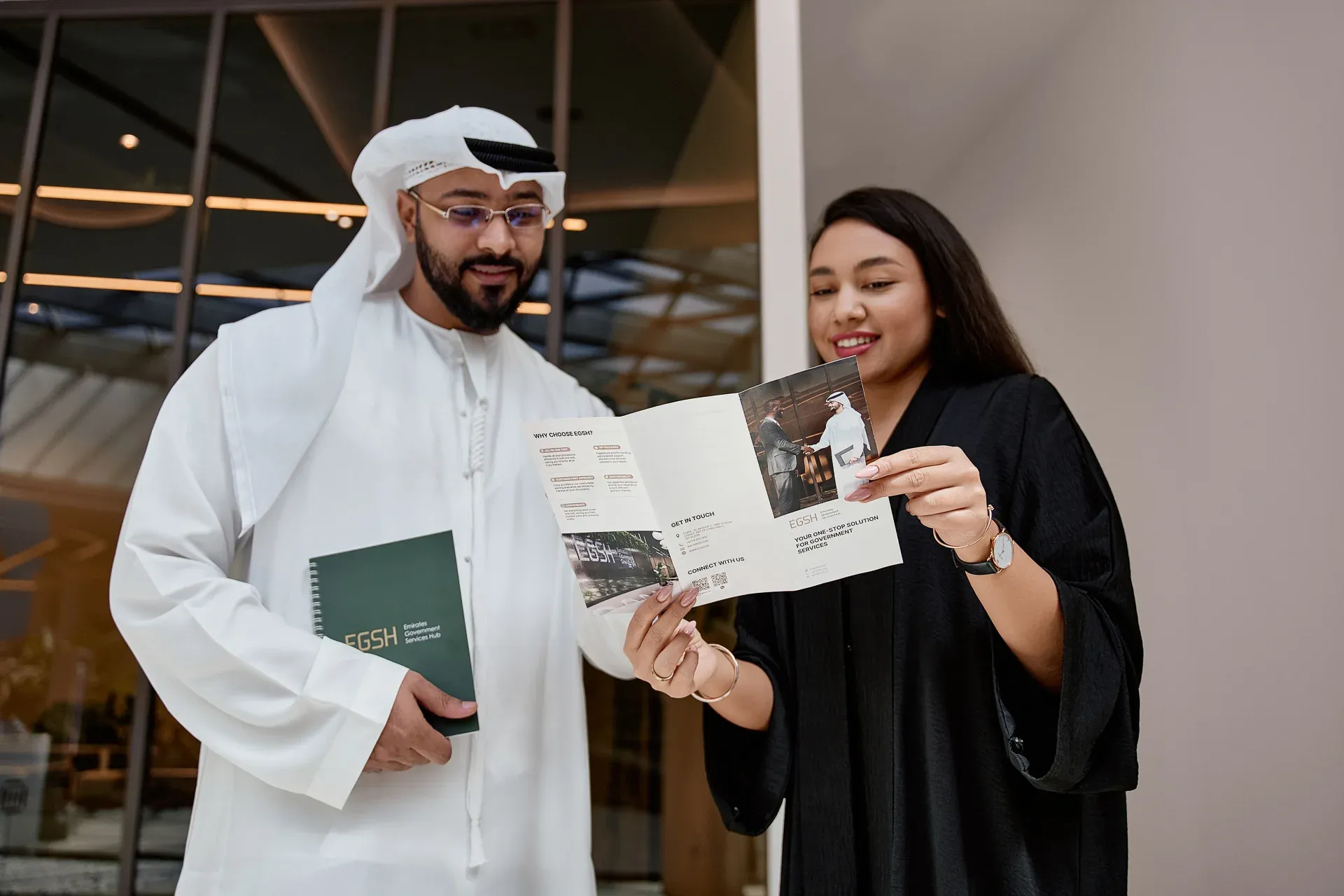
Visit EGSH for VIP Service Without Queues
You can stop by EGSH during working hours without an appointment or book your visit at a time that suits you best.
Address
Art of Living Mall, Al Barsha 2, Dubai
Operating hours
Monday–Thursday, Saturday: 9:00 am–5:00 pm
Friday: 9:00 am–12:00 pm, 2:00 pm–5:00 pm
Sunday: Closed

Non-resident foreigners may also access mortgage financing, although terms are more conservative. Most banks offer LTV ratios between 50% and 65% for non-residents, with higher down payment requirements and stricter documentation standards. Non-residents may face interest rates approximately 0.5–1% higher than those offered to UAE residents.
General eligibility criteria for expatriate mortgage borrowers include a minimum monthly income of approximately AED 15,000 (varies by bank), a maximum debt burden ratio (DBR) of 50% of net monthly income as mandated by the CBUAE, and a maximum loan term of 25 years.
Standard documentation requirements typically include a valid passport, bank statements for the preceding six to twelve months, a salary certificate or proof of income, and in some cases a credit report from the borrower's home country.
Pre-approval from a UAE bank is recommended before beginning a property search, as it clarifies the buyer's budget and strengthens their negotiating position.
Banks that offer mortgage products to foreign nationals include, among others, HSBC, Emirates NBD, Mashreq, ADCB, and FAB. Mortgage rates vary by bank, product type, and market conditions, and buyers should obtain multiple quotations before committing.
Mortgage registration with the DLD is mandatory for any financed purchase. The DLD charges a mortgage registration fee of 0.25% of the loan amount, plus a title deed issuance fee of AED 250.

Residency Visas Through Property Ownership
Property ownership in Dubai can qualify foreign buyers for UAE residency visas. No visa is required to purchase property — non-residents can buy using only a valid passport. Once a qualifying property is owned, the investor may apply for a residence visa.
Property Investor Visa (2-year)
The DLD's Taskeen service enables real estate investors to apply for a two-year renewable residence permit linked to property ownership in Dubai. In April 2026, the DLD published revised eligibility criteria through its Cube platform. Under the updated rules, sole property owners may apply regardless of property value — the previous AED 750,000 minimum threshold has been removed. For jointly owned property, each co-owner must hold a registered share valued at no less than AED 400,000.

The property must be completed and habitable; off-plan properties do not qualify until handover and final DLD registration are complete. Mortgaged properties are acceptable, provided a bank no-objection certificate (NOC) is submitted. The visa allows the investor to sponsor a spouse and children. The applicant must be inside the UAE at the time of application. Applications are processed through the DLD Cube Centre in coordination with the General Directorate of Residency and Foreigners Affairs, Dubai (GDRFA). For further details, read the EGSH 2-year investor visa through property guide.
Golden Visa (10-year)
Real estate investors who own property with a total value of AED 2,000,000 or more may apply for a 10-year renewable Golden Visa through the DLD's Golden Visa Investor service. The GDRFA in Dubai confirms that the Golden Residence Permit for investors is valid for 10 years and can be extended if the same conditions are met.
Multiple properties can be combined to reach the threshold, provided all are registered under the applicant's name. Mortgaged property is accepted; however, the DLD requires a bank letter confirming that AED 2,000,000 has been paid towards the property. If ownership is held as a share in a joint property, the value of the applicant's share must not be less than AED 2,000,000. The Golden Visa covers the investor, spouse, children, and parents. The applicant must be inside the UAE at the time of application.

Step-by-Step Process to Buy Property in Dubai as a Foreigner
The property purchase process in Dubai follows a structured sequence regulated by the DLD and administered through authorised Real Estate Registration Trustee offices. The steps below apply to both resident and non-resident foreign buyers.
Step 1 — Define Budget and Arrange Financing
Determine the total budget, factoring in the 7–10% in fees and transaction costs above the purchase price. If mortgage financing is required, obtain pre-approval from a UAE bank before beginning the property search. Opening a UAE bank account is advisable for managing the transaction, although it is not mandatory in all cases.
Step 2 — Engage a RERA-Certified Real Estate Agent
All real estate agents operating in Dubai must hold a valid licence from the Real Estate Regulatory Agency (RERA) and a Broker Registration Number (BRN). Buyers can verify an agent's credentials through the DLD's licensed brokers directory. Agent commission is typically 2% of the purchase price plus 5% VAT.

Step 3 — Select Property and Conduct Due Diligence
Verify that the property is located within a designated freehold area. Conduct thorough due diligence, including title deed verification through the DLD, developer NOC status, and service charge history. Buyers can verify the title deed through authorised service centres. Negotiation on price is standard practice in Dubai.
Step 4 — Sign the MOU (Form F) and Pay Deposit
The Memorandum of Understanding (MOU), known as Form F, is a legally binding agreement that outlines the terms of the sale. The standard deposit is 10% of the purchase price, held in escrow. If the buyer withdraws after signing, the deposit is forfeited.
Step 5 — Obtain No Objection Certificate (NOC)
The developer issues an electronic NOC confirming that there are no outstanding fees or service charges on the property. The NOC is obtained through the Dubai REST application. NOC fees typically range from AED 500 to AED 5,000, depending on the developer. The transfer cannot proceed without a valid NOC.

Step 6 — Complete Transfer at DLD or Trustee Office
Both the buyer and the seller — or their legally authorised representatives through a power of attorney — attend the trustee office to complete the transaction. The buyer pays the DLD transfer fee (4%), trustee fee, title deed fee, and any applicable map fees. Upon completion, the DLD issues an electronic title deed in the buyer's name. EGSH facilitates title deed transfer in Dubai through its authorised trustee offices.
Key Considerations Before Buying Property in Dubai
No annual property tax — Dubai does not impose recurring property tax, capital gains tax, or income tax on individuals. The UAE federal portal confirms that the UAE does not levy income tax on individuals. The absence of annual property taxation is a significant factor for foreign investors comparing Dubai with other global property markets.
Service Charges
Property owners pay annual service charges for the maintenance of common areas and shared facilities. Charges vary significantly by community and property type. RERA publishes a service charge index that buyers can consult before purchasing. Typical ranges fall between AED 10 and AED 30 per square foot for apartments, although premium developments may charge considerably more.

Off-plan Purchases
Properties purchased before completion are registered through the Oqood interim registration system administered by the DLD. Buyer deposits for off-plan purchases are protected under Dubai's escrow law, which requires developers to deposit payments into regulated escrow accounts. Off-plan buyers should verify the developer's RERA registration and project permit before committing.
Due Diligence
Buyers should always verify the title deed through the DLD to confirm ownership and check for existing mortgages, encumbrances, or blocks on the property. Any property listed for sale should have a valid RERA marketing permit. Working with a RERA-certified agent provides an additional layer of regulatory oversight.
Currency and International Transfers
The UAE dirham (AED) is pegged to the US dollar at a fixed rate. International transfers for property purchases can be made through UAE banks. Buyers should plan for transfer fees and any exchange rate considerations when converting from other currencies.

Frequently Asked Questions
Can a non-resident foreigner buy property in Dubai without a visa?
Yes. A valid passport is the only identification document required. Non-residents do not need a UAE visa or residence permit to purchase property in designated freehold areas. The DLD's Property Sale Registration service confirms that a valid passport for non-resident foreigners is accepted for identity verification.
Do foreigners pay the same fees as UAE nationals when buying property?
Yes. The DLD transfer fee of 4% of the purchase price, trustee fees, and title deed fees apply identically to all buyers regardless of nationality. There are no additional charges or surcharges for foreign buyers.
Can foreigners buy land in Dubai?
Yes, foreigners can purchase freehold land plots in designated areas. Eligibility for the two-year property investor visa requires a completed, habitable residential property — vacant land alone does not qualify for this visa category. The DLD's Taskeen service sets out the applicable eligibility conditions.
What is the minimum property value needed to qualify for a residency visa in Dubai?
For the two-year property investor visa, there is no minimum property value for sole owners following the April 2026 update to the DLD's eligibility criteria. Joint owners must each hold a registered share valued at no less than AED 400,000. The minimum threshold for the 10-year Golden Visa remains AED 2,000,000. There is no government-mandated minimum purchase price for buying property in Dubai without a visa.
Can foreign companies buy property in Dubai?
Yes. Companies established in Dubai free zones, mainland companies, and entities from other emirates with a DLD memorandum of understanding can acquire freehold property in designated areas. The company must be registered with the DLD through a company registration request before proceeding with any transaction.
Is buying property in Dubai safe for foreigners?
Dubai has a well-regulated real estate market overseen by the DLD and RERA. All transactions must be registered with the DLD to be legally valid. The DLD issues electronic title deeds confirming ownership, and all agents must hold valid RERA licences. Buyers should verify title deeds, use RERA-certified agents, and confirm that properties have valid marketing permits.
Can foreigners rent out their property in Dubai?
Yes. Foreign property owners can lease their units to tenants. Tenancy contracts must be registered through the Ejari system. There is no income tax on rental income for individuals in the UAE.
Do I need to be present in Dubai to complete a property purchase?
Not necessarily. A buyer can appoint a representative through a legally attested power of attorney (POA) to complete the transaction at the DLD or trustee office on their behalf. The POA must be notarised and, if issued outside the UAE, attested by the UAE Embassy in the relevant country.
What are the mortgage options for non-resident foreigners?
Non-resident foreigners can obtain mortgage financing from UAE banks, typically at LTV ratios between 50% and 65%. Requirements are stricter than for residents, including higher down payments and more extensive documentation. Most banks require a minimum monthly income of approximately AED 15,000 or its equivalent in foreign currency. The CBUAE's Regulations Regarding Mortgage Loans set the applicable LTV caps.
Can I combine multiple properties to qualify for a Golden Visa?
Yes. The DLD's Golden Visa Investor service confirms that multiple properties can be combined to meet the AED 2,000,000 threshold, provided all properties are registered under the applicant's name.

Explained by
Omar Abdulaziz Ali Al Qassim
Government Services Center Manager / Legal Consultant
Omar Abdulaziz Ali Al Qassim is a Government Services Center Manager and Legal Consultant with 8 years of experience in the UAE. He specialises in real estate transactions, business licensing, residency, labour services, and Ejari procedures. Omar works closely with key authorities including DLD, MOHRE, GDRFA, and DET, ensuring compliance and accurate processing of government transactions. He supports individuals, corporate clients, and investors in completing complex procedures efficiently and in line with UAE regulations.
Official Sources and References
The following official government sources were referenced in this article.
The Dubai Land Department (DLD) — Government authority responsible for real estate registration, ownership transfers, fee administration, and property transaction oversight in Dubai.
The Real Estate Regulatory Agency (RERA) — (RERA division) — Regulatory body under the DLD responsible for agent licensing, service charge administration, and real estate market regulation.
The UAE Federal Portal — National-level government platform providing information on property ownership rights for expatriates, taxation, and residency visas.
The Dubai Legislation Portal — Official repository for Dubai legislation, including Regulation No. 3 of 2006 and other real estate laws.
The General Directorate of Residency and Foreigners Affairs, Dubai (GDRFA) — Authority responsible for residency visas in Dubai, including the property investor visa and Golden Visa processing.
The Federal Authority for Identity, Citizenship, Customs and Port Security (ICP) — Federal authority responsible for Golden Visa and long-term residency processing at the national level.
The Central Bank of the UAE (CBUAE) — Regulatory authority setting mortgage lending standards, including maximum LTV ratios and debt burden limits.
Important Notice
The information in this article is accurate as of March 2026 and is based on currently available official government sources. Government fees, regulations, eligibility criteria, and procedural requirements may change without prior notice. Final approvals for property registration are issued by the Dubai Land Department, and final decisions on residency visas are made by the GDRFA and the ICP — not by EGSH. Buyers and investors should verify all fees, requirements, and eligibility conditions directly with the relevant government authority before proceeding with any transaction.



