



About EGSH
What This Guide Covers
Product registration in the UAE is a mandatory regulatory procedure governed by municipal and federal authorities. The Dubai Municipality requires approval through its Montaji system before any regulated consumer product can be legally imported, distributed, or sold in the Emirate of Dubai. For certain product categories, federal conformity certification from the Ministry of Industry and Advanced Technology (MoIAT) is also required. The processing fee for consumer product registration starts at AED 10 per product through the Dubai Municipality system.
This guide explains who must register, which authorities are responsible, what documents are required, how the Montaji and FIRS systems work, when federal ECAS certification applies, and what happens after approval. It covers food, cosmetics, health supplements, detergents, and other regulated consumer goods entering the UAE market.
Register a New Product in the UAE
Officially regulated fees
No hidden charges
Queue-free service
VIP support at no extra cost
0
starting from
Why Product Registration Is Mandatory in the UAE
Product registration is a legal prerequisite for market access in the UAE. Under Local Order No. 11 of 2003, the Dubai Municipality regulates the manufacture, sale, and importation of consumer products. All regulated products must be registered before being placed on the Dubai market.
The purpose of registration is to verify that a product complies with applicable safety standards, composition rules, labelling requirements, and consumer protection regulations. Registration is product-specific and applies to each individual item — referred to in retail and supply chain contexts as a stock-keeping unit (SKU) — regardless of whether the product is manufactured locally or imported.
Without a valid registration, products may be blocked at customs, removed from retail shelves, or subject to administrative penalties. Selling unregistered products also risks fines and consignment confiscation. Businesses that receive a penalty notice can settle outstanding Dubai Municipality fines through the dedicated payment service.

Get Business Services in Dubai Through EGSH
Authorised One-Stop Government Services Centre
- All government services in one place
- Completed in one visit
- VIP service without queues
- Regulated government fees

Regulatory Authorities Responsible for Product Registration
Product registration in the UAE involves a multi-level framework. The applicable authority depends on the product category, its composition, and its intended use.
The Dubai Municipality is the primary authority responsible for approving consumer products intended for sale in Dubai. The Municipality operates the Montaji and FIRS digital systems for product registration and safety review.
The Ministry of Industry and Advanced Technology (MoIAT), formerly known as the Emirates Authority for Standardisation and Metrology (ESMA), oversees federal technical regulations. MoIAT establishes mandatory standards for specific product categories, including cosmetics, food supplements, electrical items, and chemical products. Compliance with federal technical regulations is assessed alongside municipal registration where applicable.



Why Choose EGSH for Government Services in Dubai

VIP Service
Personal assistance and priority processing with no queues.

Affordable Fees
Official government rates with transparent, fixed pricing.

All Services in One Place
Comprehensive range of UAE government services under one roof.

One-Visit Completion
Most procedures are completed in a single visit to the centre.
Products Subject to Mandatory Registration
Mandatory registration applies to consumer products that may affect public health, safety, or consumer rights. The Dubai Municipality and federal regulators require registration for products that are ingested, applied to the body, used in households, or marketed with functional or health-related claims.
Products commonly subject to registration include food and beverages (packaged foods, drinks, dietary products), cosmetics and personal care products (skincare, haircare, perfumes, personal hygiene items), health supplements (vitamins, minerals, herbal products), household and chemical products (detergents, cleaning agents, air fresheners, disinfectants), and other regulated consumer goods identified by municipal or federal authorities.
Consumer products imported solely for re-export, exhibitions, market testing, or samples for marketing purposes may be exempted from registration requirements. However, these must still be processed through the Montaji Consumer Product Import Processing (CPIP) service for import re-export.

Dubai Municipality Product Registration Systems: Montaji and FIRS
The Dubai Municipality administers product registration through two specialised electronic systems.
Montaji is the primary registration system for cosmetics, personal care products, health supplements, detergents, and selected consumer goods. The portal is accessible at montaji.dm.gov.ae. Through Montaji, applicants submit a Consumer Product Registration Request (CPRE), which includes product classification, label compliance review, document submission, and technical approval.
FIRS (Food Import and Re-export System) is used for food-related activities connected to import control, consignment clearance, and compliance monitoring at entry points. Food products may also be registered through the ZAD food safety portal, which is operated by the Dubai Municipality.
Registration through the appropriate system is mandatory before products can be legally imported, distributed, or sold in Dubai.

Prerequisites for Product Registration
Before applying for new product registration in Dubai, the applicant must meet several prerequisites.
The applicant must hold a valid UAE trade licence with a business activity that permits the trading, manufacturing, or distribution of consumer products. The correct licence type determines eligibility for product registration — for a breakdown of how commercial, professional, and industrial classifications differ, see commercial, professional, and industrial licence types in Dubai. Only companies registered in the UAE — whether on the mainland or in a free zone — are eligible to submit registration applications. Free zone companies may require a mainland distributor to process the registration in certain cases.
The company must also register on the Montaji portal to gain access to the system. This requires submitting the trade licence and company details. Upon successful registration, the Dubai Municipality provides the company with login credentials.

Step-by-Step Product Registration Process in Dubai
The registration process follows a structured sequence through the Dubai Municipality's digital platforms.
Step 1 — Confirm Product Classification
Identify the correct product category and determine whether the product falls under Montaji, FIRS, or requires additional federal conformity certification from MoIAT. The classification determines the registration system, required documents, and applicable standards.
Step 2 — Register the Company on the Montaji Portal
Create a company account on the Montaji portal. Upload the trade licence and company details. The Dubai Municipality verifies the company's eligibility and issues login credentials.
Step 3 — Prepare and Submit the Application
File a Consumer Product Registration Request (CPRE) through Montaji. Enter all product details, including the product name in Arabic and English, ingredients, manufacturer information, country of origin, and product function. Upload all required documents, including the product label artwork, free sale certificate, certificate of analysis, and any additional certificates.

Step 4 — Pay the Registration Fee
The Dubai Municipality charges AED 10 per product — and per variant — as a processing fee for consumer product registration. A certificate issuance fee of AED 220 applies if the applicant requests a printed registration certificate. Payment is processed through the Montaji portal.
Step 5 — Technical Review and Approval
The Dubai Municipality reviews the product for compliance with safety standards, labelling rules, and category-specific technical requirements. This review covers ingredient safety, prohibited substances, product claims, and label accuracy. If additional information or laboratory testing is required, the applicant is notified through the system.
Step 6 — Receive Registration Approval
Once the product meets all requirements, the Dubai Municipality approves the registration and updates the product status in the Montaji system. A registration certificate can be generated directly from the system. The product is then authorised for legal import, distribution, and sale within the approved jurisdiction.

Visit EGSH for VIP Service Without Queues
You can stop by EGSH during working hours without an appointment or book your visit at a time that suits you best.
Address
Art of Living Mall, Al Barsha 2, Dubai
Operating hours
Monday–Thursday, Saturday: 9:00 am–5:00 pm
Friday: 9:00 am–12:00 pm, 2:00 pm–5:00 pm
Sunday: Closed

Product Label Requirements
All products subject to registration must comply with mandatory labelling requirements. Labels are reviewed as part of the registration process and must accurately reflect the product's classification, composition, and intended use.
Mandatory label elements generally include the product name, ingredients or composition — presented in International Nomenclature of Cosmetic Ingredients (INCI) format for cosmetics — manufacturer and importer details, country of origin, batch or lot number, production and expiry dates, storage conditions, usage instructions, health warnings where applicable, and a barcode.
Arabic labelling is mandatory for most regulated product categories, either as a primary label or as a compliant supplementary label affixed to the packaging. Non-compliant labels are one of the most common reasons for registration rejection.

ESMA Certification (MoIAT Conformity) and When It Is Required
The term "ESMA certification" is a commonly used market reference to federal product conformity certification in the UAE. Today, all conformity assessment functions are officially performed by MoIAT under UAE federal technical regulations.
This federal conformity certification is required for specific product categories that fall beyond purely municipal registration. Products that typically require an Emirates Conformity Assessment Scheme (ECAS) certificate include cosmetics, perfumery and personal care products, electrical and electronic goods, regulated chemical items, and other categories governed by UAE conformity schemes.
The ECAS certificate confirms that the product complies with approved UAE standard specifications. Certificates are typically valid for one year and must be renewed annually. Both manufacturers and traders may apply. ECAS certificates are issued by MoIAT-appointed Notified Bodies.
Where applicable, federal conformity certification must be obtained before or in parallel with local product registration. Without this certification, the product cannot be legally cleared through customs or placed on the UAE market.

Registration Validity, Renewal, and Amendments
Product registration is generally valid for up to five years, subject to continued compliance with applicable regulatory requirements. During the validity period, the registered product may be legally imported, distributed, and sold within the approved jurisdiction.
Before expiry, the registration must be renewed through the same government system used for the original approval. The applicant must confirm that the product, formulation, labelling, and manufacturer details remain unchanged. Failure to renew on time may result in suspension of the product record and restriction on import or sale.
Any changes to the registered product must be formally recorded through an amendment request. Changes requiring an amendment include modifications to ingredients or formulation, packaging or labelling, manufacturer or country of origin, importer or licence holder details, or product claims. Unapproved changes may invalidate the registration.
Common Reasons for Registration Rejection
Product registration applications are frequently rejected for avoidable errors. Understanding the common grounds for rejection helps businesses prepare compliant submissions.
Common reasons include incorrect product classification, missing Arabic text on labels, incomplete or inconsistent documentation, expired or mismatched certificates, discrepancies between declared ingredients and supporting documents, unauthorised claims — particularly in food, cosmetic, or health-related categories — missing free sale certificate or GMP certificate, and laboratory reports older than 12 months.
Registrations may also be refused where required conformity certificates are missing, expired, or issued by unrecognised bodies. Accurate classification, complete documentation, and full compliance with labelling standards reduce the risk of rejection and repeated resubmission.

Related Government Services
How EGSH Assists with New Product Registration
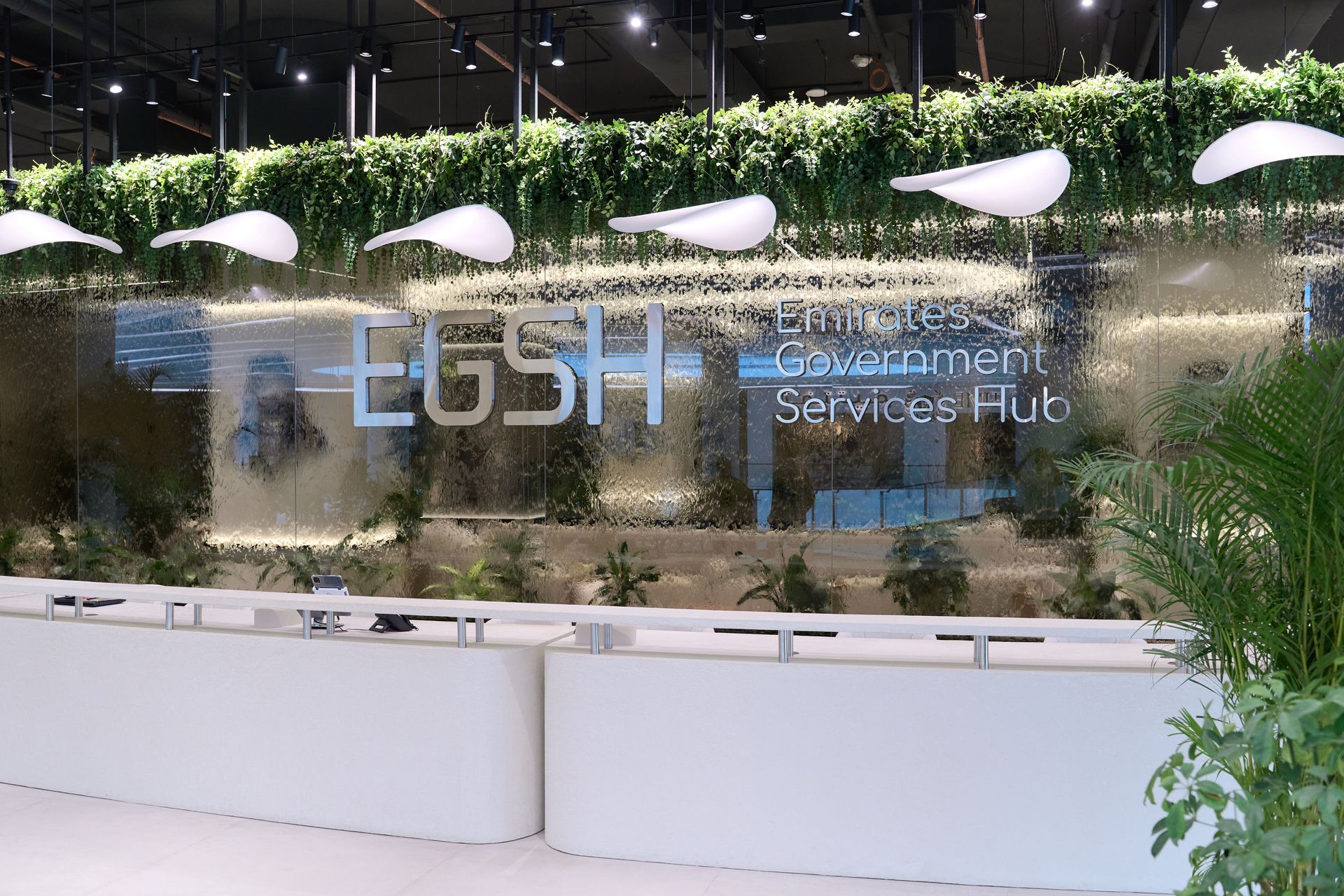
EGSH is an authorised government services centre providing access to official product registration procedures. Through EGSH, businesses can submit new product registration applications through the appropriate government platform with professional support at every stage.
The EGSH service includes verification of the product category and applicable registration system, review of labelling and supporting documentation, submission through the relevant Dubai Municipality portal, and coordination of approvals until registration is completed. Businesses that require a valid UAE trade licence before proceeding can apply for trade licence registration through EGSH. Those that do not yet have a UAE entity can complete company registration in Dubai as a prior step. For businesses considering a mainland structure specifically, a full overview of the process and requirements is available in the guide to setting up a company in the UAE.
The starting service fee for new product registration through EGSH is AED 2,660. All government fees are charged at officially regulated rates with no hidden charges.
Final approval of product registration rests solely with the relevant government authority. EGSH facilitates the submission process through authorised channels but does not grant approvals.

Frequently Asked Questions
Is product registration mandatory before selling goods in the UAE?
Yes. All regulated consumer products must be registered with the relevant authority before they can be legally imported, distributed, or sold in the UAE. In Dubai, Local Order No. 11 of 2003 requires the Dubai Municipality to approve consumer products before they are placed on the market. Selling unregistered products may result in fines, customs blocks, and product confiscation.
What is the Montaji system used for?
Montaji is the Dubai Municipality's official electronic platform for registering and approving regulated consumer products. It covers food, cosmetics, personal care products, health supplements, detergents, and other regulated goods. Through Montaji, the Municipality reviews product composition, ingredients, labelling, and safety compliance against UAE regulations.
How long does product registration take in Dubai?
Processing times depend on the product category, the completeness of the documentation, and whether the authority requires additional clarifications or laboratory testing. Simple product registrations may be approved within a few working days. More complex products, multiple variants, or those requiring testing can take several weeks.
What is the difference between Montaji and FIRS?
Montaji is the primary system for registering cosmetics, health supplements, detergents, and selected consumer goods. FIRS (Food Import and Re-export System) is used for food-related activities connected to import control, consignment clearance, and compliance monitoring. Both systems are operated by the Dubai Municipality.
Do I need both Dubai Municipality registration and an ESMA (MoIAT) certificate?
It depends on the product category. Certain products — such as cosmetics and personal care items — require both municipal registration through Montaji and a federal Emirates Conformity Assessment Scheme (ECAS) Certificate of Conformity issued by an MoIAT-appointed Notified Body. The ECAS certificate confirms compliance with federal technical regulations and is required for customs clearance.
Can free zone companies register products with the Dubai Municipality?
Yes. Companies registered in UAE free zones can register products through the Dubai Municipality systems, provided they hold a valid trade licence with a relevant business activity. In some cases, a mainland distributor may be required to process the import and registration on behalf of the free zone entity. For businesses evaluating whether a Dubai mainland company formation is the right structure for their distribution needs, EGSH can assist with entity setup before product registration proceeds.
What happens if my product registration is rejected?
If the application does not meet regulatory standards, the applicant receives a notification outlining the issues. Common causes include labelling errors, missing documents, or non-compliant formulations. The applicant may correct the identified issues and resubmit the application through the same system.
How long is a product registration valid in Dubai?
Product registration through the Dubai Municipality systems is generally valid for up to five years, subject to continued compliance with applicable requirements. ECAS conformity certificates issued by MoIAT are typically valid for one year and require annual renewal.
What are the labelling requirements for products registered in the UAE?
Product labels must include the product name, ingredients or composition, manufacturer and importer details, country of origin, batch number, production and expiry dates, storage conditions, usage instructions, and health warnings where applicable. Arabic labelling is mandatory for most regulated product categories.
What should I do before applying for product registration?
Before applying, confirm that you hold a valid UAE trade licence with a relevant business activity. Prepare all required documents, including the product label in Arabic and English, free sale certificate, certificate of analysis, and ingredient disclosure. Confirm that the label complies with UAE labelling standards before submission. For guidance on selecting the correct licence type, see the general trading licence in Dubai overview.

Explained by
Abdelmohsen Alyahri
Support Services
Abdelmohsen Alyahri is a support services professional with 3 years of experience in UAE government transactions. He assists with procedures across MOFA, the Ministry of Economy, Dubai Municipality, and RTA, ensuring accurate document handling, compliance, and timely processing.
Official Sources and References
- Dubai Municipality — Emirate-level authority responsible for consumer product registration, safety review, and market surveillance in Dubai.
- Ministry of Industry and Advanced Technology (MoIAT) — Federal authority responsible for technical regulations, conformity assessment, and the ECAS/EQM certification scheme.
- Ministry of Health and Prevention (MOHAP) — Federal authority responsible for pharmaceutical, medical device, and health product registration.
- UAE Government Portal — Official portal of the UAE Government providing information on government services, regulations, and procedures.
Important Notice
The information in this article is provided for general guidance and reflects publicly available regulatory requirements as of the date of publication. Government fees, processing timelines, documentation requirements, and regulatory procedures are subject to change without notice. Final approval of product registration rests solely with the relevant UAE government authority. EGSH facilitates the submission process through authorised channels but does not grant approvals or guarantee specific outcomes. Businesses are encouraged to confirm current requirements with the applicable authority before proceeding.



