


About EGSH
How to Sell Inherited Property in Dubai: Heirs, Title Transfer and Tax Rules
Inheritance of Dubai property can involve multiple legal systems, heirs in different countries, and require the protection of minors’ interests. For all heirs, understanding which law governs the estate and how Dubai authorities apply it is essential before any sale. EGSH helps heirs handle these government procedures efficiently and in accordance with the requirements.
This article explains the full Dubai inherited real estate sale process in three main stages: establishing who inherits, transferring title into the heirs’ names, and completing a sale through DLD. It also summarises federal tax rules (income tax, corporate tax and VAT), key concepts such as family joint ownership under the Civil Transactions Law, and how Dubai Courts and DLD handle minors’ funds and disputes between heirs.
Start the Heirs Sale Procedure in Dubai
Officially regulated fees
No hidden charges
Queue-free service
VIP support at no extra cost
0
starting from
Why Inherited Property in Dubai Needs a Structured Approach
Dubai allows UAE nationals, expatriate residents and eligible foreigners to own freehold property in designated areas, with title deeds issued by DLD. When an owner dies, the property becomes part of their estate and must be dealt with under UAE personal status and civil laws before any transfer or sale is recognised by DLD.
Selling inherited property in Dubai usually follows three steps: confirm which law applies and obtain an inheritance certificate; register property with DLD using Inheritance Title Transfer; and complete the sale through DLD’s Sale procedure (heirs), then distribute proceeds. Each step has specific rules on guardianship, ownership, and taxes, so heirs often need help from service providers and advisers.

Get DLD Services in Dubai Through EGSH
Authorised One-Stop Government Services Centre
- All government services in one place
- Completed in one visit
- VIP service without queues
- Regulated government fees

Step 1 – Confirming Who Inherits the Dubai Property
Before heirs can deal with DLD or a potential buyer, they must establish who is legally entitled to inherit and in what shares. This depends on the deceased’s religion, nationality, any registered will, and the conflict-of-laws rules in the UAE's personal status legislation.
Which Law Applies to the Estate: Personal Status Law and Civil Personal Status Decree-Law
Federal Law No. 28 of 2005 on Personal Status governs marriage, divorce, capacity, tutelage, guardianship, wills and inheritance for UAE citizens and, by default, for non-citizens in the UAE. For Muslims, it incorporates Islamic succession rules and also regulates who may act as a guardian for minors and how inherited assets are managed. Non-citizens may, in personal status matters, including inheritance, request the application of the law of their home country, subject to the UAE Civil Transactions Law (Civil Code) conflict-of-laws provisions and the supervising court’s approval.

For non-Muslims, Federal Decree-Law No. 41 of 2022 covers marriage, divorce, and estates. Article 11(1) allows non-Muslims to make a will covering all their assets in the UAE, subject to this law. If there is no will, Article 11(2) sets the default distribution: half to the spouse and half equally among the children. If there are no children, parents, or siblings, the estate is inherited equally.
Article 11(3) allows heirs to request application of the law under the Civil Transactions Law, unless a will specifies otherwise. Federal Decree-Law No. 29 of 2020 allows each emirate to set up a Non-UAE National Wills registry. In Dubai, heirs should check with the registry or the courts whether a will alters the default distribution.
Identifying Heirs and Evidencing Their Rights for Dubai Procedures
Once the applicable law is set, heirs need formal documentation confirming their status and shares before DLD can transfer or sell. Usually, this means an inheritance certificate or a Decree of Distribution issued by the Dubai Courts, a competent UAE court, or an Awqaf authority.
An “owner” includes anyone registered in the real estate registry as an owner by purchase, inheritance, grant, or other means. For inheritance cases, DLD registers properties based on a court-approved letter that sets out the inheritance procedures and the law applied to the estate. This letter accompanies the inheritance certificate or Decree of Distribution and directs DLD to transfer ownership to the named heirs in the specified shares.
Where minors are among the heirs, the Personal Status Law provisions on tutelage and guardianship apply. Guardians manage minors’ property, including inherited assets, under court oversight. Dubai Courts list specialised “Settlement of Inheritance and Minors’ Funds” circuits, illustrating that inheritance and management of minors’ funds are handled in dedicated judicial tracks.
At this stage, heirs focus on securing the necessary court decisions; EGSH can assist by clarifying which court documents DLD will expect, coordinating with certified translators and helping arrange legalisation of foreign documents, while the interpretation of inheritance and guardianship rules remains the domain of qualified lawyers or notaries. With the heirs and shares established, the next phase is to transfer the title to the inherited property at DLD.
Step 2 – Transferring the Property Into the Heirs’ Names at DLD
Once the court has determined the heirs and their respective shares, the next step is to register the property in those heirs’ names. DLD’s Inheritance Title Transfer service is the main route for this ownership transfer, whether the heirs are UAE nationals, residents or non-resident foreigners.
DLD Inheritance Title Transfer: Eligibility, Documents, Fees and Timing
DLD’s service description confirms that UAE citizens, residents, and non-residents (tourists) can be recognised as heirs through the Inheritance Title Transfer service. The purpose is to move a property from the deceased’s name into the names of the heirs, based on a valid inheritance certificate or Decree of Distribution and a supporting direction from the competent court or Awqaf authority. The result is an electronic title deed and property map issued in the heirs’ names, showing their shares.
Key documents normally required include the legal notification of inheritance or Decree of Distribution, Emirates ID copies for resident heirs and valid passports for non-resident heirs. If the property is mortgaged or subject to developer restrictions, letters of no objection from the mortgagee bank or developer may be needed. DLD also requires an official letter from Dubai Courts or another UAE court/Awqaf body instructing that the property be transferred to the identified heirs. All documents issued abroad may need legalisation through UAE consular channels and translation into Arabic, depending on court and DLD requirements.

Service fees for DLD Inheritance Title Transfer typically include AED 1,000 per property from the heirs, AED 250 for issuing the new title deed, and map fees ranging from AED 100–225 for land maps, depending on location and mapping system, and around AED 250 for apartment or villa maps. DLD also charges knowledge and innovation fees, and there may be additional service-partner fees if the transaction is processed via a Real Estate Services Trustee Centre. Heirs should verify the latest schedule with DLD, as fee structures are subject to periodic adjustment.
Once documentation and payments are complete, DLD indicates a processing time of around 25 minutes at a service centre or Real Estate Services Trustee Centre. The electronic title deed and property map are then generated in the heirs’ names, enabling them to proceed to leasing, family joint ownership arrangements or a future sale. EGSH’s consultants can help heirs prepare a document checklist aligned with DLD’s current requirements, book appointments with registration trustees, and coordinate any necessary legalisation or translation steps for foreign documents, ensuring the ownership transfer proceeds smoothly.


Why Choose EGSH for Government Services in Dubai

VIP Service
Personal assistance and priority processing with no queues.

Affordable Fees
Official government rates with transparent, fixed pricing.

All Services in One Place
Comprehensive range of UAE government services under one roof.

One-Visit Completion
Most procedures are completed in a single visit to the centre.
Step 3 – Selling the Inherited Property Through DLD
After the title appears in the heirs’ names, they can market the property and, once a buyer is found, execute a sale through DLD’s dedicated “Sale procedure (heirs)” service. This channel ensures that sale proceeds are received and distributed correctly to the heirs through the Department of Trusts.
DLD Sale Procedure for Heirs, Remote Sales and Handling Disagreements
For property sales involving heirs, DLD requires a valid title deed registered in the heirs’ names (or a court-issued inheritance deed reflected in DLD records), along with identification documents for the parties. Emirates IDs are used where available; passports are accepted where Emirates IDs are not held. If an heir is represented, a valid notarised power of attorney must be submitted and verified.

Payment handling in inheritance sales follows DLD-approved registration procedures through Real Estate Registration Trustee centres. Sale consideration is typically paid directly to the heirs’ designated bank accounts via trustee-facilitated mechanisms or manager’s cheques issued in accordance with trustee instructions. DLD itself does not hold sale proceeds in a central escrow or “department of trusts” account. Where brokers are involved, their valid broker registration and commission arrangements are verified as part of the transaction process.
DLD applies a total property transfer registration fee of 4% of the sale value for standard transactions. In inheritance cases, how this fee is allocated between seller and buyer is not fixed by law and may depend on DLD instructions, trustee-centred practice, or the parties’ agreement. Additional standard charges apply, including title deed issuance fees, applicable map fees, and knowledge and innovation fees, all payable through DLD’s authorised channels.

Registration trustee service fees apply to inheritance sales and vary by transaction value and service type. DLD publishes indicative processing times at trustee centres, which are generally short once documentation and payments are complete, subject to queueing and verification requirements.
Where all heirs agree to sell, and no legal restrictions apply, the transaction can proceed administratively through DLD. If a minor is among the heirs, or if an heir refuses to sell, court approval or a judicial order is required before DLD can complete the transfer. In such cases, the court may order partition, supervised sale, or other remedies depending on the circumstances.
For heirs located abroad or unable to attend in person, DLD supports remote real estate registration for eligible transactions. This allows sales and title transfers to be completed using secure audio-visual verification and trustee-managed payment processes, without the seller being physically present in Dubai or appointing a local representative, provided DLD’s authentication and compliance checks are satisfied. EGSH can assist heirs in assessing eligibility for remote registration, preparing compliant documentation, coordinating trustee appointments, and aligning DLD procedures with any applicable court orders, including those involving minors’ interests.
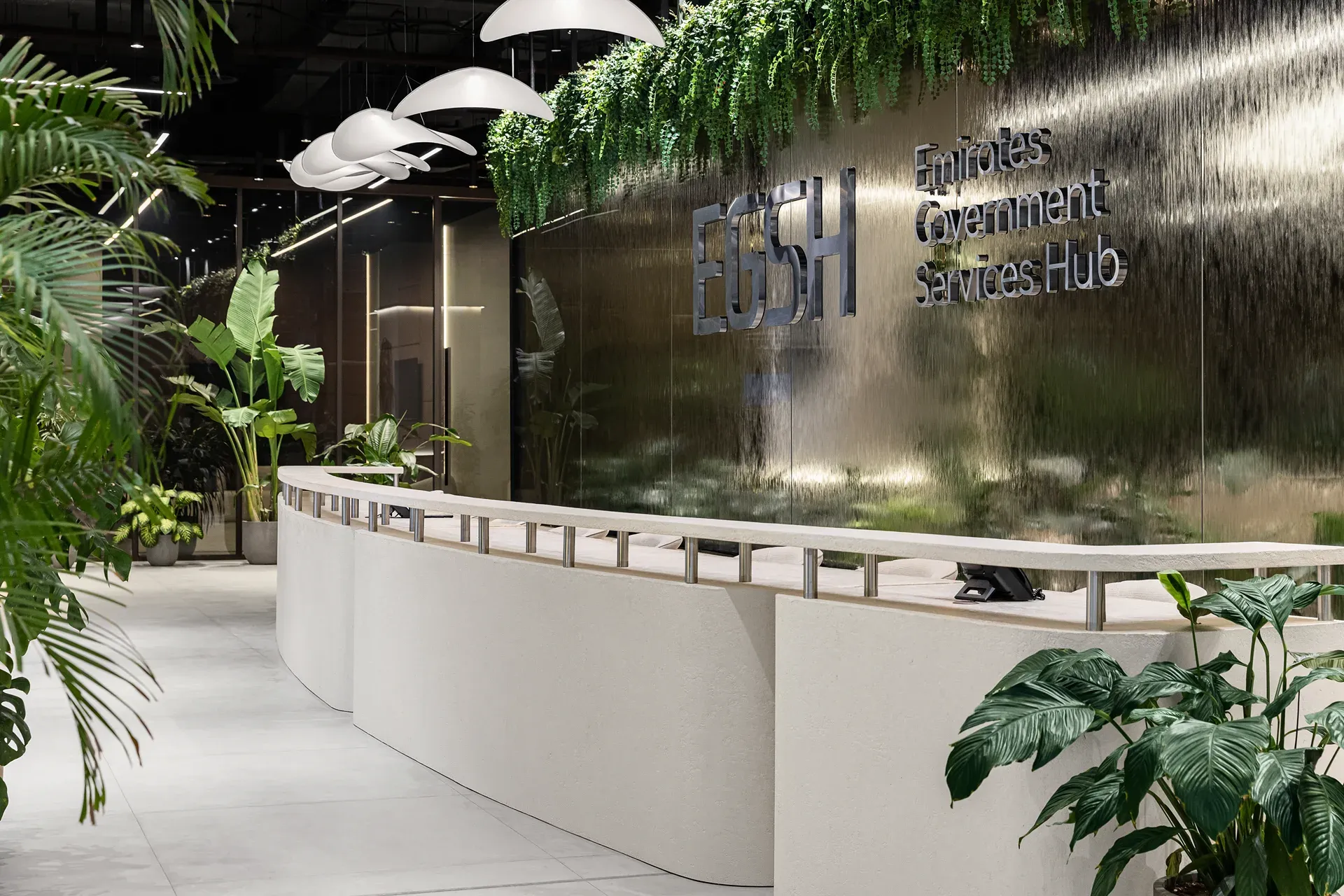
Visit EGSH for VIP Service Without Queues
You can stop by EGSH during working hours without an appointment or book your visit at a time that suits you best.
Address
Art of Living Mall, Al Barsha 2, Dubai
Operating hours
Monday–Thursday, Saturday: 9:00 am–5:00 pm
Friday: 9:00 am–12:00 pm, 2:00 pm–5:00 pm
Sunday: Closed

Understanding Tax When Heirs Sell Dubai Property
Alongside procedural steps at DLD and the courts, heirs often ask how the UAE tax system treats property they inherit and later sell. UAE federal rules distinguish clearly between personal investment and business activity, and between residential and commercial property for VAT purposes.
Income Tax and Corporate Tax: Treatment of Individual Heirs
Official UAE government guidance states that “The UAE does not levy income tax on individuals.” The main federal taxes are the corporate tax on certain business entities, the value-added tax (VAT), and excise taxes. This means that, at the federal level, there is no personal income tax on individuals, and no separate inheritance or estate tax is listed; sale proceeds received by heirs from the disposition of inherited property are therefore not taxed as personal income under current federal rules.
Corporate tax, introduced under the federal corporate tax regime, applies to businesses and to individuals conducting business activities under a commercial licence, including real estate management, construction, development, agency, and brokerage. However, government guidance on corporate tax explicitly states that corporate tax does not apply to investment in real estate by individuals in their personal capacity.
The Federal Tax Authority’s “Basis of Taxation – Natural Person” guidance clarifies that real estate investment income of natural persons is not treated as “business or business activities” and is excluded from the AED 1 million turnover threshold used to determine when a natural person carrying on a business must register for corporate tax.
A natural person must register for corporate tax if they conduct a business or business activity and their total turnover from such activities in a calendar year exceeds AED 1 million, with current registration deadlines set for 2024 activities. For most heirs who hold property as a private investment, the sale of inherited real estate will therefore fall outside corporate tax. However, if any heir operates under a commercial licence in sectors such as real estate development or brokerage, or is otherwise running a broader business that uses property assets, specialised corporate tax advice should be sought to confirm the correct treatment.
VAT on Rental and Sale of Inherited Residential and Commercial Property
For VAT purposes, the UAE treats property as “goods”, with the place of supply in the UAE when the real estate is located in the UAE. The standard VAT rate is 5% on most taxable supplies. Federal VAT guidance on the treatment of properties distinguishes carefully between residential and commercial buildings when determining VAT obligations.

Residential buildings include typical apartments and villas (provided they are not serviced), certain student and labour accommodation, armed forces and police accommodation, and specific institutional homes such as orphanages, nursing homes and rest homes. Commercial buildings include shops, offices, warehouses, clinics and hospitals, schools and universities, serviced apartments, and some short-term lets of six months or less.
Where an individual rents or sells residential buildings and has no other business activities, the guidance confirms that they are not required to register for VAT, do not charge VAT on rents or sales, and do not submit VAT returns in relation to those residential properties. This is often the case for heirs who simply sell an inherited apartment or villa and are not otherwise carrying on a business.
By contrast, for commercial buildings rented out, the owner is generally required to register for VAT if they exceed the registration threshold, charge 5% VAT on rental income, and may recover input VAT on related expenses, subject to the normal rules.
VAT on commercial property sales depends on whether the transaction forms part of a taxable business activity and on the seller’s VAT status. Where a VAT-registered seller disposes of commercial property in the course of business, the sale is generally standard-rated, with VAT charged to the buyer and recoverable by VAT-registered purchasers, subject to the usual rules.
However, not all commercial property sales are taxable. A one-off or non-business disposal by a non-taxable person, particularly where it falls below the VAT registration threshold, may fall outside the scope of VAT, depending on the circumstances and applicable Federal Tax Authority guidance.
In contrast, where a rented or partly rented commercial building is sold as part of a “going concern” to a taxable person who continues the rental business, the transfer may be treated as outside the scope of VAT on the purchase itself.
For large commercial buildings costing more than AED 5 million, VAT guidance treats them as capital assets; a buyer who is VAT-registered pays 5% VAT, may recover it in the VAT return for the period of purchase and must monitor the use of the building over a ten-year adjustment period, modifying any previously recovered VAT if the use changes between taxable and exempt activities.

Because VAT rules are sensitive to precise facts – including whether the property is residential or commercial, whether it is rented, and whether the buyer and seller are taxable persons – heirs dealing with inherited commercial or mixed-use properties should obtain specialist VAT advice. This is particularly relevant where the property forms part of a broader real estate portfolio, or where heirs are close to the VAT registration threshold due to other activities.
Managing Family Interests, Minors and Conflicts Over Sale
Beyond procedural compliance and tax, families often need to balance the desire for liquidity against the wish to retain strategic assets or a family home. UAE civil law provides tools to keep property within the family, while Dubai Courts supervise the protection of minors’ interests and resolve disputes among heirs.
Family Joint Ownership and Keeping Property Within the Family
The UAE Civil Transactions Law allows members of the same family to create “family joint ownership” of inherited or other property by written agreement. Under Article 1183, such joint ownership may be established for up to 15 years, and during this period, none of the co-owners may demand partition of the jointly owned property. This mechanism helps families avoid forced sales and preserve assets such as a family home or an investment building for a significant period.

Article 1185 provides that, during family joint ownership, no co-owner may dispose of their share in favour of a non-family member without the consent of all co-owners. An outsider acquiring a share only joins the family joint ownership if both the family and the acquirer consent. These restrictions prevent outsiders from fragmenting ownership and support continuity of control, but they also limit individual heirs’ ability to exit or monetise their shares. Families considering joint family ownership should therefore seek legal advice and record clear internal agreements on management, the use of income, and exit mechanisms.
The Civil Code also addresses cases where estate assets include property exploited as an economic unit, such as an agricultural, industrial or commercial enterprise. If heirs cannot agree on continuing the unit jointly, the court may allocate the entire unit to the heir considered most capable of managing it, based on a valuation, and deduct the excess value from that heir’s share of the estate. This approach allows viable businesses or investment properties to remain intact, rather than being broken up or sold under pressure, while still respecting the overall balance between heirs.

Protecting Minors’ Interests and Resolving Disputes Between Heirs
Under the Personal Status Law, tutelage and guardianship encompass both personal care and the management of minors’ property, including inherited real estate. Guardians act under court supervision, and when a minor’s assets are involved in major decisions, such as the sale of property, the Dubai Courts may scrutinise the transaction closely. The existence of dedicated “Settlement of Inheritance and Minors’ Funds” circuits indicates that the judiciary treats these matters as a specialised area that requires ongoing monitoring of minors’ funds.
When a property includes minors’ shares, a proposed sale may require approval from the competent court, an investigation or a minors’ funds committee. Authorities may examine whether the sale price reflects market value and how the sale proceeds will be invested or held to safeguard the minor’s interests.
In parallel, if one heir refuses to sell a jointly owned property, DLD guidance states that the matter is referred to the court, which can order partition in kind, sale and division of proceeds, or other solutions consistent with UAE law and the protection of vulnerable heirs. EGSH can help families anticipate the documentation courts and DLD are likely to require, such as valuations, proposed reinvestment plans or guardianship orders, and can connect them with appropriate legal and counselling services when disputes threaten to derail the process.
Practical Checklist for Heirs Considering a Sale in Dubai
To make the process of selling inherited property in Dubai more manageable, heirs can structure their approach around a practical sequence of steps aligned with the legal and administrative framework described above. This also helps ensure that all necessary government interactions are planned in the correct order, reducing the risk of delays or rejected applications.
First, clarify which personal status regime applies: the Muslim Personal Status Law, the Civil Personal Status Decree-Law for non-Muslims, or, where applicable, the law of the deceased’s home country under the Civil Code conflict rules. Check whether the deceased registered any non-UAE national will in Dubai that affects succession to the property.
Second, obtain an inheritance certificate or a Decree of Distribution from the Dubai Courts or another competent UAE authority, ensuring that guardianship over any minors and any instructions regarding the sale or retention of property are clearly documented.

Third, prepare for the DLD Inheritance Title Transfer by collecting court documents, Emirates IDs, and passports for all heirs, and securing any necessary no-objection letters from mortgagees or developers. Once DLD issues electronic title deeds in the heirs’ names, review whether the property will be retained under family joint ownership or whether a sale will proceed.
At this stage, heirs should also assess their potential tax and VAT position, particularly if the property is commercial or forms part of wider business activities, and confirm whether any heir holds a real estate or other commercial licence that could affect corporate tax or VAT registration.
Fourth, when proceeding to sale, familiarise yourselves with the DLD sale procedure (heirs): required documents, 2% transfer fees for both buyer and seller, service-partner fees and the use of the Department of Trusts account for receiving and distributing proceeds. Consider whether any heirs will rely on DLD’s remote property registration system and whether the courts need to approve the transaction in light of minors’ interests or prior orders.

Finally, before distributing proceeds, document the agreed allocation and any reinvestment or savings arrangements for minors or vulnerable family members, ensuring consistency with court directions and national and foreign inheritance laws where cross-border issues arise.
Throughout this process, professional advisers play distinct roles. A UAE-qualified lawyer or notary can advise on the interpretation of the Personal Status Law, Civil Personal Status Decree-Law, Civil Code and any home-country law chosen by the court, while tax specialists interpret corporate tax and VAT rules as they apply to particular transactions.
EGSH acts as a central point of contact for government services in Dubai, helping heirs understand procedural requirements for DLD and court applications, scheduling appointments with Real Estate Registration Trustees and, where needed, referring clients to regulated lawyers and tax consultants.

FAQ
How to sell inherited property in Dubai as an heir living abroad?
An heir living outside the UAE must first be named in a UAE inheritance certificate or Decree of Distribution and ensure that DLD has transferred the property into the heirs’ names via the Inheritance Title Transfer service. Once that is done, the sale can be completed either through a Real Estate Registration Trustee centre in Dubai or, if DLD’s remote real estate registration system is used, via authenticated audio-visual communication and payment through a guarantee account. Courts may require a power of attorney or other documents for overseas heirs, and EGSH can help coordinate attestation, translation and interaction with DLD so that non-resident heirs can participate effectively.
Do you pay tax on inherited property in Dubai when you sell it?
At the federal level, UAE guidance confirms that there is no personal income tax on individuals and no separate inheritance or estate tax, so an heir selling inherited property does not pay income tax on the sale proceeds in their personal capacity. Corporate tax applies only to business activities conducted under a commercial licence, and official guidance states that real estate investment by individuals in their personal capacity is outside the scope of corporate tax. However, VAT can apply to commercial property transactions, so heirs should distinguish between residential and commercial property and obtain VAT advice where commercial use is involved.
What fees do heirs pay to the Dubai Land Department when selling inherited property?
Under the sale procedure (heirs), DLD charges transfer fees equal to 2% of the sale value from the seller (the heirs) and 2% from the buyer, plus AED 250 for the new title deed and map fees that usually range between AED 100–225 for land and AED 250 for apartments or villas. Additional service-partner fees of AED 4,000 plus VAT or AED 2,000 plus VAT apply, depending on whether the sale value is above or below AED 500,000, along with knowledge and innovation fees per transaction. Earlier in the process, heirs also pay Inheritance Title Transfer fees, such as AED 1,000 per property and deed/map issuance charges to move the property into their names before sale.
What law applies to the inheritance of Dubai property for non-Muslims?
Inheritance of Dubai property for non-Muslims is governed mainly by Federal Decree-Law No. 41 of 2022 on Civil Personal Status. Where no valid will exists, the court applies civil inheritance rules and determines heirs and their shares on a case-by-case basis, taking into account the family structure and the estate's circumstances, without automatic gender-based allocation. Non-Muslims may dispose of their UAE assets by a valid will, and where such a will is registered, the court will apply it. In all cases, the court examines the existence of a will, the status of the heirs, and the relevant legislation before confirming how a Dubai property is distributed.
Can non-resident heirs sell property in Dubai remotely through DLD?
Yes, DLD’s remote property registration system allows certain sale transactions to be executed without the seller being physically present in Dubai or appointing a local representative, by using audio-visual communication and routing payments through a guarantee (escrow) account. The parties’ identities are verified electronically, documents are uploaded, and once DLD approves the transaction, the title is transferred, and funds are released. This facility is particularly useful where several heirs are spread across different countries, although courts or DLD may still require notarised and legalised powers of attorney or identity documents from some participants.
What happens if one heir refuses to sell inherited property in Dubai?
If one of the heirs refuses to sell a jointly owned property, the issue is referred to the court rather than resolved administratively at DLD. The court may explore options such as partition in kind, ordering a sale with division of proceeds, recognising family joint ownership for a fixed period, or allocating an economic unit to a capable heir with financial adjustment based on valuation. During this process, the court pays particular attention to minors’ funds and vulnerable heirs, and its directions will bind DLD when processing any subsequent title transfer or sale.
Is VAT charged on the sale of inherited commercial property in Dubai?
For commercial properties, VAT treatment depends on whether the property is rented or non-rented and whether the buyer is a taxable person. A non-rented commercial property sold by an heir is generally a standard-rated taxable supply, so the seller charges 5% VAT, while a rented or partly rented property sold as a “going concern” to a VAT-registered buyer continuing the business may fall outside the scope of VAT on the transfer itself. Residential property sales by individuals are typically outside VAT obligations, but heirs inheriting shops, offices, warehouses or serviced apartments should seek professional VAT advice before completing an inheritance property sale in Dubai.
How can heirs protect minors’ interests in Dubai inheritance property cases?
Where minors inherit property, the Personal Status Law places management of their assets under guardianship and court supervision, and the Dubai Courts’ “Settlement of Inheritance and Minors’ Funds” circuits oversee decisions such as sales or reinvestments. Any proposed sale involving a minor’s share may require court approval, often backed by valuations and plans for safe reinvestment of proceeds, and DLD may require evidence of this approval before processing a transfer. Families can also consider structures like family joint ownership to preserve key assets, while working with lawyers and EGSH to ensure that all court and DLD requirements protecting minors’ funds are met.

This article is intended to provide general information based on official UAE sources, and does not constitute personalised legal advice. Before acting, applicants should verify the current rules and fees directly with the relevant authority or an authorised service centre.



