



About EGSH
Student to Work Visa in Dubai: MoHRE and GDRFA Procedure Explained
Smoothly shifting from study or family sponsorship into employment status in the UAE requires understanding how labour and residency rules interact, especially in Dubai. EGSH, as a licensed government services centre, helps students and graduates complete these procedures correctly with the relevant authorities.
Many students, recent graduates, and parents are unsure when work is permitted, how long they can stay after graduation, and exactly what must be done with MoHRE and GDRFA Dubai to convert a student visa to a work visa in the UAE. This guide is for university and college students, graduates in family or student residences, and HR teams planning to hire them.
This article explains the legal framework, residence and grace periods after study, lawful work options while on student or family visas, and the full process for converting a student visa to a work visa in Dubai through MoHRE and GDRFA. It also covers transition visas, including 'explore job opportunities' entries, Golden Residence for outstanding graduates, timelines, and EGSH support.
Change Your Visa Status in Dubai
Officially regulated fees
No hidden charges
Queue-free service
VIP support at no extra cost
From AED 676
Legal Framework and Your Status After Studying in the UAE
Working in the UAE always involves two parallel tracks: a labour authorisation from the Ministry of Human Resources and Emiratisation (MoHRE), and an immigration status managed by the emirate’s General Directorate of Residency and Foreigners Affairs (GDRFA). In Dubai, GDRFA Dubai handles entry permits, residence visas and status amendments via its smart services, the Dubai Now app and Amer centres.
Why a Work Permit and Employment Residence Are Mandatory
Under the Federal Decree‑Law on Labour Relations (No. 33 of 2021), a person may not undertake work, and an employer may not recruit or employ any worker in the private sector unless MoHRE has issued a work permit. This rule applies even if the individual already lives in the UAE on a student, family or other residence visa.
MoHRE is the federal authority responsible for private-sector work permits, while each emirate’s GDRFA issues and amends residence visas. For a UAE student to convert a residence visa, the employer first obtains a MoHRE work permit, and then the residence status is adjusted through GDRFA Dubai so that the person is sponsored for employment rather than for study or family reasons.

Common Student‑Related Residence Types and Grace Periods
Many students in Dubai are initially on a family‑sponsored residence visa, usually as sons sponsored by a resident parent. According to federal guidance, sons can be sponsored up to age 18, or up to 21 if they are studying in the UAE or abroad, with their residence visas typically issued for one year at a time and renewable until completion of education.
From 21 October 2018, students who graduate from a university or secondary school in the UAE, or turn 18 years old, can obtain a special one‑year residence visa, renewable for another year, based on an attested graduation certificate. The government fee for this student‑related residence is AED 100 per year for first issuance and renewal, with no bank deposit required. After this post‑graduation period and any applicable grace period, those who wish to work must move to an employment‑based residence sponsored by an employer or to another qualifying long‑term residence, such as a Golden Residence.

GDRFA Dubai also issues visit visas for study, training, or rehabilitation. Licensed universities or institutes sponsor these visas. They last 30, 60, or 180 days and require you to have a passport valid for at least six months, a personal photo, and a letter from your educational institution. Extensions are possible up to 180 days in total. Afterwards, you must change your status or leave the UAE.
For family‑sponsored and other residents, UAE rules provide a 30‑day grace period from the date of residence visa expiry or cancellation to obtain a new residence permit or exit. After this period, the person is considered an illegal resident and overstay fines may apply, so timing is critical when moving from study or family residence to employment.

Get Visa Services in Dubai Through EGSH
Authorised One-Stop Government Services Centre
- All government services in one place
- Completed in one visit
- VIP service without queues
- Regulated government fees

Working Legally While Still on Student or Family Residence
Many students want to gain experience or income during their studies or while still on a family visa. The law allows this in limited, regulated ways, but only if proper MoHRE permits are obtained. Simply holding a student or family residence does not in itself authorise paid work.
MoHRE Training and Work Permit for Students
MoHRE operates a dedicated “Training and Work Permit for Students” service that allows establishments registered with MoHRE to train or employ students aged 15 years or above. This permit can cover work or training in full‑time, part‑time, temporary, flexible, remote or job‑sharing formats, depending on the agreement between the establishment and the student.
To be eligible, the establishment must hold a valid trade licence, be active (not closed or suspended), and the proposed occupation must be consistent with the establishment’s registered activity. The occupation also cannot be among the prohibited juvenile occupations, except for certain skilled positions specified by MoHRE. Core documents include a coloured photo, a copy of the Emirates ID, proof of student status, a valid residence visa for non‑national students, guardian consent for those aged 15–18, and a medical fitness certificate.
Where the arrangement is structured as training, a no‑objection certificate from the educational institution is required, along with an employment contract in MoHRE’s standard form, signed by both the employer and the student. The Training and Work Permit for Students can be issued for up to two years, providing students and establishments with a clear legal basis for internships, part‑time work, and similar arrangements while the student remains on their original residence status.

Private Tuition Permits and Part‑Time Work on Family Visas
Students who wish to provide private lessons can use the MoHRE “Private Tutor Licensing / Private Tuition Work Permit” system. Under Ministerial Resolution No. 710 of 2023 and related guidance, school students aged 15 to 18 years and university students with valid residence visas are among those eligible, provided they meet the conditions agreed between MoHRE and the Ministry of Education. Private tuition work permits under this framework are typically valid for two years and may be renewed, always subject to the same conditions.
More broadly, residents in the UAE on family‑sponsored visas may take a second job or part‑time role if they obtain a part‑time work permit from MoHRE and a no‑objection certificate from their family sponsor. This option is available to men and women aged 18–65, but the work again must be properly covered by a MoHRE work permit. Across all these scenarios, the principle remains the same: regardless of the student's or family's residence, no lawful employment exists without an appropriate MoHRE work permit linked to the actual work performed.



Why Choose EGSH for Government Services in Dubai

VIP Service
Personal assistance and priority processing with no queues.

Affordable Fees
Official government rates with transparent, fixed pricing.

All Services in One Place
Comprehensive range of UAE government services under one roof.

One-Visit Completion
Most procedures are completed in a single visit to the centre.
Main Pathway – Converting from Student or Study Status to a Full Work Visa
The standard route from student or family residence to a Dubai work visa for graduates is to shift onto an employment residence sponsored by a private‑sector employer. This pathway relies on the interaction between MoHRE (for the work permit and labour card) and GDRFA Dubai (for entry permits, status amendment and residence stamping).
Step 1 – Maintain Legal Stay During Job Search
The first responsibility is to remain in the UAE legally while job‑hunting. Graduates should track the expiry date of their family or student residence, any post‑graduation one‑year student visa, and the end of the 30‑day grace period that follows expiry or cancellation.
If a residence expires and no new permit is obtained within the grace period, the individual becomes an illegal resident and may incur fines, which can complicate later applications. Students on a visit visa for study or training must also monitor the maximum 180‑day combined limit for extensions set by GDRFA Dubai and avoid overstaying once that limit is reached.

Step 2 – Obtain a Job Offer from a MoHRE‑Registered Employer
Next, the graduate needs a written job offer from a UAE‑based establishment that is properly licensed and registered with MoHRE. For roles in Dubai, the establishment must also be connected to the GDRFA Dubai systems as a recognised sponsor for residence visa purposes.
The procedure described here focuses on private‑sector positions, where MoHRE is the competent labour authority. Public‑sector and certain free‑zone entities may have their own internal processes, but they still coordinate with the relevant GDRFA to issue or amend residence visas.
Step 3 – Employer Applies for MoHRE Work Permit
Once an offer is accepted, the employer applies for a MoHRE work permit in the graduate’s name using MoHRE’s online or smart application channels. This application is submitted in line with the Labour Relations Decree‑Law and its implementing regulations, and typically includes the employment contract, a passport copy, a photo, and other supporting documents.
No work should start before MoHRE has issued the work permit. The permit is the legal basis for the employment relationship; employing someone or working without it breaches federal labour rules, regardless of any existing residence visa.
Step 4 – Entry Using the Work Permit (If Outside the UAE or on a Visit Visa)
If the graduate is outside the UAE, or inside the UAE on a regular visit visa, the approved work permit also functions as an entry permit for employment. According to federal guidance, this permit is normally valid for two months from its date of issue, during which the worker must enter the country.
After entry based on this permit, the remaining steps of the UAE employment residence visa process must be completed within the official timelines. These include medical fitness testing, Emirates ID processing, issuance of a labour card and residence visa stamping.
Step 5 – Issuing the New Employment Entry/Residence Visa Inside the UAE
If the graduate is already in Dubai on a student, family, or study‑related residence visa, the employer may request the issuance of a new employment entry permit or, directly, a residence visa, depending on the specific channel used with GDRFA Dubai. In practice, companies often work through Amer centres or authorised PROs to prepare these applications.
The previous residence permit must be cancelled as part of the change to employment status. The amendment is only possible where a new visa or entry permit has been issued, and the earlier residence or entry permit has been cancelled or is ready to be cancelled.

Step 6 – GDRFA Status Amendment Application in Dubai
The GDRFA Dubai status amendment procedure allows the sponsored person’s status to be changed within the UAE without exiting, ensuring it aligns with the new visa. Applications can be filed via GDRFA Dubai’s website or smart app around the clock, or at Amer service centres during their working hours. In many cases, the employer or its PRO submits this on the worker’s behalf.
Required documents include: a copy of the passport of the sponsored person and the new sponsor (employer); a copy of the sponsor’s residence permit, where applicable; a copy of the cancelled entry or residence permit; and a copy of the new entry permit. As per GDRFA Dubai’s schedule, the Dubai status amendment fee comprises AED 500 for the amendment itself, AED 10 Knowledge Dirham, AED 10 Innovation Dirham, plus an AED 15 individual fee and AED 50 establishment fee. These figures are based on official information and are subject to change; they should always be checked before filing.

Step 7 – Medical, Emirates ID, Labour Card and Residence Stamping
After the status amendment is approved, the process continues similarly to any new work visa. The employee attends a medical fitness test at an approved medical fitness centre, which is required before residence stamping. In parallel, an Emirates ID application is submitted, and the applicant completes biometric enrolment at an authorised centre.
The employer arranges for the issuance of the labour card to record employment in the MoHRE systems. According to federal guidance, all of these steps, including stamping of the work residence permit in the passport, must be completed within 60 days from the date of entry based on the work‑permit‑linked entry permit. Once stamped, the residence visa confirms that the worker is now sponsored by the employing company.

Step 8 – After Your Employment Residence Is Issued
When the work residence visa has been stamped, the graduate is legally resident in the UAE under employer sponsorship, and the previous student or family sponsorship ends. At this point, and subject to meeting income and accommodation requirements, they may sponsor eligible family members for residence visas under the usual family sponsorship rules.
From here on, the individual must keep both their MoHRE labour record and GDRFA Dubai residence record up to date, especially when changing jobs or cancelling employment. Any future change of employer in the private sector will again involve coordination between MoHRE (for work permit transfer or cancellation) and GDRFA Dubai (for residence visa amendment or renewal).
Key Government Fees Mentioned (Indicative)
The table below summarises several of the principal government fees referenced in this guide. These amounts are drawn from official sources and are subject to change, so they should always be verified on the relevant portals before applying.
Visit EGSH for VIP Service Without Queues
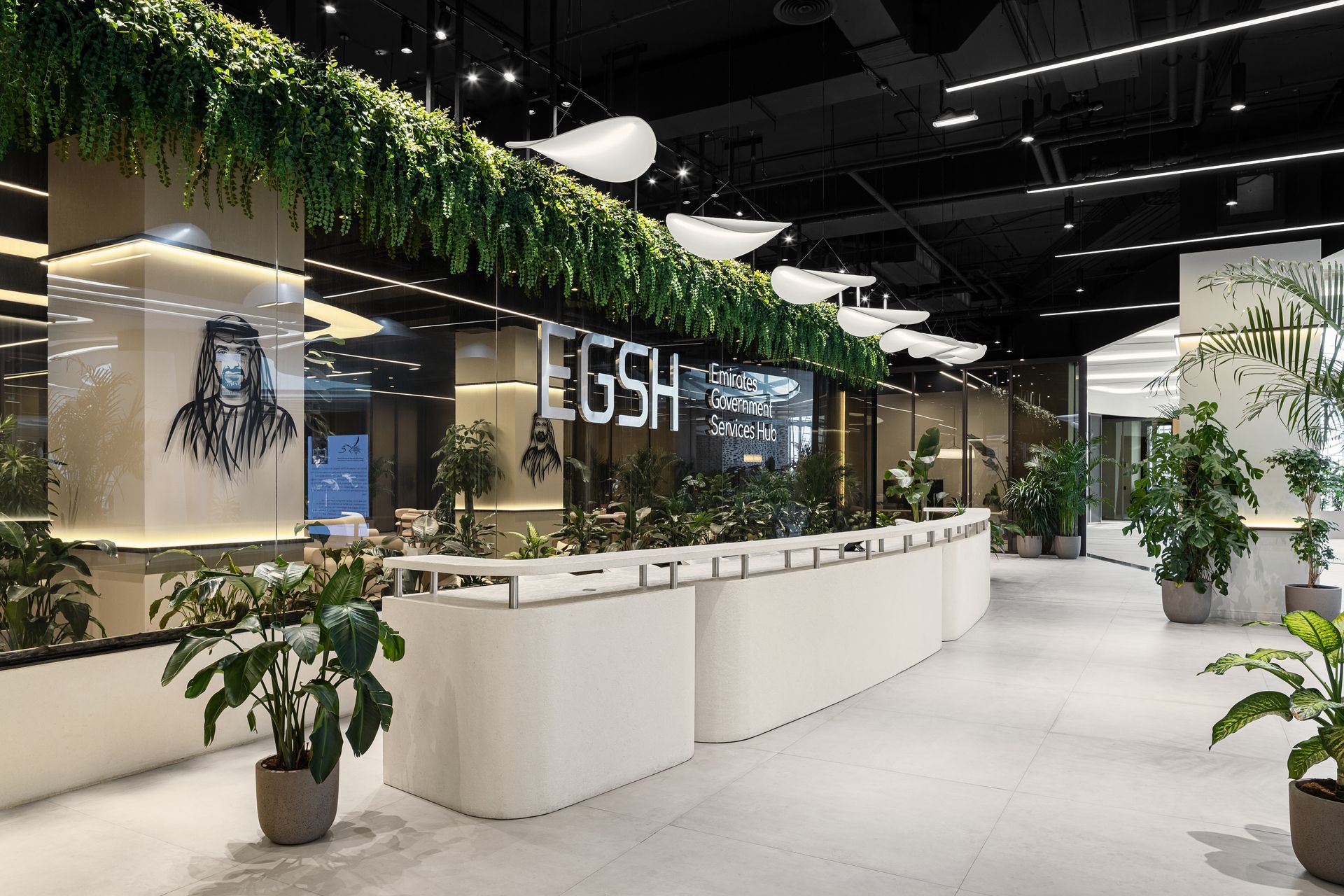
You can stop by EGSH during working hours without an appointment or book your visit at a time that suits you best.
Address
Art of Living Mall, Al Barsha 2, Dubai
Operating hours
Monday–Thursday, Saturday: 9:00 am–5:00 pm
Friday: 9:00 am–12:00 pm, 2:00 pm–5:00 pm
Sunday: Closed

Transitional Visas and Long‑Term Options After Study
Not every graduate secures employment immediately. Dubai offers several transitional routes that allow time to search for a job or to benefit from long‑term residence if academic performance qualifies.
Visit Visa to Explore Job Opportunities
GDRFA Dubai provides a specific visit visa intended “to explore job opportunities”, designed for individuals who wish to stay in Dubai while looking for work. A separate extension service allows a visit visa to be extended for the same period, subject to a combined maximum of 180 days, as determined by the competent authority.
The extension fee indicated by GDRFA Dubai is AED 600 plus 5% VAT. When the sponsored person is inside the UAE at the time of extension, additional charges apply: AED 10 Knowledge Dirham, AED 10 Innovation Dirham and an AED 500 inside‑country fee. These extensions do not themselves authorise work; they simply extend the lawful stay while the person looks for an employer willing to sponsor a work visa.
Extending Study/Training Visit Visas and Considering Golden Residence
For those who entered Dubai on a visit visa for study, training or qualification, GDRFA Dubai offers an “Extending visit visa for Study, Training or Qualification” service. This extension can be for the same period as the original visa, carries the same base fee of AED 600 plus 5% VAT, and attracts the same Knowledge, Innovation and inside‑country fees if the person is already in the UAE. However, the combined duration of the original visa and its extensions cannot exceed 180 days, after which the person must change status or depart.
Outstanding students and graduates may instead be eligible for a Golden Residence in Dubai. This residence is described as a 10‑year, non‑extendable visa that does not require a sponsor, granted to top students of the UAE or eligible international universities who meet grade point average and institution‑rating criteria set by the authorities.
Applications are handled by GDRFA Dubai, usually after prior approval from the Federal Authority for Identity, Citizenship, Customs & Ports Security. Where a Golden Residence is granted, it can provide a more flexible long‑term base alongside work authorisations in line with federal rules.

Compliance Tips, Timelines and Typical Scenarios
Managing dates and sequence is crucial when planning a Dubai student visa status change to work visa, especially around expiry, grace periods and work‑permit validity.
Key Deadlines and Common Pitfalls
Several timelines interact in a UAE work visa after graduation scenario. First, there is the expiry date of your current residence (family, student, post‑graduation year or otherwise), followed by a 30‑day grace period to obtain a new residence or exit. Second, a MoHRE work‑permit‑based entry permit is generally valid for two months, during which the worker must enter the UAE.
Third, once in the UAE on a work‑permit‑linked entry or after a status amendment, the medical fitness test, Emirates ID procedures, labour card issuance and residence stamping must be completed within 60 days. Common pitfalls include starting work before MoHRE issues a permit, allowing the grace period to lapse while waiting for a job offer, delaying the GDRFA-Dubai Status Amendment until the work‑permit entry is close to expiry, or assuming that a student or family visa alone confers work rights.

Practical Checklist Before You Switch to a Work Visa
Before initiating a UAE family visa to work visa conversion or moving from student to employment residence, it is useful to follow a structured checklist. Confirm that you are still within your current residence validity or grace period, or that you hold a valid visit visa where applicable. Secure a written job offer from an employer registered with MoHRE and, for Dubai, authorised to sponsor residence visas through GDRFA Dubai.
Gather core documents early: a passport with sufficient validity, copies of your current visa, Emirates ID, an attested graduation certificate, and any proof of ongoing or completed studies. Discuss with your employer who will handle MoHRE and GDRFA Dubai submissions and how government fees will be paid. Finally, verify the latest requirements and fee schedules directly on u.ae, mohre.gov.ae and gdrfad.gov.ae, or seek procedural support from EGSH to align your timing and documentation with current practice.

FAQ
Can I Work in Dubai While I Am on a Student or Family Visa?
You may work only if you hold an appropriate MoHRE work permit that covers the actual work you perform. Students aged 15 or above can be employed or trained under MoHRE’s Training and Work Permit for Students, and eligible school or university students can obtain a private tuition work permit for giving lessons. Residents on family visas can take part‑time roles if they obtain a MoHRE part‑time work permit and a no‑objection certificate from their family sponsor. Without such permits, paid work is not allowed even if your residence visa is valid.
Do I Have to Leave the UAE to Change from a Student Visa to a Work Visa?
You do not necessarily have to leave the country to convert a student visa to a work visa in the UAE, provided specific conditions are met. In Dubai, GDRFA offers a Status Amendment service that allows your status to be changed within the UAE when a new entry permit or visa is issued and the previous residence or entry permit is cancelled. The employer, often through a PRO or Amer centre, submits the application with the required passport copies, visa documents and fees. Where the status amendment is granted, the process continues in‑country with medicals, Emirates ID and residence stamping.
What Happens If My Student or Family Residence Expires Before I Find a Job?
If your residence visa expires or is cancelled, you typically have a 30‑day grace period to obtain a new residence permit or exit the UAE. During this period, you may look for work, but you must either secure an employment‑based residence or depart before the grace period ends to avoid overstay fines. Some individuals may choose transition options, such as applying for a visit visa to explore job opportunities or extending a study/training visit visa where applicable, but these still require timely status changes and do not replace the need for a MoHRE work permit to work.
What Are the Main Fees to Change from a Study Visa to a Work Visa in Dubai?
Current guidance lists AED 500 as the base amendment fee, plus AED 10 Knowledge Dirham, AED 10 Innovation Dirham, an AED 15 individual fee and an AED 50 establishment fee. Additional costs arise from medical fitness tests, Emirates ID issuance and the work visa package agreed between the employer and worker. If transitional visit visas or extensions are used (for study/training or to explore job opportunities), there are separate GDRFA fees, including AED 600 per extension, plus VAT and in‑country surcharges. Employers may cover some or all of these charges, so it is advisable to clarify cost allocation in advance.
How Long Can I Stay in Dubai After Graduation If I Do Not Immediately Get a Job?
Graduates may be eligible for a one‑year student‑related residence visa, renewable once, based on an attested graduation certificate, with a government fee of AED 100 per year. After this period, and after any 30‑day grace period following expiry or cancellation, they must either obtain another type of residence (such as employment residence, Golden Residence or another qualifying category) or leave the country. Some may also use a visit visa to explore job opportunities, but these have defined maximum durations and extension caps that must be respected.
Can Golden Residence Replace a Work Visa for Outstanding Graduates?
A Golden Residence for outstanding students and graduates in Dubai is a 10‑year residence that does not require a sponsor and may be granted to top students who meet specific criteria set by the UAE authorities. It is obtained through GDRFA Dubai with approval from the Federal Authority for Identity, Citizenship, Customs & Ports Security. While Golden Residence provides long‑term stability and may simplify some sponsorship matters, individuals working in the private sector must still comply with labour rules, including holding any MoHRE work permits required for their employment arrangements.

This article is intended to provide general information based on official UAE sources, and does not constitute personalised legal advice. Before acting, applicants should verify the current rules and fees directly with the relevant authority or an authorised service centre.



