


About EGSH
What Is a Free Zone Visa in Dubai
A free zone visa in Dubai is a residence permit issued through the governing authority of a specific free zone, allowing the holder to live and work in the UAE. The total cost of a standard free zone employment visa ranges from AED 3,500 to AED 7,500, depending on the free zone, visa type, and whether the applicant is inside or outside the country. Free zone visas are processed in coordination with the General Directorate of Residency and Foreigners Affairs (GDRFA) in Dubai and the Federal Authority for Identity, Citizenship, Customs and Port Security (ICP) at the federal level.
The legal framework governing all residence visas in the UAE, including those issued through free zones, is Federal Decree-Law No. 29 of 2021 Concerning Entry and Residence of Foreigners and its Executive Regulations under Cabinet Resolution No. 65 of 2022. Free zone authorities act as the sponsoring entity for visa purposes and manage the immigration file, establishment card, and visa quota on behalf of registered companies. Final visa issuance and residency decisions rest with the GDRFA or ICP.
Unlike mainland visas, which are processed through the Ministry of Human Resources and Emiratisation (MOHRE) for work permit purposes, free zone visas are administered entirely by the respective free zone authority. This means the free zone handles the work permit, employment contract registration, and visa application as a single coordinated process. However, the visa holder is restricted to employment within that specific free zone unless additional approvals are obtained.
Apply for an Investor Golden Visa
Officially regulated fees
No hidden charges
Queue-free service
VIP support at no extra cost
From AED 10,575
Explore EGSH Government Services in Dubai
Types of Free Zone Visas in Dubai
Dubai free zones issue several categories of residence visas, each designed for a specific relationship between the applicant and the licensed free zone entity. Work permits and residence visas for free zone employees are applied for through the respective free zone authority.
Employment Visa
The employment visa is the most common free zone visa type. It is issued to foreign nationals hired by a company registered in a Dubai free zone. The employing company acts as the visa sponsor, and the visa ties the holder to that specific employer within the zone. Standard validity is two years, renewable upon continued employment. The employer bears all visa-related costs under Federal Decree-Law No. 33 of 2021 on the Regulation of Employment Relationships. For a detailed comparison — employment visas in the UAE.

Investor or Partner Visa
Free zone companies can sponsor residence visas for their shareholders, investors, and partners. The applicant must hold a minimum share capital in the company as determined by the free zone authority. At DMCC, for example, partner and investor visas require a share certificate showing a minimum of 50 shares amounting to AED 50,000 in total share capital. Investor visas are typically valid for two to three years, depending on the free zone.
Dependent Visa
Free zone visa holders who meet the UAE's salary and accommodation requirements can sponsor immediate family members. Sponsorship typically covers a spouse, children, and in some cases parents. The sponsor must maintain valid health insurance for all dependents and provide proof of suitable accommodation through an Ejari-registered tenancy contract or property title deed. Dependent visa fees are separate from the primary visa costs.

Get Visa Services in Dubai Through EGSH
Authorised One-Stop Government Services Centre
- All government services in one place
- Completed in one visit
- VIP service without queues
- Regulated government fees

How Free Zone Visas Differ from Mainland Visas
The structural differences between free zone and mainland visa regimes affect cost, processing, and operational flexibility. Choosing between the two depends on the target market, business activity, and long-term objectives. A full breakdown of cost drivers for both structures — comparative guide to business setup costs in Dubai.
Sponsoring authority. Mainland employment visas require a MOHRE-issued work permit before the GDRFA processes the residence visa. Free zone visas bypass MOHRE entirely. The free zone authority issues the work permit and manages the entire immigration process internally, submitting applications to the GDRFA or ICP on the company's behalf.
Employment restriction. A mainland employment visa allows the holder to work anywhere within the UAE for the sponsoring employer. A free zone visa restricts the holder to employment within the issuing free zone. Working outside the zone without additional approvals constitutes a visa violation.
Cost structure. Mainland visa processing involves separate fees paid to MOHRE, the GDRFA, medical screening centres, and Emirates ID authorities. Free zone visa packages often bundle work permit fees, residence visa processing, and Emirates ID registration into a single payment. The bundled approach typically results in lower total costs. Free zone employment visa packages tend to cost 30–40% less than equivalent mainland processing, though this varies by zone.
Visa quota. Mainland companies receive visa allocations based on the Ejari-registered office space and business activity, assessed by MOHRE and the GDRFA. Free zone visa quotas are set by the free zone authority based on the selected office solution. A flexi-desk may allow up to three visas, while a physical office space allocation depends on the square footage. Companies can apply for quota increases, subject to approval.


Why Choose EGSH for Government Services in Dubai

VIP Service
Personal assistance and priority processing with no queues.

Affordable Fees
Official government rates with transparent, fixed pricing.

All Services in One Place
Comprehensive range of UAE government services under one roof.

One-Visit Completion
Most procedures are completed in a single visit to the centre.
Visa Quota and Allocation Rules
Every free zone company receives a visa quota that determines how many residence visas it can sponsor. Most free zone authorities impose a quota or limit on the number of visas that can be issued to each business.
Quota allocation depends on the office solution selected during company registration. At DMCC, the allocation structure follows these general parameters: a flexi-desk supports up to three visas, a serviced office supports four or five visas depending on size, and a physical office space provides one visa per approximately nine square metres. Other free zones apply similar but zone-specific formulas.
Companies that need additional visas beyond their initial allocation can apply for a quota increase. The free zone authority reviews the request based on the premises, business activity, and staffing justification. Approval is not automatic. Some free zones allow companies to upgrade their office package to qualify for a higher visa allocation.
The visa quota directly affects hiring capacity. Companies planning to employ a larger workforce should factor the visa allocation into their initial free zone company setup decision, as office upgrades after incorporation carry additional costs.
Eligibility Requirements
Eligibility for a free zone visa depends on the visa category and the specific free zone's regulations. The following general requirements apply across most Dubai free zones.
For employment visa applicants: a valid employment contract with a licensed free zone company, a passport with at least six months' remaining validity, and a clean immigration record. Some free zones require attested educational certificates for professional and managerial positions. The UAE Government confirms that the minimum age for an employment visa is 18 years, with a maximum age of 60 in certain free zones, although special approvals can be obtained for shareholders and managers listed on the trade licence.
For investor and partner visa applicants: a valid free zone trade licence, a share certificate confirming the required minimum capital, and a passport with at least six months' remaining validity.
For freelancer visa applicants: a valid freelancer permit issued by the relevant free zone authority, proof of qualifications relevant to the permitted activity, and a passport with at least six months' remaining validity.
For all categories: mandatory medical fitness clearance, valid UAE health insurance, and Emirates ID registration. Health insurance must be active before the residence visa can be issued.
Required Documents
Document requirements vary between free zones, but the standard set includes the following. Applicants should confirm the exact requirements with their free zone authority before submission.
Company-side documents (submitted by the sponsor):
- Valid free zone trade licence
- Establishment card or immigration file details
- Visa quota approval confirmation
- Authorised signatory documents and company stamp
Applicant-side documents:
- Original passport with at least six months' validity
- Coloured passport-sized photographs (white background)
- Attested educational certificates (for professional, managerial, and some skilled roles)
- Employment contract or offer letter signed by both parties
- For investors: share certificate and Memorandum of Association
Post-entry documents:
- Medical fitness test result
- Emirates ID biometric registration confirmation
- Valid UAE health insurance policy
All educational certificates submitted for professional or managerial positions must be attested through the appropriate channels. For documents issued outside the UAE, this typically involves attestation by the issuing country's Ministry of Foreign Affairs, the UAE Embassy in that country, and the Ministry of Foreign Affairs and International Cooperation (MOFA) in the UAE.

Visit EGSH for VIP Service Without Queues
You can stop by EGSH during working hours without an appointment or book your visit at a time that suits you best.
Address
Art of Living Mall, Al Barsha 2, Dubai
Operating hours
Monday–Thursday, Saturday: 9:00 am–5:00 pm
Friday: 9:00 am–12:00 pm, 2:00 pm–5:00 pm
Sunday: Closed

Step-by-Step Application Process
The free zone visa application follows a defined sequence. Each stage must be completed before the next can proceed.
Step 1 — Immigration File and Establishment Card
The sponsoring company must have an active immigration file with the GDRFA and a valid establishment card issued by the free zone authority. This is typically completed during the company registration process. Without an active immigration file and available visa quota, no visa application can be submitted.
Step 2 — Entry Permit Application
The free zone authority submits an entry permit application to the GDRFA or ICP on behalf of the applicant. If the applicant is outside the UAE, the entry permit allows them to enter the country and complete the residency process. The entry permit is valid for 60 days from the date of issuance. Entry permit fees range from AED 800 to AED 1,200, depending on the free zone and whether the applicant is inside or outside the UAE. Applicants already in the UAE on a valid visa may apply for an in-country visa status change instead of exiting and re-entering.
Step 3 — Medical Fitness Test
After entering the UAE (or after the status change is processed), the applicant must undergo a medical fitness examination at an authorised screening centre. In Dubai, Smart Salem centres provide same-day electronic results transmitted directly to the GDRFA. The examination includes a blood test and chest X-ray, screening for communicable diseases as mandated by UAE health regulations. Medical fitness test fees range from AED 300 to AED 700, depending on the centre and service level selected.
Step 4 — Emirates ID Biometrics
The applicant visits an authorised Emirates ID centre to complete fingerprinting, a facial scan, and document verification. The Emirates ID serves as the primary identification document in the UAE and is digitally linked to the residence visa. Emirates ID fees are calculated at AED 100 per year of visa validity, plus a smart services fee. For a standard two-year free zone visa, the total Emirates ID cost is approximately AED 370 to AED 500.
Step 5 — Health Insurance Activation
Valid UAE health insurance must be in place before the residence visa can be finalised. In Dubai, health insurance is mandatory for all residents under the Dubai Health Insurance Law (Law No. 11 of 2013). Many free zone packages include basic health insurance, but applicants should confirm coverage meets the minimum requirements set by the Dubai Health Authority (DHA).
Step 6 — Residence Visa Issuance
Once the medical fitness test, Emirates ID registration, and health insurance are confirmed, the residence visa is issued. Most free zones now use digital stamping, which means the visa is activated electronically rather than printed into the passport. The digital residence, combined with the Emirates ID, serves as proof of legal residency in the UAE. Visa stamping or digital issuance fees range from AED 500 to AED 800.
The end-to-end processing time from entry permit application to residence visa issuance is typically two to four weeks, depending on the free zone and the completeness of submitted documents.
Related Government Services
Visa Renewal and Cancellation
Free zone residence visas must be renewed before they expire. The standard renewal window opens 30 days before the expiry date. Renewal requires a valid trade licence, a current employment contract or share certificate, a new medical fitness test, and updated health insurance. Emirates ID renewal runs concurrently. The ICP charges AED 100 per year of visa validity for Emirates ID renewal, plus a late renewal fine of AED 20 per day if the ID is not renewed within 30 days of expiry, up to a maximum of AED 1,000.
If the visa holder leaves employment, the sponsoring company must cancel the visa. A standard grace period of 30 days applies after cancellation, during which the former employee may find new employment, change visa status, or exit the UAE. Overstay fines are set at AED 50 per day by the ICP for residence visa holders who remain beyond the grace period.
For a comprehensive overview of all UAE residence visa categories, including renewal timelines and long-term options such as the Golden Visa and Green Visa, refer to UAE residence visas.

Family Sponsorship on a Free Zone Visa
Free zone visa holders can sponsor their spouse, children, and in some cases parents for UAE residence. The sponsor must meet the following general conditions:
- Minimum monthly salary as determined by GDRFA regulations (typically AED 4,000, or AED 3,000 with employer-provided accommodation)
- Valid Ejari-registered tenancy contract or property title deed demonstrating suitable accommodation
- Active health insurance for all sponsored family members
- A valid, unexpired residence visa
Dependent visa fees are separate from the primary applicant's costs. The GDRFA charges AED 1,035 for a family entry permit when the sponsored person is inside the UAE, and AED 365 when the sponsored person is outside the country. A refundable deposit of AED 1,020 applies for first-degree relatives.
Children can be sponsored up to age 18, or up to 25 if they are students. Unmarried daughters can be sponsored without an age limit. Sons above the age threshold must obtain their own residence visa through employment or other qualifying categories.
Common Issues and Misconceptions
"A free zone visa allows me to work anywhere in the UAE." This is incorrect. A free zone visa authorises employment only within the sponsoring free zone. Working for a mainland company or another free zone without the appropriate work permit is a violation of UAE immigration regulations.
"I can transfer my free zone visa to another free zone." A direct transfer is not possible. The existing visa must be cancelled, and a new visa must be processed through the new free zone authority. Some free zone authorities offer streamlined transfer procedures, but the applicant must still complete a new medical fitness test, Emirates ID registration, and health insurance activation.
"Free zone companies cannot sponsor family visas." This is a common misconception. Free zone visa holders can sponsor dependents if they meet the salary and accommodation thresholds set by the GDRFA. The process follows the same requirements as mainland-sponsored family visas.
"The free zone handles everything — I do not need to interact with any government authority." While the free zone manages the administrative process, the GDRFA and ICP retain authority over final visa decisions. Applications may be rejected or delayed based on immigration screening results, incomplete documentation, or other regulatory considerations.
The Role of EGSH
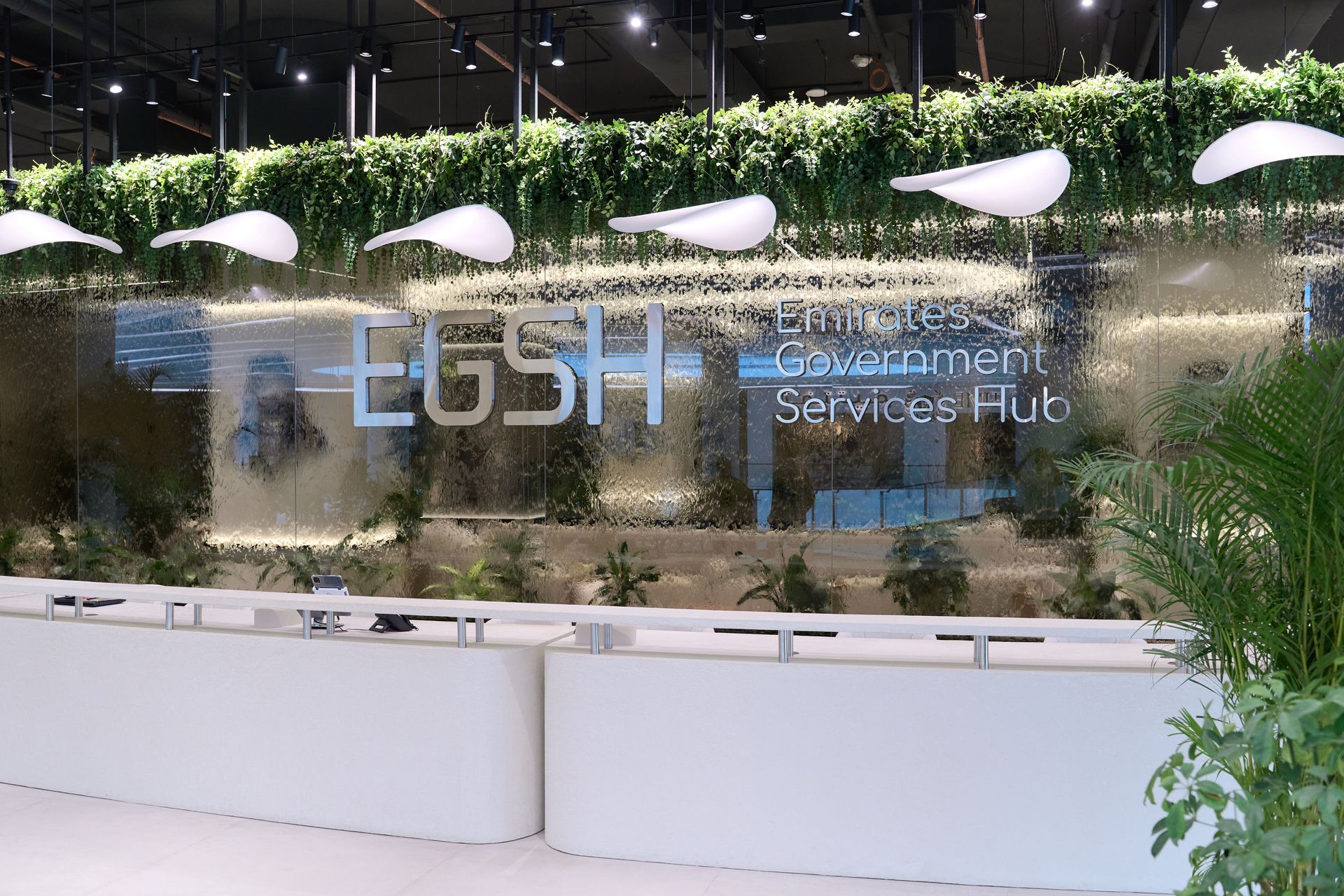
The Emirates Government Services Hub (EGSH) is an authorised government services centre in Dubai that provides access to official visa and immigration procedures through its licensed Amer Centre department. EGSH processes employment visa applications, visa status changes, medical fitness examinations, and Emirates ID services directly through GDRFA and ICP channels.
For applicants transitioning from a free zone visa to a mainland visa, or converting a visit visa to a free zone residence status, EGSH handles the procedural steps including status amendment, medical testing, and Emirates ID registration at a single location. EGSH also assists with free zone company setup, enabling investors to complete both the business registration and visa processing through one centre.
Frequently Asked Questions
How much does a free zone visa cost in Dubai?
The total cost of a standard free zone employment visa in Dubai ranges from AED 3,500 to AED 7,500. This includes the entry permit, medical fitness test, Emirates ID registration, health insurance, and visa issuance fees. Freelancer visas carry additional permit costs of AED 7,000 to AED 15,000 per year.
How long does it take to get a free zone visa in Dubai?
The end-to-end processing time is typically two to four weeks from entry permit application to final residence visa issuance. Processing times depend on the free zone, the completeness of submitted documents, and any additional security screening by the GDRFA or ICP.
Can I work outside my free zone on a free zone visa?
No. A free zone visa authorises employment only within the sponsoring free zone. Working for a mainland employer or a company in a different free zone requires a separate work permit and visa through the appropriate authority.
How many visas can a free zone company sponsor?
The number of visas depends on the free zone and the office solution selected. At DMCC, a flexi-desk allows up to three visas, while physical office space provides approximately one visa per nine square metres. Companies can apply for quota increases, subject to the free zone authority's approval.
Can I sponsor my family on a free zone visa?
Yes. Free zone visa holders who meet the minimum salary and accommodation requirements set by the GDRFA can sponsor their spouse, children, and eligible parents. Dependent visa fees and a refundable deposit apply separately.
What happens if my free zone visa expires?
A 30-day grace period applies after residence visa expiry or cancellation. During this period, the holder must renew the visa, obtain a different residence category, or leave the UAE. Overstaying beyond the grace period incurs a fine of AED 50 per day, as standardised by the ICP.
Can I switch from a free zone visa to a mainland visa without leaving the UAE?
Yes. An in-country visa status change is available in most cases. The existing free zone visa is cancelled, and the new employer applies for a mainland work permit through MOHRE and a status amendment through the GDRFA. A status amendment fee of AED 500 applies in Dubai.
Is the 180-day absence rule applicable to free zone visa holders?
Yes. Under Federal Decree-Law No. 29 of 2021, standard free zone residence visa holders who remain outside the UAE for more than 180 consecutive days risk automatic visa cancellation. Golden Visa, Green Visa, and Blue Visa holders are exempt from this rule.

Official Sources and References
-
Federal Authority for Identity, Citizenship, Customs and Port Security (ICP) — Federal authority responsible for visa and residency regulation across the UAE.
-
General Directorate of Residency and Foreigners Affairs (GDRFA) — Dubai authority managing entry permits, residence visas, and immigration enforcement.
-
UAE Government Portal — Official portal providing information on free zone recruitment and visa procedures.
-
Ministry of Human Resources and Emiratisation (MOHRE) — Federal authority regulating mainland labour and work permits.
-
Dubai Health Authority (DHA) — Authority overseeing health insurance compliance and medical fitness testing in Dubai.
-
Ministry of Foreign Affairs and International Cooperation (MOFA) — Responsible for document attestation of foreign-issued certificates.
-
UAE Legislation Portal — Repository of federal laws and executive regulations, including Federal Decree-Law No. 29 of 2021 and Cabinet Resolution No. 65 of 2022.
Important Notice
The information in this article is current as of the date of publication and is based on official UAE government sources. Fees, eligibility criteria, document requirements, and processing timelines are subject to change without prior notice. Final approval of any visa application rests with the relevant UAE government authority, including the GDRFA and the ICP. Free zone regulations, visa quotas, and fee schedules vary between individual free zone authorities and are subject to periodic revision. EGSH facilitates the application process through authorised government channels but does not issue or guarantee visa approvals. Applicants are advised to confirm all current requirements directly with the relevant free zone authority and immigration authorities before submitting an application.



