



About EGSH
Property Annexation in Dubai — Overview
Property annexation in Dubai is a registration procedure that consolidates two or more adjacent registered properties into a single real property unit under one title deed. The Dubai Land Department (DLD) administers this service under Law No. 7 of 2006 Concerning Real Property Registration in the Emirate of Dubai, which mandates that any merger or division of a real property unit be recorded in the Property Register. The application fee is AED 500, and the DLD typically completes the process within four working hours of submission.
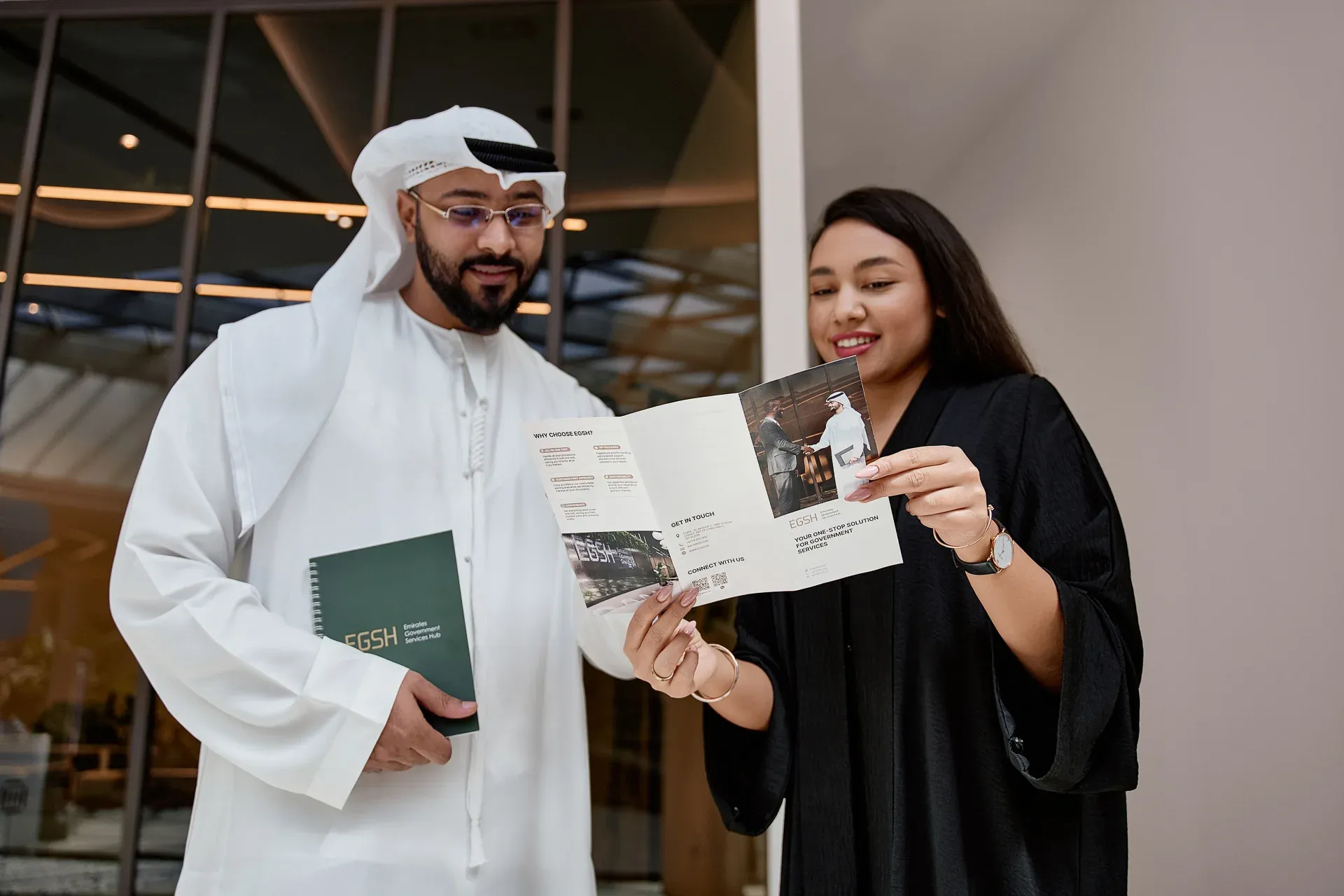
EGSH is an authorised DLD trustee centre that processes property annexation and separation transactions directly through the DLD system. Applicants submit the request, pay all applicable fees, and receive the updated electronic title deed and property map at EGSH in a single visit, at standard government rates.
Apply for Property Separation or Annexation
Officially regulated fees
No hidden charges
Queue-free service
VIP support at no extra cost
From AED 1,000
Explore EGSH Government Services in Dubai
What Property Annexation Means Under Dubai Law
Annexation, also referred to as amalgamation, is the legal process of combining separately registered real property units into one consolidated unit with a single folio in the DLD's Property Register. The merged property receives a new title deed reflecting the updated boundaries, total area, and unified ownership record.
Law No. 7 of 2006 requires each real property unit to have its own separate map indicating its site, boundaries, measurements, area, and constructions. Upon annexation, the DLD's Survey Department issues a new map reflecting the consolidated configuration, and the Property Register is updated accordingly. The resulting title deed carries the same absolute evidentiary value as any other DLD-issued title deed.
The service applies to all registered real property in Dubai: vacant land plots, residential and commercial units, villas, offices, and warehouses. It is distinct from a title deed amendment, which modifies data on an existing title deed, such as a name correction or area adjustment, without altering the composition of the registered unit.

Legal Framework Governing Property Merger
Two principal pieces of legislation govern property annexation in Dubai.
Law No. 7 of 2006 — Real Property Registration
Law No. 7 of 2006 establishes the DLD's exclusive authority over property registration in the Emirate. The law requires that any variation in a real property unit by way of merger or division be registered in the Property Register and that the DLD issue an updated map for the resulting unit. These provisions make annexation simultaneously a survey update and a registration update — the two are inseparable.
A critical provision addresses collateral rights during merger. Where two units merge and only one carries a registered mortgage, the mortgage automatically extends to the entire consolidated unit without the lender's consent. However, where each unit is encumbered by a separate mortgage from a different lender, the merger requires the prior consent of all mortgage holders. This distinction is directly relevant to owners planning to consolidate financed properties.

Law No. 6 of 2019 — Jointly Owned Real Property
For properties within multi-unit developments, Law No. 6 of 2019 Concerning Ownership of Jointly Owned Real Property in the Emirate of Dubai introduces additional requirements. The DLD issues and updates maps of common parts, designated common parts, and common facilities under this law. Merging adjacent units within a building may alter the registered common area allocation, requiring developer or management entity approval of the revised layout before the DLD processes the application.

Get DLD Services in Dubai Through EGSH
Authorised One-Stop Government Services Centre
- All government services in one place
- Completed in one visit
- VIP service without queues
- Regulated government fees

Who Can Apply for Property Annexation
The service is available to the following applicants:
- Registered property owners holding valid DLD-issued title deeds for the adjacent properties to be merged. All properties must be registered under the same ownership.
- Developers managing registered real estate projects, who submit applications through the Oqood portal or the DLD's Survey Department.
- Authorised representatives acting under a valid, attested Power of Attorney. Foreign-issued powers of attorney must be attested by the Ministry of Foreign Affairs (MOFA) in the country of origin, the UAE Embassy, and MOFA in the UAE.
The service is open to UAE nationals, residents, and non-resident property owners. Residents and citizens must present a valid Emirates ID; non-residents must provide a valid passport copy.

Eligibility Conditions and Pre-Approval Requirements
Several conditions must be met before the DLD accepts an annexation application.
Ownership Consistency
All properties intended for merger must be registered under the same owner or entity. If adjacent units have different registered owners, ownership must first be consolidated through a property ownership transfer or sale registration before annexation can proceed.
Planning Authority Approval
The DLD requires an approved map from the relevant planning authority — typically Dubai Municipality or, for special development zones, the Dubai Development Authority (DDA) — showing the post-annexation configuration. The map must depict updated boundaries, total area, and any changes to access routes or common areas. Without this approval, the DLD will not accept the application.

Mortgage and Encumbrance Status
If any property to be merged is subject to a registered mortgage, the applicant must obtain a No Objection Certificate (NOC) from the financing bank. Where only one unit carries a mortgage, the law permits the merger to extend that mortgage to the consolidated unit automatically. Where multiple separate mortgages exist, all lenders must provide consent. Owners restructuring mortgage arrangements after annexation may use the mortgage registration service at EGSH.
Developer NOC for Units Within Projects
For units within a registered development — such as apartments in a residential tower — the developer may need to issue a NOC confirming that the annexation complies with the project's approved master plan. This applies where merging units alters the building's floor plan or affects common area allocations governed by Law No. 6 of 2019.



Why Choose EGSH for Government Services in Dubai

VIP Service
Personal assistance and priority processing with no queues.

Affordable Fees
Official government rates with transparent, fixed pricing.

All Services in One Place
Comprehensive range of UAE government services under one roof.

One-Visit Completion
Most procedures are completed in a single visit to the centre.
Step-by-Step Annexation Process
Step 1 — Obtain the Planning Authority Map
The applicant obtains an approved map from the relevant planning authority showing the proposed post-annexation layout. For most Dubai properties, Dubai Municipality issues this map. For properties in special development zones, the DDA issues the approval. The map must reflect updated boundaries, total area, and any changes to access or common parts.
Step 2 — Gather Supporting Documents
The applicant collects all required documents: title deeds for the properties being merged, Emirates ID or passport copies, applicable bank or developer NOCs, and an attested Power of Attorney if a representative is submitting the application.
Step 3 — Submit the Application
The application can be submitted through:
- Real Estate Services Trustee centres — such as EGSH, where a consultant reviews documents, enters the transaction into the DLD system, and processes the submission.
- The DLD website or Dubai REST app — for direct digital submission by property owners.
- The Oqood portal — for registered developers processing project-level annexation.
Step 4 — Pay the Applicable Fees
The DLD fees are payable at submission. Trustee centres accept cash and card; the DLD website and Dubai REST app accept online payment.
Step 5 — Receive Updated Title Deed and Map
Upon approval, the DLD issues the updated electronic title deed and property map via email. Standard processing time is approximately four working hours from submission and fee payment.

Visit EGSH for VIP Service Without Queues
You can stop by EGSH during working hours without an appointment or book your visit at a time that suits you best.
Address
Art of Living Mall, Al Barsha 2, Dubai
Operating hours
Monday–Thursday, Saturday: 9:00 am–5:00 pm
Friday: 9:00 am–12:00 pm, 2:00 pm–5:00 pm
Sunday: Closed

Special Considerations for Mortgaged Properties
Annexation involving mortgaged units requires attention to the rules in Law No. 7 of 2006.
If only one property carries a registered mortgage, the mortgage extends automatically to the consolidated unit. Lender approval of the merger is not required, although the lender retains all existing rights over the new unit. Owners should notify their bank to ensure mortgage records are updated and insurance coverage reflects the larger property.
If each property carries a separate mortgage from a different lender, both lenders must provide written consent — typically as a bank NOC — before the DLD processes the annexation. This situation may require the owner to refinance or consolidate mortgages under a single lender before proceeding.
Where a property is subject to a registered block — for instance, under a court order or dispute — annexation cannot proceed until the block is lifted.

Annexation for Developers and Project-Level Changes
Registered developers submit annexation requests for units within their projects through the DLD's real estate project data amendment service, which covers unit separation, annexation, area modifications, and common area adjustments.
The process begins with the appointment of a survey company, which prepares updated data matched against the approved plans. The survey company submits the application to the DLD's Survey Department for review. Upon approval, the DLD updates the real estate records and issues updated title deeds or Oqood certificates.
If a unit within the development has already been sold, the developer must obtain the buyer's written approval before submitting the annexation application.

Common Reasons for Property Annexation
Owners of adjacent land plots merge them to create a larger development site, enabling construction that would not be feasible on a single, smaller plot. A unified plot simplifies the permitting process with Dubai Municipality and allows greater design flexibility.
Investors who acquire neighbouring apartments or offices within the same building consolidate them to create a larger combined space. A single title deed increases market value and simplifies future transactions — it is easier to sell, transfer, or mortgage than multiple separate deeds.
Developers annex units within projects to reconfigure floor plans in response to market demand — for instance, merging smaller apartments into a larger penthouse or combining retail units into a flagship space.
In some cases, annexation supports meeting minimum property value thresholds for visa eligibility. Combining properties under a single title deed may simplify the documentation required for a Golden Visa through property investment, although investors should confirm requirements directly with the relevant authority.

Related Government Services
What Happens After Annexation
Upon approval, the DLD cancels the original title deeds for the individual properties and issues a single new electronic title deed for the consolidated unit. The title deed reflects the combined area, updated boundaries, and owner details.
A new electronic property map (e-map) is issued, showing the merged configuration as recorded in the Property Register. This map serves as the official cadastral record for all future transactions.
All existing rights registered against the original units — including mortgages, usufruct rights, and easements — transfer to the consolidated unit under Law No. 7 of 2006. Owners should verify that encumbrances are correctly reflected on the new title deed. EGSH offers title deed verification for owners confirming post-annexation accuracy.
Updated records are also reflected in the Dubai REST app, where the owner can view and download the new title deed and property map.

How to Apply for Property Annexation at EGSH
EGSH processes property annexation as an authorised DLD trustee centre, directly connected to the DLD registration system.
Visit EGSH at Art of Living Mall, Al Barsha 2, Dubai, during operating hours. No appointment is required, although advance booking is available. Bring the approved planning authority map, Emirates ID or passport, and any applicable NOCs.
A consultant reviews the documents, submits the application through the DLD system, and processes fee payment by cash or card. The updated title deed and property map are delivered to the applicant's email within approximately four working hours.

Frequently Asked Questions
What is property annexation in Dubai?
Property annexation is a DLD registration service that consolidates two or more adjacent registered properties into a single real property unit under one title deed. The process requires an approved map from the relevant planning authority and is governed by Law No. 7 of 2006.
How much does it cost to merge properties in Dubai?
The DLD application fee is AED 500. Additional fees include AED 250 for title deed issuance, AED 100–225 for map issuance depending on jurisdiction, and AED 10 each for Knowledge and Innovation Fees per drawing. Trustee centre submissions incur an additional service partner fee of AED 80 plus VAT.
Can I merge two apartments in the same building into one title deed?
Adjacent apartments within the same building can be merged, provided both are registered under the same owner and the applicant obtains an approved post-annexation map from the relevant planning authority. A developer NOC may be required if the annexation affects the building's floor plan or common area allocation.
What happens to a mortgage when merging properties?
Under Law No. 7 of 2006, if only one property carries a mortgage, the mortgage extends automatically to the consolidated unit without lender consent. If each property carries a separate mortgage from a different lender, both lenders must provide a NOC before annexation proceeds.
How long does property annexation take?
Standard processing time is approximately four working hours from application submission and fee payment. Developer-level changes submitted through the Oqood portal may take longer due to Survey Department review.
Is Dubai Municipality approval required to merge land plots?
Yes. The DLD requires an approved map from the relevant planning authority — typically Dubai Municipality — showing the consolidated layout. Without this map, the application is not accepted.
Can a non-resident owner apply for property annexation?
Non-resident owners may apply, provided they hold valid DLD-issued title deeds for the properties being merged. A valid passport copy is required, and if applying through a representative, an attested and translated Power of Attorney must be submitted.

Explained by
Reem Alsaadi
Customer Happiness Consultant
Reem Alsaadi is a Customer Happiness Consultant in the Registration Trustee department with 3 years of experience. She specialises in Title Deed Transfer, supporting clients in completing property ownership transactions through DLD with accurate and compliant processing.
Official Sources and References
- Dubai Land Department (DLD) — The authority responsible for real property registration, title deed issuance, and land-related services in the Emirate of Dubai.
- Law No. 7 of 2006 Concerning Real Property Registration in the Emirate of Dubai — The principal legislation governing property registration, title deeds, and merger/division of real property units.
- Law No. 6 of 2019 Concerning Ownership of Jointly Owned Real Property in the Emirate of Dubai — Governs ownership, common parts, and management of jointly owned real property in multi-unit buildings.
- Dubai Municipality — The planning authority responsible for issuing approved maps for property separation and annexation.
Important Notice
The information in this article is current as of March 2026 and is based on publicly available official sources. Government fees, document requirements, and procedural steps are subject to change without prior notice. Final approval of any property annexation application rests with the Dubai Land Department. Applicants are advised to verify the latest requirements directly with the DLD or through an authorised trustee centre before submitting their application. This article does not constitute legal advice.



