



Key Types of Property Auctions in Dubai and How They Differ
Property auctions in Dubai operate under three distinct mechanisms, each governed by different authorities and legal frameworks. Court-supervised execution sales are regulated by the Dubai Courts Execution Department under Dubai Law No. 14 of 2008 Concerning Mortgage and the Federal Civil Procedure Law. Bank repossessions follow internal asset disposal procedures of licensed financial institutions supervised by the UAE Central Bank.
Voluntary auctions are conducted through eMart, the official online auction portal of the Dubai Land Department (DLD). In all three cases, the DLD registration fee of 4% of the sale value applies upon ownership transfer, and the buyer must complete registration at an authorised Real Estate Registration Trustee Centre — EGSH or through the DLD's official channels.

Legal Framework Governing Property Auctions in Dubai
The primary legislation governing mortgage enforcement and court-supervised property sales in the Emirate of Dubai is Law No. 14 of 2008 Concerning Mortgage. This law establishes the procedures for foreclosure, forced sale, and distribution of auction proceeds when a mortgagor defaults on repayment obligations. Issues not covered by this Emirate-level law are governed by Federal Civil Procedure Law No. 11 of 1992 (as amended) and the Federal Civil Transactions Law, which apply to mainland properties outside financial free zones such as the Dubai International Financial Centre (DIFC).
For cancelled or unfinished off-plan projects, Decree No. 33 of 2020 established the Special Tribunal for Liquidation of Cancelled Real Property Projects in Dubai and Settlement of Related Rights. This specialised judicial body holds exclusive jurisdiction over all disputes, grievances, and complaints arising from unfinished or cancelled real estate projects, overriding all other courts in the Emirate, including the DIFC Courts.
The Real Estate Regulatory Agency (RERA), operating under the DLD, oversees developer compliance and manages the cancellation process for off-plan projects under Law No. 13 of 2008 Concerning the Interim Real Property Register. When RERA issues a cancellation decision, the Special Tribunal manages the liquidation of project assets and the settlement of investor rights, including the distribution of funds held in escrow accounts governed by Law No. 8 of 2007 Concerning Escrow Accounts for Real Property Development.

Court-Supervised Execution Sales
Court-supervised execution sales represent the most formally regulated auction mechanism in Dubai. These sales arise when a creditor obtains an enforceable judgment or exercises mortgage enforcement rights, and the Dubai Courts Execution Department orders the seizure and public sale of the debtor's property.
How the Foreclosure Process Begins
Under Articles 25 and 26 of Law No. 14 of 2008, when a mortgagor defaults on payment, the mortgagee (typically a bank or licensed financial institution registered with the UAE Central Bank) must first serve formal notice through the Notary Public, giving the debtor 30 days to settle the outstanding amount. If payment is not received within this period, the mortgagee applies to the execution judge at the Dubai Courts, requesting that the registered mortgage contract be granted the force of an enforceable deed and that the property be seized for public auction in accordance with DLD procedures.
The execution judge reviews the application to confirm that the mortgage was properly registered with the DLD, that notification was correctly served, and that the 30-day grace period has elapsed. Once these conditions are satisfied, the judge issues an attachment order against the property.

Auction Procedure and Pricing Rules
Following the attachment order, the DLD arranges the public auction. The property is valued, and a reserve price is set. If the first auction does not attract a bid meeting the reserve price, the judge may reduce the property's assessed value by up to 25% of its initial valuation and reschedule the sale. In this subsequent round, the property may be sold to the highest bidder regardless of the price offered, provided the bid is not less than 50% of the initial valuation.
The winning bidder must pay the balance of the sale price and all associated expenses within 10 days of the auction session. Once payment is settled, the auction is formally awarded, and the title deed is transferred to the new owner through the DLD.
Debtor Protections and Postponement Rights
The law provides several protections for debtors. Under Article 27 of the Dubai Mortgage Law, the mortgagor may request a one-time postponement of the auction for up to 60 days if they can demonstrate that significant harm will result from the immediate sale or that they are able to repay the debt within that period.
Additionally, Article 288 of the Federal Civil Procedure Law allows the debtor to request a postponement if the property's revenue over five years is sufficient to settle the debt, or if the debtor's combined income allows instalment payments within five years with adequate guarantees. These provisions mean that auction timelines can be extended beyond initial estimates, and buyers should account for potential delays.
Bank Repossessions and Direct Sales
When borrowers default on mortgage obligations, banks in Dubai do not always pursue the full court-supervised foreclosure process. Major UAE banks, including Emirates NBD and Abu Dhabi Commercial Bank (ADCB), sometimes sell repossessed properties directly through their asset disposal divisions or licensed real estate agents before the properties reach public auction. According to banking sector analysis, fewer than 5% of mortgage borrowers in Dubai default for a period long enough for properties to reach the auction stage, making genuine foreclosure opportunities relatively limited.
How Bank Repossession Works
Bank repossession follows a structured internal process. After the borrower misses consecutive monthly instalments (typically four to five cycles), the bank classifies the asset as non-performing and initiates recovery procedures. The bank may first attempt loan restructuring or renegotiation. If these measures fail, the bank proceeds with formal notice under the mortgage contract and either files for court-supervised sale or lists the property for direct disposal.
In the direct disposal route, the bank appoints RERA-licensed brokers or uses its own asset management department to market the property. Prices typically reflect the urgency to clear non-performing assets from the bank's balance sheet, often resulting in discounts of 10% to 30% below current market value. Banks also publish auction notices in major UAE publications such as Gulf News, providing an additional channel for identifying upcoming sales.

Get DLD Services in Dubai Through EGSH
Authorised One-Stop Government Services Centre
- All government services in one place
- Completed in one visit
- VIP service without queues
- Regulated government fees

Key Differences from Court-Supervised Sales
Bank direct sales offer certain advantages for buyers. The process is generally faster than a full court-supervised auction, since the bank has already taken possession and can transfer the property without waiting for judicial proceedings. However, the buyer should be aware that bank-sold properties are typically offered on an "as is, where is" basis. A thorough independent property valuation and physical inspection are essential before committing to a purchase.
Buyers who intend to finance a bank-repossessed property with a new mortgage should arrange pre-approval before the sale, as banks selling distressed assets often require rapid settlement, typically within 30 days, which may not be compatible with standard mortgage processing timelines. Details of mortgage registration procedures and associated DLD fees are explained in the DLD mortgage guide.

Voluntary Auctions Through DLD eMart
The eMart platform is the official online auction portal operated by the Dubai Land Department. Launched in 2013, eMart allows property owners, developers, and the DLD itself to list properties for electronic auction. The platform supports voluntary owner-initiated auctions, court-ordered sales, and developer disposals. Registration and listing on eMart are free of charge.
Registration and Bidding Process
To participate in an eMart auction, buyers must register on the platform and verify their identity at a DLD office (original passport required). Before placing a bid, the buyer must pay a refundable deposit of 10% of the property's asking price through the Noqodi payment system or by bank transfer. The bidding period typically lasts five working days from the auction start date. Bids are submitted online and are visible in real time to all registered participants.
For a property to be listed on eMart, it must have a valid title deed, and the owner must obtain a Valuation Certificate from the DLD (valid for six months). If the auction is conducted pursuant to a court decision, a court verdict is required instead of the owner's sale declaration. The DLD reserves the right to present the property either through eMart or at a physical public auction.

Fees and Ownership Transfer
Upon a successful auction, the seller pays an auction fee of AED 10,000 plus 2% of the final selling price as their share of the DLD registration fee. The buyer pays 2% of the final selling price as their share, plus AED 10 Knowledge Fee and AED 10 Innovation Fee. The balance payment must be completed within 20 working days from the booking date. Once payment is settled, the ownership transfer is registered with the DLD, and an electronic title deed is issued to the new buyer.
These fees are consistent with the standard DLD registration structure, which applies a transfer fee of 4% split across all types of real estate transactions, including auction sales.



Why Choose EGSH for Government Services in Dubai

VIP Service
Personal assistance and priority processing with no queues.

Affordable Fees
Official government rates with transparent, fixed pricing.

All Services in One Place
Comprehensive range of UAE government services under one roof.

One-Visit Completion
Most procedures are completed in a single visit to the centre.
Emirates Auction and Private Auction Platforms
In addition to DLD's eMart, several licensed private auction companies operate in the Dubai property market. Emirates Auction, established in 2004, is one of the largest, handling both real estate and other asset categories. Response Auction, operating since 2005, specialises in foreclosure and bank-repossessed properties. Newer platforms such as Boli.ae offer real-time online auctions with countdown timers and remote bidding options.
All private auction platforms must comply with DLD and RERA regulations. Properties sold through these platforms still require standard DLD registration, and all applicable government fees, including the 4% transfer fee, trustee fees, and title deed issuance charges, remain payable. Emirates Auction requires a manager's cheque of 20% of the property value as a security deposit, with the balance payable within 10 days of bid approval.
Buyers should note that properties sold through court-ordered auctions via these platforms are sold "as is, where is" based on specifications determined by the auctioneer and the competent court. It is the bidder's responsibility to inspect and evaluate the property before placing a bid.

Cancelled Off-Plan Projects and the Special Tribunal
A distinct category of distressed property sales in Dubai involves cancelled or unfinished off-plan projects. When RERA cancels a development project due to significant delays, developer insolvency, or regulatory violations, the matter is referred to the Special Tribunal for Liquidation of Cancelled Real Property Projects, established under Decree No. 33 of 2020.
The Tribunal holds exclusive jurisdiction over all disputes arising from these projects. Its powers include ordering project completion by a new developer, liquidating project assets, distributing escrow funds to investors, and settling the rights of all affected parties. Under Article 11(b) of Law No. 13 of 2008 (as amended by Law No. 19 of 2020), if a project is cancelled by a final RERA decision, the developer must refund all amounts received from purchasers, with refunds processed through the project's dedicated escrow account under the supervision of the DLD.
The Tribunal's decisions are final and enforceable through the Execution Court at Dubai Courts. No other court in the Emirate, including the DIFC Courts, may accept disputes that fall within the Tribunal's jurisdiction.

Due Diligence Requirements Before Bidding
Purchasing property through any auction mechanism in Dubai requires thorough due diligence. The legal and financial risks differ from standard resale transactions, and buyers must take additional precautions before committing funds.
Verifying Property Status and Ownership
Before bidding, the buyer should conduct an official property status inquiry through the DLD to confirm the legal ownership, registration status, and any encumbrances recorded against the property. This verification does not include financial or legal encumbrances such as mortgages, attachments, or ongoing disputes — these must be investigated separately through the Dubai Courts and the relevant financial institution.
Title deed verification is equally essential. Buyers or their representatives should confirm that the seller or the executing authority holds the right to transfer ownership and that no competing claims exist against the property.

Outstanding Liabilities and Service Charges
Auction properties frequently carry outstanding service charges, utility arrears, or developer obligations. Service charge liability depends on the specific auction terms and the community's management regulations. Some auctions explicitly transfer all outstanding charges to the buyer as a condition of sale. Even where auction terms are silent on this point, management companies may block the issuance of a No Objection Certificate (NOC) until all arrears are settled.
Existing Ejari-registered tenancies typically survive an ownership transfer. The new owner must honour valid lease terms, including rent amounts and contract duration. Eviction of existing tenants requires grounds specified in Dubai Rental Law No. 33 of 2008 and may involve proceedings before the Rental Disputes Centre.
Financing Considerations
Financing an auction purchase requires advance planning. Most auction formats require rapid settlement — winning bidders at court-supervised auctions must pay the balance within 10 days, and eMart requires full payment within 20 working days. These timelines are often insufficient for standard mortgage processing, which typically takes three to six weeks.
Buyers intending to finance their purchase should obtain mortgage pre-approval before the auction. Some buyers purchase with cash and refinance after registration. Banks may also decline to finance properties in poor condition, lacking proper documentation, or with unresolved legal issues.

Visit EGSH for VIP Service Without Queues
You can stop by EGSH during working hours without an appointment or book your visit at a time that suits you best.
Address
Art of Living Mall, Al Barsha 2, Dubai
Operating hours
Monday–Thursday, Saturday: 9:00 am–5:00 pm
Friday: 9:00 am–12:00 pm, 2:00 pm–5:00 pm
Sunday: Closed

Related Government Services
Role of EGSH in Auction Property Registration
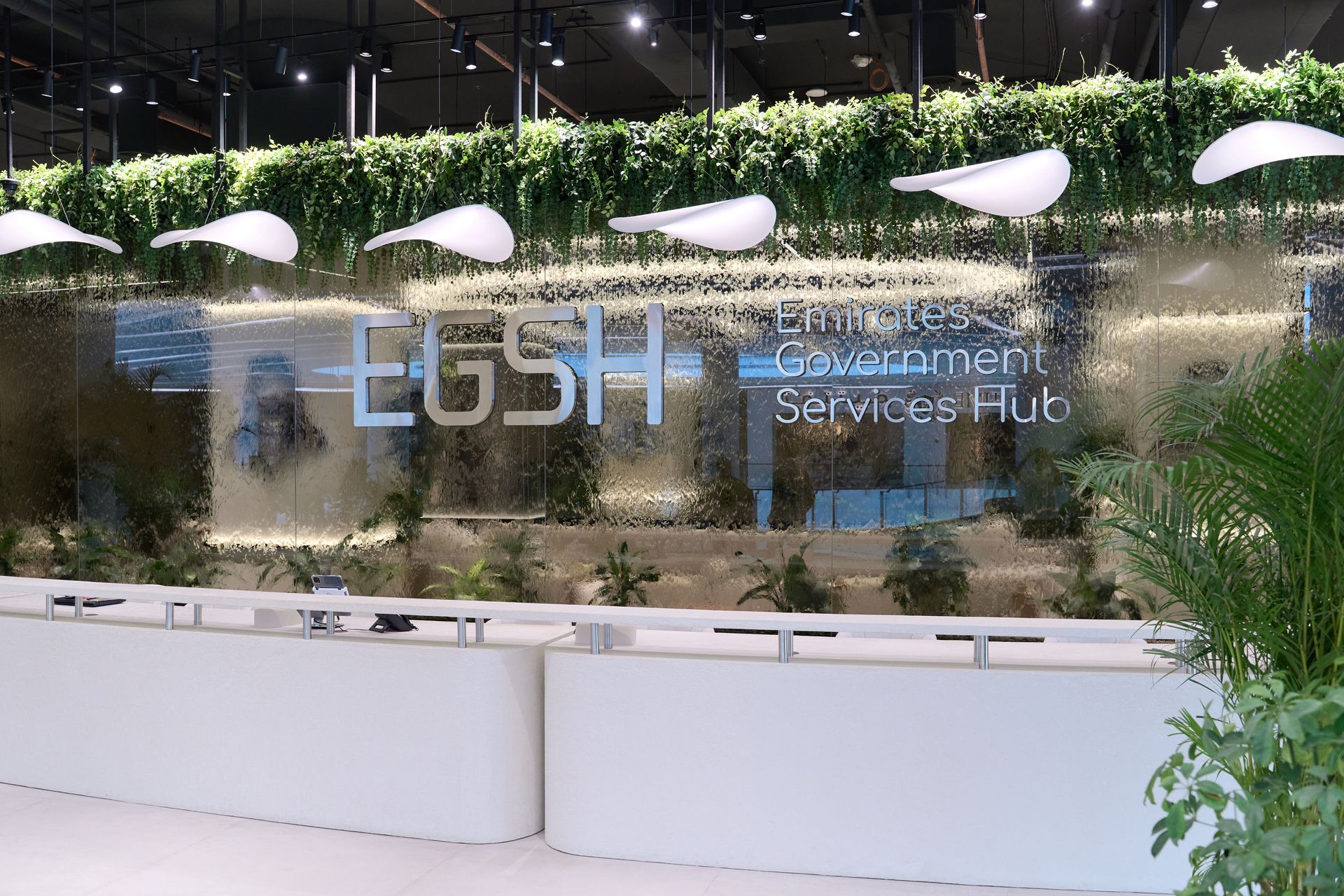
Emirates Government Services Hub (EGSH) is an authorised Real Estate Registration Trustee Centre under the Dubai Land Department. EGSH processes auction sale registrations, including ownership transfer, title deed issuance, and mortgage registration for properties acquired through court-supervised sales, bank repossessions, and eMart auctions.
At EGSH, a dedicated consultant verifies all auction documentation, calculates the applicable DLD fees, coordinates with both parties and their banks (if applicable), and completes the registration through the DLD's official electronic system. The entire process is typically finalised in a single visit. EGSH operates at officially regulated DLD fees with no additional charges, and clients may visit during working hours without an appointment or schedule a visit in advance.
For buyers who have acquired property at auction and need to complete the ownership transfer, title deed issuance, or post-purchase registration procedures, EGSH provides end-to-end support within the DLD's regulatory framework.

Frequently Asked Questions
What is the minimum deposit required to participate in a property auction in Dubai?
The deposit varies by platform. For eMart auctions conducted by the DLD, bidders must pay 10% of the property's asking price before participating. For Emirates Auction, a manager's cheque of 20% of the property value is required as a security deposit. Court-supervised auctions may have different deposit requirements set by the execution judge. Deposits are refundable if the bidder does not win.
Can foreign nationals buy property at auction in Dubai?
Yes. Foreign nationals may purchase property at auction in designated freehold areas in Dubai. The same ownership rules that apply to standard property purchases apply to auction transactions. Buyers must register on the auction platform, provide identification, and comply with all DLD registration requirements.
How long does the buyer have to pay after winning a property auction?
Payment timelines differ by auction type. For court-supervised sales, the winning bidder must pay the balance within 10 days. For eMart auctions, the balance must be paid within 20 working days from the booking date. For Emirates Auction, the balance plus fees must be paid within 10 days of bid approval. Failure to complete payment results in forfeiture of the security deposit.
Are auction properties sold with a warranty or guarantee?
No. Auction properties in Dubai are sold on an "as is, where is" basis. The buyer accepts all existing conditions, including maintenance issues, structural concerns, and outstanding liabilities unless specific terms state otherwise. Professional property inspection before bidding is strongly recommended.
What happens if the auction price does not cover the outstanding mortgage debt?
If the sale proceeds from a court-supervised auction are insufficient to cover the mortgagee's debt, the mortgagee may pursue the shortfall from the mortgagor through separate legal proceedings. The buyer's obligation is limited to the auction price, and the remaining debt remains between the original mortgagor and the lending institution.
Can I obtain a mortgage to buy a property at auction?
Financing an auction purchase is possible but requires advance preparation. Buyers should obtain mortgage pre-approval before the auction, as the settlement timelines (10–20 working days) are shorter than standard mortgage processing periods. Some buyers purchase with cash and arrange refinancing after registration.
Where can I register ownership of a property purchased at auction?
Ownership of a property purchased at auction must be registered with the Dubai Land Department. Buyers can complete the registration at an authorised Real Estate Registration Trustee Centre such as EGSH, where the full process — document verification, fee payment, and title deed issuance — is handled during a single appointment.
What is the DLD registration fee for properties bought at auction?
The DLD registration fee for auction property purchases is 4% of the sale value, split equally between the seller (or executing authority) at 2% and the buyer at 2%. Additional fixed fees apply, including trustee fees, title deed issuance (AED 250), and map fees. These rates are identical to the standard DLD registration structure for all property sales in Dubai.

Explained by
Omar Abdulaziz Ali Al Qassim
Government Services Center Manager / Legal Consultant
Omar Abdulaziz Ali Al Qassim is a Government Services Center Manager and Legal Consultant with 8 years of experience. He specialises in real estate, licensing, residency, labour, and Ejari services, ensuring accurate and compliant processing across DLD, MOHRE, GDRFA, and DET systems.
Official Sources and References
The following government authorities and legal instruments are cited in this article.
-
Dubai Land Department (DLD) — The government authority responsible for regulating and overseeing all property transactions, registrations, and valuations in the Emirate of Dubai.
-
eMart by DLD — The official online auction platform of the Dubai Land Department for electronic property auctions.
-
Real Estate Regulatory Agency (RERA) — Operates under the DLD and regulates real estate brokerage, development, and off-plan sales in Dubai.
-
Dubai Courts — The judicial authority responsible for civil, commercial, and execution proceedings, including court-supervised property auctions.
-
Federal Authority for Identity, Citizenship, Customs and Port Security (ICP) — Regulates residence visas, including investor visas linked to property ownership.
-
UAE Central Bank — The supervisory authority for banks and licensed financial institutions operating in the UAE.
-
Law No. 14 of 2008 Concerning Mortgage in the Emirate of Dubai — Governs mortgage registration, foreclosure, and forced sale procedures in Dubai.
-
Decree No. 33 of 2020 Concerning the Special Tribunal for Unfinished and Cancelled Real Property Projects — Establishes the Special Tribunal with exclusive jurisdiction over cancelled and unfinished real estate projects in Dubai.
-
Law No. 8 of 2007 Concerning Escrow Accounts for Real Property Development — Governs mandatory project-specific escrow accounts for off-plan developments in Dubai.
-
Law No. 13 of 2008 Concerning the Interim Real Property Register (as amended by Law No. 19 of 2020) — Regulates provisional registration of off-plan properties and refund obligations for cancelled projects.
Important Notice
The information in this article is current as of March 2026 and is based on official UAE legislation and government sources. Regulations, fees, and procedures are subject to change by the relevant government authorities without prior notice. Final approval of any property transaction, visa application, or legal matter rests with the competent UAE government authority. Readers are advised to verify all requirements directly with the Dubai Land Department, the Dubai Courts, or an authorised Real Estate Registration Trustee Centre such as EGSH before proceeding with any auction-related transaction. This article does not constitute legal, financial, or investment advice.



