


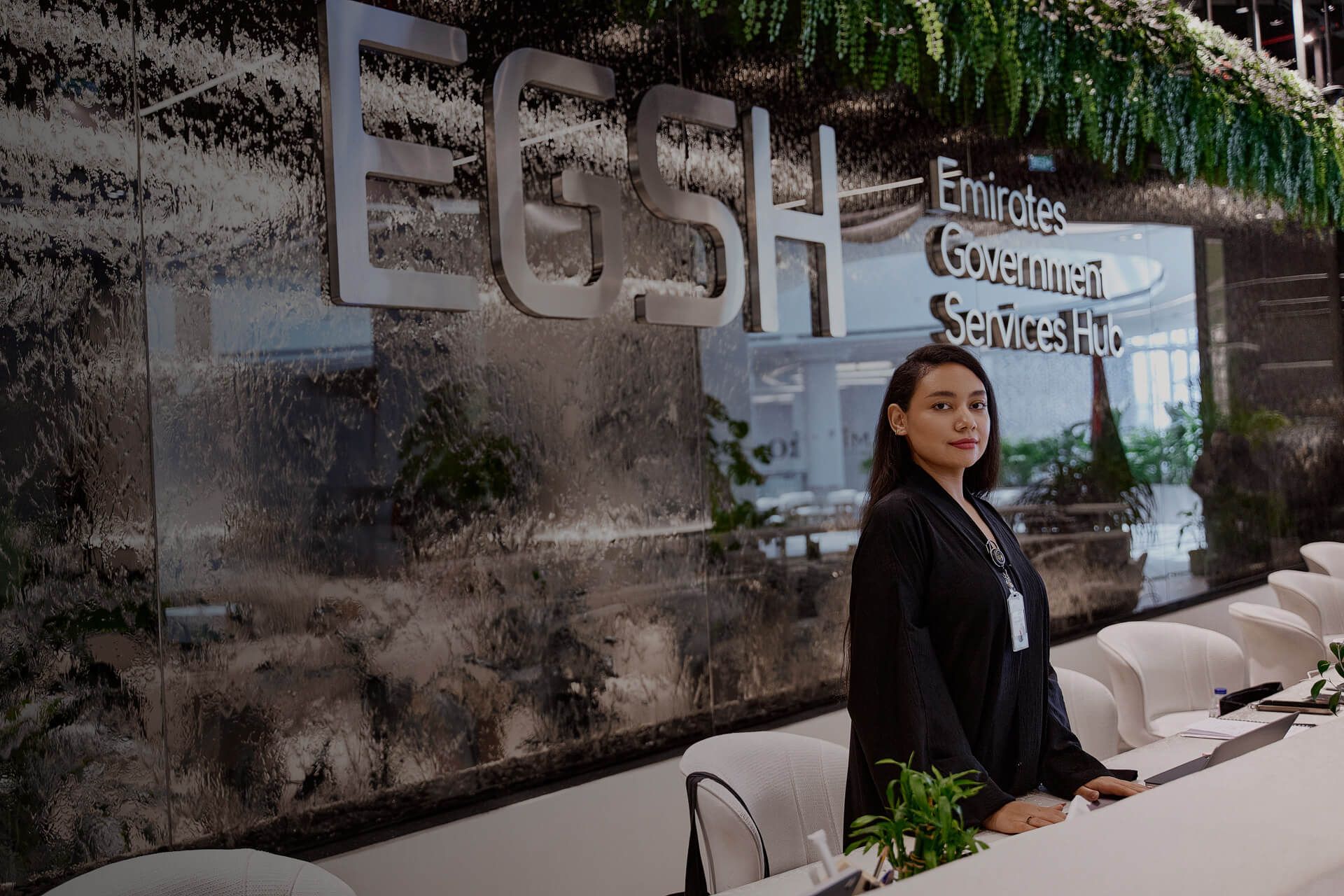





About EGSH
Your Official Partner for Secure and Efficient DLD Services
EGSH is a leading government services hub in Dubai, offering efficient and confidential support for all DLD procedures. We provide clients with priority handling, personalised service, and seamless access to essential property and legal solutions in one place.
How to Register Property in Dubai
Seamless Service in Just 4 Steps
01
Book Your Appointment
Schedule your visit online or by phone at a date and time convenient for you.
02
Document Verification
Meet with your consultant, who will check documents and explain all requirements.
03
Submit & Pay Fees
All paperwork is prepared and submitted, and official fees are processed on-site.
04
Receive Your Documents
Get confirmation and official certificates or registration documents during your visit.
Visit EGSH for VIP Service Without Queues
You can stop by EGSH during working hours without an appointment or book your visit at a time that suits you best.
Address
Art of Living Mall, Al Barsha 2, Dubai
Operating hours
Monday–Thursday, Saturday: 9:00 am–5:00 pm
Friday: 9:00 am–12:00 pm, 2:00 pm–5:00 pm
Sunday: Closed

Why Choose EGSH for Government Services in Dubai

VIP Service
Personal assistance and priority processing with no queues.

Affordable Fees
Official government rates with transparent, fixed pricing.

All Services in One Place
Comprehensive range of UAE government services under one roof.

One-Visit Completion
Most procedures are completed in a single visit to the centre.

Take a 3D Tour of EGSH
Dubai Land Department Services
What is the Dubai Land Department, and what does it do?
Dubai Land Department (DLD) is the government authority responsible for all real estate registration, documentation, and regulation in Dubai. DLD oversees property registration, title deed issuance, ownership transfer, legal property verification, and enforces all laws relating to real estate transactions in the emirate.
What is Ejari registration with the Dubai Land Department?
Ejari registration with the Dubai Land Department is the official process for registering rental agreements for residential and commercial properties. This service ensures all leases are legally recognised and protects the rights of both landlords and tenants.
What are the Dubai property registration fees?
Dubai property registration fees typically include a 4% transfer fee of the property value, AED 540 for the title deed issuance, AED 250 for initial sale registration, and AED 10 each for Knowledge and Innovation fees. Fees may vary based on the transaction type. EGSH will provide a clear breakdown and help you calculate all costs before you start the process.
What documents are required for property registration in Dubai?
Core documents include your passport or Emirates ID, signed contract of sale, proof of payment, and No Objection Certificate (NOC) if required. Companies also need a trade license and corporate papers. EGSH will help you collect and prepare the complete document package to ensure fast and accurate property registration.
How do you complete real estate registration in Dubai?
To complete real estate registration in Dubai, you must prepare the sale agreement, identification documents, and proof of payment, and submit them to the Dubai Land Department (DLD). The process includes verification, payment of DLD registration fees, and issuing a title deed. EGSH can manage every step for you, ensuring your property is registered correctly and without delays.
What types of real estate transactions can be registered in the Dubai Land Department?
Dubai Land Department registers a full range of real estate transactions: sales and purchases, mortgage registration, ownership transfer, property valuation, lease (Ejari) registration, and gifting. EGSH supports all real estate transactions in Dubai, from initial sale registration to title deed issuance.
How is property ownership in Dubai confirmed?
Property ownership in Dubai is confirmed by the title deed issued by the Dubai Land Department. After completing the property registration process, you will receive an official title deed as legal proof of property ownership. EGSH ensures you receive your title deed correctly and in the shortest time.
Can foreigners buy property in Dubai?
Yes, foreign nationals can buy property in designated freehold areas in Dubai. The Dubai Land Department regulates the process and requires property registration to confirm legal ownership rights. EGSH provides complete guidance and support for non-residents purchasing real estate in Dubai.
How do you prepare real estate documentation in the UAE for legal property registration?
For legal property registration in Dubai, documents must be accurate, complete, and—if not in English or Arabic—accompanied by a certified translation. EGSH assists with the preparation, review, and submission of all real estate documentation in the UAE, ensuring compliance with DLD requirements.

Explained by
Omar Abdulaziz Ali Al Qassim
Government Services Center Manager / Legal Consultant
Omar Abdulaziz Ali Al Qassim is a Government Services Center Manager and Legal Consultant with 8 years of experience. He specialises in real estate, licensing, residency, labour, and Ejari services, ensuring accurate and compliant processing across DLD, MOHRE, GDRFA, and DET systems.
What Our Clients Say About Us

Very professional and quick service I was in touch with Zara Moshiri and she was so helpful She was in touch with me online as well and very responsive, we did most of the things remotely It’s not crowded, they welcome you with Arabic coffee and they do everything very fast Highly recommended

Sina Safi
21.08.2026
I wanted my Golden Visa quickly and a VIP treatment. I got both. I wanted answers and support whenever I needed them. I got them. Thank you, Amir, for your promptness, involvement and availability throughout the process.

Iulia
19.08.2026
Very professional Service, Mr Amir was really helpful. He handled all my queries very patiently, and I got my service done smoothly. I highly recommend EGSH for taking service from them.
Sheikh Mairajul Haque
18.08.2026
Best experience with Golden visa, Manaf and Sarah super professional, fastest response and fast delivery of the golden visa

Olga Toksharinova
17.08.2026
I had an excellent experience with the Dubai Economy Department. The service was outstanding, and the staff were highly professional, courteous, and efficient.
Narayan Datt
07.08.2026
I was renewing my 5 year golden visa for a 10 year one. I did it alone the first time and thought I would do it again for the 10 year visa. But I contacted Amir at EGSH to double check the rules. He was so knowledgeable that he convinced me it was better to use him and EGSH. The process was perfect and fast. From start to finish 4 days. Well done EGSH and thank you Amir for a wonderful experience.

Af Capital
06.08.2026
Thank you Zara for the assistance smooth and helpful

Itsyourboysjh
06.08.2026
Fast! Reliable! Thank you so much! Special thanks to Amir for organizing and receiving all the documents!

Elena Fortuna
05.08.2026
Excellent service Thanks for help and support Very kind service

Mazen Moujber
24.07.2026
Very nice place and very good service

Ingrid Villanueva
21.07.2026
Had a great experience renewing my Emirates ID through this center. The process was smooth and quick, with clear guidance at every step. Special thanks to Zara Moshiri for her assistance — professional, responsive, and made the experience hassle-free.

Harsh Chandan
15.07.2026
EGSH is known for its professional approach and commitment to quality service. I would especially like to recognize Mr. Omar Abdulaziz for his professionalism, dedication, and excellent reputation.

Nida Hashmi
14.07.2026
I had some difficulties during my transaction due to missing support documents. The team went out of their way helping me solved my problem. Thank you so much. Highly recommend

Weili Zhou
13.07.2026
I had a great experience working with Yara. She is very professional, helpful, and always supportive throughout the process.

Reza Habibi
13.07.2026
GREAT experience with EGSH Visa Center from start to finish. The entire team is highly professional, responsive, and incredibly efficient. Every step of the process was handled smoothly, and all my questions were answered promptly and accurately.

Lamiae Fahdi
12.07.2026
I had a great experience at this service centre. The staff were professional, friendly, and very helpful throughout the entire process. I would especially like to thank Mr. Abdul Manaf and Ms. Umama Azeem for their outstanding support, patience, and excellent customer service.

elsa susan daniel
11.07.2026
My sincere thanks and appreciation to all the staff at the center, and especially to Mr. Omar Abdulaziz Al-Qasim, for his hospitality, excellent service, and speed in processing my transaction. I highly recommend dealing with them. It was a wonderful experience. Best of luck!

Abdulhakim Rokayya
10.07.2026
I was lucky enough to find this service to help with my children’s EmiratesID process. Zara Moshiri at this office is one of the most professional, friendly, efficient people I have dealt with in the entire UAE. If she did not work for you, she would be working for me. A huge credit to your entire organisation. Thank You.

Rick O — LTF
09.07.2026
Thank to Zara who assisted for Golden visa for property owner and the family. She was there step by step and the process was seamlessly.

Fahad AAA
05.07.2026
I registered for my Ejari, and the whole process took less than 10 minutes! The staff were incredibly friendly and helpful. A special thanks to Maria! she made everything so easy to understand. And the place is gorgeous!

Niltze Ladrilleros
04.07.2026
Second time i use EGSH services and it is cery professional and quick. Many thanks to Zara that assisted us in perfect way.

andrea russo
02.07.2026
Great service and quick turnaround time with EGSH Emirates Government Services Hub. A special thank you to Maria Claudia Garcia for the support throughout — very knowledgeable about the process, very responsive with proper follow up. Thank you.

Mohammad Saleh
25.06.2026
Excellent service! Ms. Zara was very professional, kind, and helpful throughout the entire process. Everything was handled smoothly and efficiently. Highly recommended. Thank you, Zara!

Habibollah Niknami
25.06.2026
I had a fantastic experience processing visa applications for my wife and three children at EGSH. The entire process was incredibly smooth, and the team provided helpful guidance at every step of the way.
James Mitchell
24.06.2026
Hassle-free experience at this center! Mr. Amir was really helpful and professional! And about the center itself, it has a good capacity and the infrastructure to handle a lot of clients at the same time so your time will not be wasted, waiting in line here.

Alee Delzende
23.06.2026
It was truly exceptional services at EGSH specially customer support and guidance provided by Mr. Amir for our golden visa process. Would strongly recommend.

Fakhre Alam
22.06.2026
Best place for all government cases

Hooman JavanBakht
15.06.2026
Excellent service, very smooth and fast. Maria was taking care of my case and she did an amazing work! Muchas gracias

Genesis Contreras
14.06.2026
Our license renewal experience was excellent: very efficient and great service (thank you Jessica). Will definitely use this service center only going forward.

Oliver Klaus
13.06.2026
Zara efficiently expedites visa, trade license, and various government-related work requests through a single communication channel.

Asif Assar Ali
03.06.2026
Fantastic customer service, Zara was very professional and extremely helpful. What a great experience, Ejari done in no time at all.

Brod Stanowski
01.06.2026
I have completed 3 Ejari applications and am always amazed at how helpful the staff here is. They go out of their way to help and make it a single visit affair! Keep up the great job EGSH!!!

Pat Mwatha
31.05.2026
Professional place, thanks for Amir for his support, very helpful!

Salah Ahmad
30.05.2026
Very reliable and professional service. Fast processing and great communication from start to finish. Mr. Amir was extremely helpful and provided top-level customer service. Definitely recommend EGSH Emirates Government Services Hub.

Arman Emamian
29.05.2026
I Had a Great Experience with EGHS. Mr Amir was my advisor and the person who handled my documents Fast and efficiently for process of Golden Visa

Mohhamed Moinuddinn
28.05.2026
Dear Team EGSH I would like to sincerely express my appreciation and gratitude for the outstanding support and assistance provided by Zara Moshiri

Dmitry Still
28.05.2026
Maybe the best service what I ever got in Dubai! Zara Moshiri is very friendly, very professional and always available within few minutes. Im recommending this location and specially Zara to everyone of my friends, all had the same perfect experience! Thank you! Wishing to meet everywhere this kind of perfect service!

Alexander Schamne
27.05.2026
I had a great experience with Emirates Government Services Hub. Huge thanks to Ms. Zara Moshiri for being incredibly supportive, and professional during the entire process. She followed up with us carefully and made sure everything was handled smoothly and quickly.

Mohamad Nagy
26.05.2026
I had a wonderful experience with Emirates Government Services Hub. Ms. Zara Moshiri was extremely kind, supportive, and professional throughout the entire process. She truly cared about helping us and made everything feel easy and stress-free.
Esraa Nasr
26.05.2026
Fast and convenient. Maria was super helpful, kept me up to date and also checked up on whether the ID was received. She kept close and made sure everything went well. Thank you
Naely N
24.05.2026
One of the best place for your government services in UAE, I would like to share my personal experience, I wanted my PCC for my previous stay in UAE. Unfortunately I wasn’t able to get through online system, as I was located outside UAE. I approach them, they handled with high professionalism and provided me with PCC within same day. I highly recommend their service. Thank you so much.

Muzaffar hussain
15.05.2026
I had a very smooth and positive experience with EGSH. I would especially like to thank Maria Claudia Garcia for her outstanding support throughout the entire process of getting my ID.

Shoubi Mehdi
05.05.2026
Zara was excellent. Definitely ask for her to assist you. Went above and beyond to help

Adrian Hill
01.05.2026
Thank you Zara Moshiri and the team for support and attention.

Maryam Nademi
30.04.2026
I applied for my residency through Ms. Zara, and my process was completed in the best and fastest way possible. Everything was excellent. Thank you to Ms. Zara and her professional team.

amin nasiri
29.04.2026
I had a great experience with Tasheel services. The process was smooth, well-organized, and much faster than I expected. The staff were professional and helpful throughout.

Shirin Joneidi
28.04.2026
Received amazing service from Maria Claudia Garcia. She is was knowledgeable and got my application processed in few days.

karan kumar
25.04.2026
Thank you Zara, excellent service and support nice and quick service

Warren Hill
22.04.2026
Great staff convenience location thanks Zara

Omyma Hamza
21.04.2026
Went in for a quick ejari registration and was helped by Zara; the process was very quick and Zara was extremely helpful and kind. Thank you!

D D
17.04.2026
Everything is amazing, thank you Mounir

Toufic El Deek
14.04.2026
Zara was absolutely amazing, kind, helpful and professional 💯 She got my work done efficiently and quickly as I truly appreciate her services and the services 💯 …

Tala El Obeidi
13.04.2026
I had a great experience at EGSH Dubai. Zara was incredibly helpful, attentive, and made the whole process of getting a copy of my ID quick and effortless. Everything was handled smoothly and efficiently. Highly recommend their service!

Maria Alejandra Munoz
09.04.2026
Excellent service! Everything was smooth and professional from start to finish. Special thanks to Zara for her kind and helpful assistance—she made the whole experience even better. Highly recommended!

Laszlo Veszelovszki
07.04.2026
Perfect place to get Government related services, also for property transfer services.

Husnain Nazeer
04.04.2026
Thank to Zara who assisted for Golden visa for property owner. She was there step by step and the process was seamlessly.

Fahad AAA
03.04.2026
I want to thank the manager Reman for his prompt assistance and support, I applied for a visa for family members, everything was done on time

Аzalia Agliamova
03.04.2026
Hello, I visited this office today and I really enjoyed their service, expertise, kindness, and approach, especially Ms. Zara, who helped and guided me with great openness and patience.

Soroush Soroush.s11
27.03.2026
Best service ever. Special thanks to Mirabelle — she is extremely efficient with property transfers and always makes the process smooth and hassle-free.

Yehya
19.03.2026
Big thanks to ZARA for her amazing support! She was extremely helpful when my employee approval got stuck in the Amer system. She went the extra mile to sort it out quickly. Her responsiveness made all the difference, greatly appreciated!!!

ali mojaverian
13.03.2026
Very professional and friendly. They made the property transfer easy and smooth. Golden visa process seamless and thanks to Maya that all the staff (In particular to Maya!!!).

Gourat Ahmed
18.03.2026
Zara was very helpful and professional. All the documents were submitted very fast by her and the service we received were very efficient. Highly recommend!

Lilliana
10.03.2026
Natalia was very professional, she was a pleasure to deal with. Answering my questions, always responsive to phone calls and very prompt at providing updates at each stage of golden visa application which was very quick to process.

Edyta Monika
25.02.2026
had an excellent experience with EGSH. They truly live up to their promise of one-stop government services, handling everything with efficiency and professionalism from start to finish.

Paula Tovar
24.02.2026
I had a wonderful experience. She provided outstanding service with great professionalism and care. Everything was handled smoothly and efficiently. I truly appreciate her dedication and would definitely recommend her services to others

Syed Ayub Naqvi
23.02.2026
Zara helped to get my Ejari completed. I recommend service here

Badri Venkatesh
22.02.2026
Maria Claudia garcia helped me to renew my kids Emirates id. She went the extra mile to help me and she was so efficient and her communication skills are amazing. I would recommend the ESGH Emirates government services in barsha anytime. Thank you Maria for your help

Rehana Khan
19.02.2026
Such a great service with an amazing and friendly environment and i would like to specially thank zara for her exceptional professionalism and support.

Wasim Najeeb
09.02.2026
Had a great experience at Emirates Government Service Hub. Zara Moshiri truly went above and beyond to help me with my visa. I was facing a few issues during the process, and she handled everything patiently and professionally until it was sorted. Really grateful for her support — definitely ask for her when you visit this branch.

Malik Bilal (Malik)
02.02.2026
I would like to recognize the exceptional service I received from Umida at EGSH. From the very first minute, she made me feel genuinely welcome and at ease. Navigating the documentation required for a Golden Visa can be complex, yet Umida went far beyond what is typically expected — guiding me through every requirement with clarity, professionalism, and patience.

Mouamar Arnous
30.01.2026
We are extremely pleased with the excellent visa services provided by EGSH in Dubai. From start to finish, their team demonstrated professionalism, efficiency, and deep expertise in handling visa applications for our workforce.

Artem Gusamov
29.01.2026
Ms. Zara Moshiri is extremely professional, patient, and supportive. She provided clear and thorough guidance and took the time to answer all my questions. I truly appreciate her help and highly recommend working with her.

Fatemeh Yazdankia
28.01.2026
Outstanding Service and Professionalism My wife and I recently applied for and obtained our 5-year Golden Visa (Retiree) in an exceptionally short time — mine in three days and my wife’s in just one day. We are extremely satisfied with the service provided by EGSH Emirates Government Service Hub.

Pedro Hernandez
27.01.2026
Exceptional service every step of the way For showing your great example of services Remarkable dedication of consultant mrs Maria Garcia regalado. Thank you EGSH service Hub team

Yasmine Nadji
25.01.2026
Amazing service! They went above and beyond to assist and resolved my concern there and then! Highly recommended anyone to visit this centre, the ladies are very helpful

Cornel Meyer
22.01.2026
Went there for a consulting. Booked an appointment in advance thro their website. Came early — no line — which is good. Very pleasant interior. My consultant Rachel, was polite. Answered all my questions. Can’t judge regarding the process once applied for an exact service, but consulting went well.

Alex Sergman
03.01.2026
This trustee office is remarkably quiet, and it is unquestionably the finest I have experienced in Dubai. Umama Azeem was an absolute pleasure to work with; she ensured that all documentation and formalities were thoroughly prepared prior to the arrival of both the buyer and the seller. As a result, the transaction itself was completed within approximately ten minutes. For anyone uncertain about which trustee office to choose among the many available options, this is undoubtedly the correct choice. My sincere thanks to Umama Azeem for her exceptional assistance.

Muhammad Ashraf
30.12.2025
Amazing support and communication during the whole process. Rachel, Yara and Maria were super well organized and assisted in record time. We finished the whole process from star to end in 4 business days for 10 year Golden Visa!

Dejan Dakić
23.12.2025
I had an excellent experience with the wonderful help of Maria Claudia Garcia. Her professionalism and attention to detail made the whole process easy.

Anthony Kamau
18.12.2025
They are really very amazing very kind I was having problem with my residency and my license miss Zara and miss Amna they really help me from start to end and they are really very kind and professional highly recommend if any wants to setup there business go with egsh and thanks miss Zara 🙏 you are really very amazing person

theschool for hustlers
17.12.2025
I had a pleasure being assistanced by Ms. Natalia today and her support throughout the process. Everything was smooth, super professional, efficient and high level service was exceptional. Highly recommended for anyone looking for reliable and smooth government-related services.

Alex Salman
15.12.2025
I had such a great experience with EGSH (Emirates Government Services Hub)! Everything went super smoothly, and the team was really helpful. A big shout‑out to Ms. Zara Moshiri—she was kind and supportive the whole way through. Truly appreciate it!
Hassan Farid
18.12.2025
Super quick and efficient service. Maria was available via WhatsApp and responded very quickly to all messages.

Kelly Mullins
10.12.2025
I got a delightful service from them to upgrade my visa category half of the expected timeline. Compared with my previous place, this the best and I would like to recommend any of visa service for all of you. * reasonable fair (I was asked twice my previous what I paid). * fast service and delivering before timeline. * Authentic service. Thank you so much Maria for your dedicated service.!

Nila Gamage
01.12.2025
An exceptional service from Zara at EGSH. She guided us perfectly through the process and managed to get us even more than we had anticipated. A world class service center with exceptional staff. Would recommend them to anyone who wants to get sorted for government services

ziad j
24.11.2025
Hello, My Name is Kelvin it was my first time to hear EGSH Emirates Govt from my sponsor. I was assisted By Mrs Maria Claudia Garcia the experience was amazing from the beginning to the End she has been supporting and guiding me through all the process. I am grateful to her and the entire team for the help. I trust and believe EGSH is a place to recommend to family members and friends.

Kelvin Muia
19.11.2025
A very hassle free experience from EGSH. Special mention of Ms.Zara who was most helpfull. Her quick response to queries and swift action are much appeciated.

Shaji Jacob
18.11.2025
We had the pleasure of being assisted by the lovely Ms Maria and Ms Randa. They were clear concise and super professional throughout our whole process of renewing our Ejari and business licence. Maria provided continued support while we were waiting for our business Ejari to come through and made it a simple seamless process.

Rajan Gharu
09.11.2025
EGSH in art of living is the best Hub center for every thing that you want in dubai Specially Ms.ZARA MOSHIRI is the advisor and assistance and she is beside you in every step Thank you Ms.ZARA MOSHIRI and EGSH

Dubai Toronto
08.11.2025
I recently visited this institution had an exceptional experience! Ms. Maria Claudia took the time to understand my needs and preferences. I really appreciate her support and services.

Bryan Meza
08.11.2025
Good morning, I needed to apply for the Golden Visa and went to this EGSH Emirates office. I was very impressed by their facilities and the peaceful atmosphere. We were fortunate to be assisted by María Claudia García, who provided exceptional service. She advised and helped us every step of the way, guiding us through the entire process until we obtained the Golden Visa.

C. JUSTO
07.11.2025
I would like to express my appreciation to Ray from EGSH for his outstanding assistance in handling the transfer of our property at Rove Hotel. He was very helpful, accommodating, and patient throughout the entire process, from addressing transaction concerns and verifying documents to the actual property transfer and ensuring the new owner received the title deed…

Conveyancing luxe homes
31.10.2025
I worked with Amir and Zara, they took care of everything, I only had to send the mandatory information. In a very short time, everything was completed. I was amazed, considering how difficult it had seemed before. Not to mention, the fees were the same or even lower than those of the other companies I mentioned. For me, it was a 10/10 experience, the quickest and smoothest process someone could have in this journey. Strongly recommend them.

Levi Elekes
31.10.2025
Zara assisted me with my Ejari registration, and she was absolutely amazing. She demonstrated exceptional professionalism, efficiency, and delivered everything promptly. Truly a pleasure to work with!

Chantal Scott
30.10.2025
THE BEST!!! Zara you are as always star

Rustem Ilaman Concierge
30.10.2025
Thanks to EGSH and to Zara for Excellent service — professional, attentive, and truly pleasant experience. Highly recommended!

Batyrkhan Orazbayev
29.10.2025
Had an amazing service for the transfer of property there, specially Rachel Rahmat she was very helpfull throughout the process, looking forward to work more.

Ali Nasir
27.10.2025
Visited for the first time for a property transfer and had an amazing experience with Jessieca! She was professional, helpful, and made the entire process smooth and stress-free. Highly recommended for all government services excellent customer service!

Haroon M
20.10.2025
Personally, I find this the best centre in Dubai. They always go the extra mile. Especially Maria Garcia has help out so much in such an efficient way! Thank you!

Kristof Kuypers
13.10.2025
Went there for ejari cancellation. Excellent place. Staff was so cooperative. Ms Maria and Ms Fatima assist me and it was a fast process.

Khurram Khan
10.10.2025
This is probably the best government service hub in Dubai. You come in, asked to be seated, and the staff will come to you instead of standing on the reception and on queue. They will offer you tea and water are available at each table. Really embodies the Emirati hospitality and what seamstresses Dubai is known for.

Kris Ayuso
09.10.2025
I was here the morning of this post. The concierge like service with a contact person arranging for you all the difeerent interactions is making the interactuon as smooth as possible. A truly delightful experience and a true commitment to service excellence, thank you for the great experience and for the initiative to present government interactions in this way!

Frank Harenberg
03.10.2025
Outstanding service — fast, friendly, and highly professional. Thank you very much!

Astro
26.09.2025
I’ve been here for the first time and I can say that this organization definitely worth to come here and make all proceeds with their help! We were changing the owner and such difficult process was really easy for us with your help and most of the time it was done online. So I’m very grateful to Mrs Zara and her support during all the process❤️

Jamilya Rahmiddinovna
25.09.2025
I had an excellent experience with Natalia Baiamonte from EGSH while getting Ejari certificate. From the very beginning, she was professional, attentive, and extremely helpful. Natalia guided me through the process clearly, answered all my questions with patience, and made task feel simple and stress-free. Highly recommend Natalia for her outstanding customer service and dedication!

Bilal Rasool
16.09.2025
I had a really good experience with EGSH (Emirates Government Services Hub). Everything went smoothly and the team was super helpful. Special thanks to Zara and Amal. they were so supportive and kind throughout the process. Really appreciate it!

mohammad fakhri
13.09.2025
We had great experience with Amal She is so helpful and awesome She stayed with us over her duty today just to finish her work Thanks Amal

Banafsheh
15.09.2025
I had a great experience with this office. They handle everything related to company setup, residency, Golden Visa, DLD, and more. The office is very clean, modern, and welcoming, and the staff are extremely professional and polite. A special thank to Ms. Zara for her kindness and guidance throughout the process so smoothly and professionally, and to Ms. Amal for managing the administrative registration.
Kourosh Gheisari
09.09.2025
Zara is the best always attentive to every requests and helping with a solving problems without delay thank you Zara❤️🌸 …

Guljemal Tekaeva
07.09.2025
Absolutely stunning office, i am awestruck. No one can beat Dubai for the kind of hospitality you get in a government office… Its mind-blowing 😍 i wish i could give a 10 star rating (double) on 5 🤩

Sandeep Sabharwal
06.09.2025
I had a great experience with EGHS. I was assisted by Sarah Almeida and she delivered an amazing service. Very attentive, promptly responded my messages and guided me throughout the process. It was all very smooth and done very quickly. I highly recommend and I’ll definitely use their services again.

Bárbara Munaier
04.09.2025
I received really attentive and fast service from Sarah, got all the documents even earlier than promised. Thank you! 😁

Beatriz Paixão
02.09.2025
One of the best people to work with. These guys are really smart and professional. Thanks to Ms Zara

Imran Kazi
02.09.2025
Zara helped me with my services and the process was very easy and she was very helpful

Maya Al Moukayed
02.09.2025
Visit Our Centre
Phone
Working Hours



