


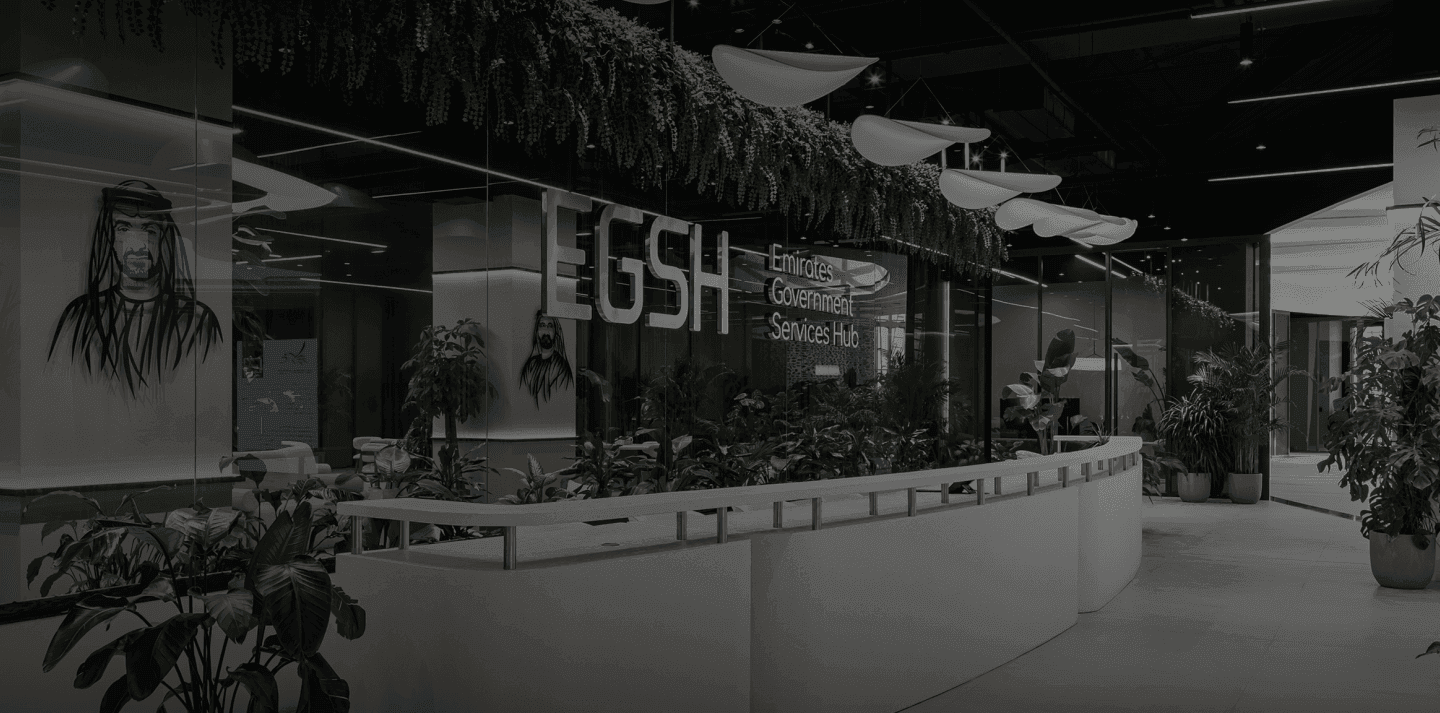
About EGSH
How to Register Property in Dubai: DLD Fees and Transfer Procedure
Property registration in Dubai requires completing a formal transfer process through DLD, the government authority responsible for all real estate transactions in the emirate. The standard DLD transfer fee is 4% of the property value, payable at a Real Estate Trustee office along with additional administrative charges totalling approximately AED 4,600 to AED 5,600 depending on the transaction type. For a complete breakdown of all costs involved, including agent commission, mortgage fees, and service charges, see our guide on the cost of buying property in Dubai.
To complete registration, buyers must present a valid sale and purchase agreement, an Emirates ID (for UAE residents), a copy of their passport, and a No Objection Certificate from the developer. Upon successful payment and document verification, the buyer receives a title deed confirming legal ownership. This guide explains the complete registration process, documents required for individuals and companies, detailed fee breakdowns, processing timelines, and common mistakes to avoid during property transfer.
Get Your Title Deed in Dubai
Officially regulated fees
No hidden charges
Queue-free service
VIP support at no extra cost
From AED 580
What Is Property Registration in Dubai?
Property registration is the legal process of recording ownership of real estate with the Dubai Land Department. The DLD maintains the official register of all properties in Dubai and issues the title deed, which serves as the definitive proof of ownership recognised by UAE courts and financial institutions.
The title deed contains essential information, including the property location, plot number, built-up area, owner details, and any registered mortgages or encumbrances. Without a registered title deed, a buyer has no legal protection over the property and cannot sell, mortgage, or transfer the asset.

Dubai offers two main types of property ownership. Freehold ownership grants the buyer complete ownership rights to the land and any structures built on it. Freehold properties are available to UAE nationals, Gulf Cooperation Council (GCC) citizens, and foreign nationals in designated freehold areas approved by the Dubai Government. Leasehold ownership grants rights for a specified period, typically 99 years, after which the property reverts to the freeholder unless renewed. Foreign nationals should verify their eligibility before committing to a purchase — our guide on legal requirements for foreigners buying property in Dubai explains designated ownership areas, company registration rules, and visa-linked acquisition options.
All property transactions in Dubai, whether purchases, gifts, or inheritance transfers, must be registered with the DLD. The registration requirement applies equally to individuals, companies, and institutional investors. Failure to register a property transfer leaves the transaction legally incomplete, regardless of any private agreements between parties.

Get Business Services in Dubai Through EGSH
Authorised One-Stop Government Services Centre
- All government services in one place
- Completed in one visit
- VIP service without queues
- Regulated government fees

Step-by-Step Property Registration Process
The property registration process in Dubai follows a structured sequence regulated by the DLD. Most transactions can be completed within a single day when all documents and payments are prepared correctly.
Step 1 – Sign the Sale and Purchase Agreement
The sale and purchase agreement (SPA) is a binding contract between the buyer and the seller that outlines the transaction terms. The SPA must include the agreed purchase price, payment schedule, property details, and completion date. Both parties sign the agreement, which forms the basis for the registration application.
For ready properties, the SPA is typically signed directly between the buyer and the seller, or through their appointed representatives. For off-plan properties purchased from developers, the SPA follows a standard format approved by the Real Estate Regulatory Agency (RERA). Sellers preparing for this stage should review the full property ownership transfer process in Dubai, which covers documentation, NOC coordination, and DLD requirements from the seller's perspective.
Step 2 – Obtain NOC from Developer
Before transferring ownership of any property, the buyer must obtain a No Objection Certificate (NOC) from the master developer. The NOC confirms that the seller has no outstanding service charges, maintenance fees, or other liabilities to the developer.
Processing time for NOC issuance varies by developer but typically takes between two and five working days. Some developers charge an NOC issuance fee, which is usually the seller's responsibility unless otherwise agreed in the SPA.
Step 3 – Visit a Real Estate Trustee Office
Both buyer and seller (or their authorised representatives with a valid power of attorney) must attend a Real Estate Registration Trustee office to complete the transfer. The DLD has authorised several trustee offices across Dubai, including the EGSH Real Estate Registration Trustee, to process property transactions on its behalf.
At the trustee office, officials verify the identity documents of both parties, review the SPA, confirm the NOC validity, and calculate the applicable fees. The trustee office submits the registration application directly to the DLD's system. Both parties can complete the property ownership transfer through DLD at EGSH, where consultants manage document verification and fee processing in a single visit.

Step 4 – Pay DLD Fees
All registration fees must be paid before the transfer is processed. Payment is made via a manager's cheque or through the Noqodi payment system at the trustee office. The buyer typically pays the DLD transfer fee, while the seller covers the NOC charges, though parties may negotiate alternative arrangements.
The trustee office issues a receipt confirming payment and submission of the registration application. For cash purchases, the transfer is processed immediately. Mortgage-backed purchases require additional processing time for the bank's security interest to be registered. A full breakdown of fees, including the 4% registration charge, knowledge fee, and innovation fee, is covered in our guide to sale registration in Dubai.
Step 5 – Receive Your Title Deed
Upon successful registration, the DLD issues a new title deed in the buyer's name. For straightforward cash transactions, the title deed registration is typically completed on the same day. The title deed is provided in both Arabic and English and includes a unique registration number, QR code for verification, and all property details.
For properties purchased with a mortgage, the title deed will show the lending bank's charge registered against the property. This charge remains until the mortgage is fully repaid, at which point the owner can request removal of the encumbrance.



Why Choose EGSH for Government Services in Dubai

VIP Service
Personal assistance and priority processing with no queues.

Affordable Fees
Official government rates with transparent, fixed pricing.

All Services in One Place
Comprehensive range of UAE government services under one roof.

One-Visit Completion
Most procedures are completed in a single visit to the centre.
What Documents Are Required?
Document requirements differ based on whether the buyer is an individual or a corporate entity. All documents must be valid and, where applicable, attested in accordance with UAE requirements.
Documents for Individual Buyers
Individual buyers must present the following documents at the trustee office:
- Valid passport with at least six months' validity.
- Non-residents may use their passports as primary identification.
- UAE residents must also provide a valid Emirates ID.
- The original sale and purchase agreement signed by both parties.
- No Objection Certificate from the developer dated within 30 days of the transfer.
- Manager's cheque(s) for the purchase price payable to the seller, if applicable.
- Manager's cheque(s) for fees payable to the Dubai Land Department.
Power of attorney if the buyer is represented by another person, attested by a notary public and, for documents issued outside the UAE, by the UAE Embassy in the country of origin.

Documents for Corporate Buyers
Companies purchasing property in Dubai must provide additional corporate documentation:
- Valid trade licence issued by the relevant licensing authority.
- Memorandum of Association (MOA) showing the company's shareholders and authorised activities.
- Board resolution authorising the property purchase and nominating a signatory.
- Copy of the authorised signatory’s passport.
- Emirates ID of the signatory if a UAE resident.
- Power of attorney if the signatory is different from a director named in the MOA.
For companies registered outside the UAE, all corporate documents must be attested by the UAE Embassy in the country of incorporation and subsequently by the Ministry of Foreign Affairs in the UAE.

Visit EGSH for VIP Service Without Queues
You can stop by EGSH during working hours without an appointment or book your visit at a time that suits you best.
Address
Art of Living Mall, Al Barsha 2, Dubai
Operating hours
Monday–Thursday, Saturday: 9:00 am–5:00 pm
Friday: 9:00 am–12:00 pm, 2:00 pm–5:00 pm
Sunday: Closed

The 4% DLD transfer fee is the highest cost and is calculated on the property's sale price or DLD valuation, whichever is higher. For a property valued at AED 2 million, the transfer fee alone amounts to AED 80,000.
Trustee office fees vary slightly between authorised trustees and may depend on the property value bracket. The fee typically ranges from AED 4,000 for properties under AED 500,000 to AED 5,000 or more for higher-value transactions.
Buyers financing their purchase through a mortgage must pay an additional 0.25% mortgage registration fee on the loan amount. For a mortgage of AED 1.5 million, this equates to AED 3,750.
Some transactions may require a property valuation report, particularly for mortgage applications. Valuation fees are separate from registration costs and vary based on property type and location.
How Long Does Property Registration Take?
Property registration at a trustee office typically takes between one and four hours for straightforward cash transactions when all documents are complete, and fees are paid. Same-day completion is standard for ready properties with no outstanding issues.
Mortgage-backed purchases require additional processing time as the bank must register its security interest against the property. This typically adds one to three working days to the process, depending on the lending institution's internal procedures.
Delays most commonly occur due to missing or incorrect documentation. The absence of a valid NOC, incorrectly prepared manager's cheques, or incomplete corporate authorisation documents can postpone registration by several days or weeks while issues are resolved.
Off-plan properties under construction follow a different timeline. Initial registration occurs through the Oqood system at the time of purchase, with the final title deed issued only upon project completion and handover.

Common Mistakes When Registering Property
Several recurring errors cause delays and complications during property registration. Understanding these pitfalls helps buyers prepare effectively.
Incorrect Manager's Cheque Preparation
Manager's cheques must be issued in the exact amounts required and payable to the correct beneficiaries. Cheques for the DLD fees must be payable to "Dubai Land Department" with the precise fee amount. Errors in the payee name or amount require the cheque to be cancelled and reissued, causing delays.
Missing Developer No Objection Certificate (NOC)
Attempting to register without a valid NOC from the developer will result in rejection at the trustee office. The NOC must be current (typically valid for 30 days) and confirm that all developer charges have been settled.
Incomplete Company Documentation
Corporate buyers frequently encounter issues with missing board resolutions, outdated trade licences, or improperly attested foreign company documents. All corporate documents should be reviewed for completeness before the registration appointment.
Underestimating the 4% Transfer Fee
Some buyers budget only for the property price without accounting for the substantial 4% transfer fee. For a property costing AED 3 million, the buyer must prepare an additional AED 120,000 for the DLD fee alone, plus trustee and administrative charges.
Confusing Oqood and Title Deed
Oqood is the interim registration system for off-plan properties under construction. An Oqood certificate confirms the purchase but is not equivalent to a title deed. The full title deed is issued only after the project is completed and final registration with the DLD is completed.
Off-Plan vs Secondary Market Registration
The registration process differs significantly between off-plan purchases from developers and secondary market transactions for ready properties.
Off-Plan Property Registration
Off-plan purchases are initially registered through Oqood, the DLD's system for properties under construction. When a buyer signs an SPA with a developer for an off-plan unit, the developer submits the contract to Oqood, and the buyer receives an Oqood certificate confirming the registered interest.
All payments for off-plan properties must be made through an escrow account administered by the DLD. This protects buyers by ensuring funds are released to the developer only according to construction milestones verified by independent auditors.
Upon project completion and handover, the developer applies for the unit's final title deed. The buyer then completes the formal registration process to receive a standard title deed, replacing the Oqood certificate.

Secondary Market Registration
Secondary market transactions involve ready properties with existing title deeds. The transfer occurs directly between buyer and seller at a trustee office, with the seller's title deed cancelled and a new one issued in the buyer's name on the same day.
Secondary market transactions do not involve escrow accounts unless parties specifically agree to use one. Payment is typically made via a manager's cheque directly to the seller at the trustee office upon completion of registration.
Can Foreigners Register Property in Dubai?
Foreign nationals may purchase and register freehold property in Dubai within designated freehold areas without requiring UAE residency. This policy has made Dubai one of the most accessible property markets for international investors.
Designated freehold areas where foreigners can own property include Dubai Marina, Downtown Dubai, Palm Jumeirah, Jumeirah Beach Residence, Emirates Hills, and numerous other developments. The full list of freehold areas is published by the DLD and updated periodically.

Non-resident buyers do not require an Emirates ID to register property. Identification is verified using a valid passport. However, non-residents should note that opening a UAE bank account, which is often necessary to receive rental income or manage the property, may require additional documentation.
Property ownership in Dubai can qualify buyers for a UAE residence visa. Investors purchasing property valued at AED 750,000 or above may apply for a 2-year investor visa. Properties valued at AED 2 million or more may qualify the owner for a 10-year Golden Visa for investors through the Federal Authority for Identity, Citizenship, Customs and Port Security (ICP).
Companies registered in Dubai can also own property. Foreign entrepreneurs may establish a mainland business setup in the UAE or a free zone company to hold property assets. However, ownership structures should be reviewed for tax and legal implications.
Frequently Asked Questions
Is property registration mandatory in Dubai?
Yes, property registration with the Dubai Land Department is mandatory for all real estate transactions in Dubai. Unregistered transfers have no legal effect, and the purported buyer has no ownership rights enforceable in UAE courts. Registration is the only way to obtain a valid title deed confirming legal ownership.
Who pays the 4% DLD transfer fee?
Market convention in Dubai is for the buyer to pay the 4% DLD transfer fee. However, this is not a legal requirement, and parties may negotiate alternative arrangements in the sale and purchase agreement. Some transactions, particularly in certain market conditions, involve shared fees or seller contributions.
Can property registration be done remotely?
Property registration requires visiting a trustee office, but buyers need not attend in person. A buyer may appoint a representative through a power of attorney attested by a notary public. For foreign buyers, the power of attorney must be attested by the UAE Embassy in their country of residence and subsequently by the Ministry of Foreign Affairs in the UAE.
What happens if a property is not registered?
An unregistered property transfer is not legally recognised in the UAE. The seller remains the legal owner according to the DLD records, regardless of any private agreement or payment made. This exposes the purported buyer to significant risks, including the seller transferring the property to another party or creditors seizing the property to satisfy the seller's debts.
How is a mortgage registered with DLD?
Mortgage registration occurs simultaneously with or shortly after the property transfer. The lending bank's representative attends the trustee office appointment and submits the mortgage documents. DLD registers the bank's security interest against the property, which appears on the title deed. The mortgage registration fee is 0.25% of the loan amount plus AED 290 in administrative charges.
Can I register property without being physically present in the UAE?
Yes, property registration can be completed without the buyer's physical presence in the UAE. The buyer must issue a power of attorney to an authorised representative. Any person holding a properly attested power of attorney may attend the trustee office on the buyer's behalf; the representative does not need to be a UAE resident. Video or online registration is not currently available for standard property transfers.

Official Sources and References
- Dubai Land Department (DLD) – Primary authority for property registration, title deed issuance, and real estate regulation in Dubai.
- Real Estate Regulatory Agency (RERA) – Regulatory arm of DLD responsible for licensing real estate professionals and regulating the property market.
- Federal Authority for Identity, Citizenship, Customs and Port Security (ICP) – Authority responsible for residence visas, including Golden Visa for property investors.
- Ministry of Foreign Affairs (MOFA) – Responsible for attestation of foreign documents for use in the UAE.
Important Notice
The information provided in this article reflects property registration procedures and fees applicable as of the date of publication. Dubai Land Department may update fees, procedures, and requirements without prior notice. All registration fees, timelines, and document requirements should be confirmed directly with DLD or an authorised Real Estate Trustee before proceeding with any transaction. Final approval of property registration rests solely with the Dubai Land Department. EGSH facilitates the registration process through authorised channels but does not guarantee approval or processing times, which remain at the discretion of the relevant government authority.



