


About EGSH
Digital Property Ownership in Dubai: What This Guide Covers
The Dubai Land Department (DLD) issues all title deeds in electronic format, with each certificate carrying the same legal validity as a paper document under Law No. (7) of 2006 Concerning Real Property Registration in the Emirate of Dubai. The standard title deed issuance fee is AED 250 per ownership certificate, plus a knowledge fee of AED 10 and an innovation fee of AED 10, as published on the DLD's official service page.
Property owners receive the electronic title deed via a secure email link within approximately 25 minutes of approval, and the certificate can be verified at any time through the Dubai REST app or the DLD Smart Services portal. EGSH, as an authorised DLD trustee centre, processes title deed issuance, reissuance, and verification directly through the DLD electronic system at standard government fees.
This guide explains how digital property ownership functions in Dubai, the legal framework that underpins electronic records, the process for issuing and verifying an e-deed, the fee structure, and the emerging role of blockchain-based real estate tokenisation under the Dubai Real Estate Sector Strategy 2033.
Get Your Title Deed in Dubai
Officially regulated fees
No hidden charges
Queue-free service
VIP support at no extra cost
From AED 580
Explore EGSH Government Services in Dubai
What Is an Electronic Title Deed in Dubai?
An electronic title deed (commonly referred to as an e-deed or Mulkiya) is the official digital certificate of property ownership issued by the DLD. It records the owner's full name, the title deed number, a description of the property (unit or plot, built-up area, location), the property type (apartment, villa, land), the nature of ownership (freehold, leasehold, usufruct, or musataha), any registered encumbrances such as mortgages, and the date of issuance. The distinction between these ownership types has significant implications for duration, transferability, and investor eligibility — our comparison of freehold vs leasehold in Dubai explains how each category is treated under UAE property law.
For a field-by-field breakdown of each section — from the deed number and QR code to the ownership type and registered encumbrances — see our guide on how to read a Dubai title deed.
The DLD ceased issuing paper title deeds as the primary format and now delivers all ownership certificates electronically. Each e-deed bears a digital seal from the DLD and is transmitted directly to the registered owner's email address. The certificate includes a unique QR code and title deed number that enable instant verification through the DLD's Verify Title Deed service or the Dubai REST mobile application.

An electronic title deed serves three core legal functions. First, it establishes ownership rights — the document is the only instrument recognised by Dubai Courts, government authorities, and financial institutions as conclusive proof of legal title. Second, it ensures enforceability of transactions — any disposition of real property (sale, gift, long-term lease, or mortgage) is legally effective only once registered with the DLD and reflected in the deed.
Third, it facilitates financing and due diligence — banks require a verified title deed before approving mortgage applications, conducting property valuations in Dubai, or registering collateral. If any detail on the electronic deed becomes outdated — for instance, following a passport renewal or nationality change — the owner must apply for a title deed modification in Dubai to ensure the DLD register reflects the correct personal data before the deed can be used in subsequent procedures.
Legal Framework Governing Electronic Title Deeds
Law No. (7) of 2006 — Real Property Registration
The primary legislation underpinning all property registration in Dubai is Law No. (7) of 2006 Concerning Real Property Registration in the Emirate of Dubai.

Article 4 of this law designates the DLD as the sole authority responsible for maintaining the Real Property Register and for registering all real property rights. Article 5 provides that the Property Register has absolute evidentiary value against all parties, and its data may not be challenged unless fraud or forgery is proven.
Critically, Article 6 of the law stipulates that all electronically recorded real property documents and reports carry the same evidentiary value as their original counterparts. This provision gives electronic title deeds equal standing with any former paper-based certificates in courts, financial institutions, and government proceedings. All transactions that create, transfer, amend, or extinguish real property rights must be recorded in the Property Register to be deemed valid.
Federal Decree-Law No. (46) of 2021 — Electronic Transactions and Trust Services
At the federal level, Federal Decree-Law No. (46) of 2021 on Electronic Transactions and Trust Services reinforces the legal validity of electronic documents across the UAE. This legislation establishes that electronic documents do not lose their legal force or enforceability by virtue of being in electronic form. The law also regulates the licensing and oversight of trust service providers who create, validate, and preserve electronic signatures and seals — the same technology that underpins the DLD's digital seal on every e-deed.

Together, these two legislative instruments create a dual layer of legal protection: Dubai-level property law ensures that electronic registration in the DLD system is authoritative, and federal electronic transactions law ensures that digital documents are admissible and enforceable across all UAE jurisdictions.
Law No. (13) of 2008 — Interim Property Register (Oqood)
Off-plan properties are governed by a separate registration mechanism. Law No. (13) of 2008 Regulating the Interim Property Register in the Emirate of Dubai requires all off-plan sale contracts to be registered in the Interim Property Register through the Oqood system, maintained by the DLD. An Oqood certificate is issued electronically and serves as the buyer's proof of registered interest until the project is completed and the developer obtains a completion certificate.
At that point, the DLD converts the Oqood entry into a full title deed registered in the buyer's name in the permanent Property Register. The differences between these two instruments are explained in detail in the EGSH guide to Oqood vs title deeds in Dubai.

Get DLD Services in Dubai Through EGSH
Authorised One-Stop Government Services Centre
- All government services in one place
- Completed in one visit
- VIP service without queues
- Regulated government fees

How the DLD Issues an Electronic Title Deed
The issuance process is fully digital and is administered through the DLD's electronic registration system. Property owners can apply through an authorised Real Estate Services Trustee Centre, such as EGSH, or at the DLD Customer Happiness Centre.
Step 1 — Document Submission
The applicant submits a valid Emirates ID (original) and the existing title deed certificate, if applicable. For corporate applicants, a valid trade licence, Memorandum of Association, and the signatory's Emirates ID are required. If the applicant is represented by a third party, a notarised Power of Attorney must be presented.
Step 2 — Verification and Data Entry
The DLD consultant (or the authorised trustee centre consultant at EGSH) reviews all documents for completeness and accuracy. The transaction data is entered into the DLD's electronic system, which cross-references the submission against the Real Property Register.

Step 3 — Fee Payment
The applicable DLD fees are calculated and paid at the centre. Accepted payment methods include ePay, cash, credit card, and manager's cheque. At EGSH, all fees are disclosed before submission, and payment is processed through the DLD's secure system.
Step 4 — Approval and Electronic Issuance
Once the DLD system approves the transaction, the electronic title deed is generated and sent to the owner's registered email address. The certificate includes the updated ownership details, the property map, the digital seal, and the QR code for verification. The entire process takes approximately 25 minutes from the point of submission at an authorised centre.


Why Choose EGSH for Government Services in Dubai

VIP Service
Personal assistance and priority processing with no queues.

Affordable Fees
Official government rates with transparent, fixed pricing.

All Services in One Place
Comprehensive range of UAE government services under one roof.

One-Visit Completion
Most procedures are completed in a single visit to the centre.
Verifying an Electronic Title Deed
Verification of a title deed confirms that the ownership details recorded in the DLD system match the information on the certificate. This process is essential before any property transaction, mortgage application, inheritance registration, or legal proceedings. A comprehensive overview of the verification process is provided in the EGSH guide to title deed verification before purchase.
Via the Dubai REST App
The Dubai REST application is the DLD's official smart platform for real estate services. To verify a title deed, the owner or interested party opens the app, navigates to the verification service, and enters the certificate number (located below the QR code on the deed) together with the year of issuance. The system returns the registered ownership details, the property description, and the current status of the deed. A full walkthrough of the app's features is available in the EGSH Dubai REST app tutorial.
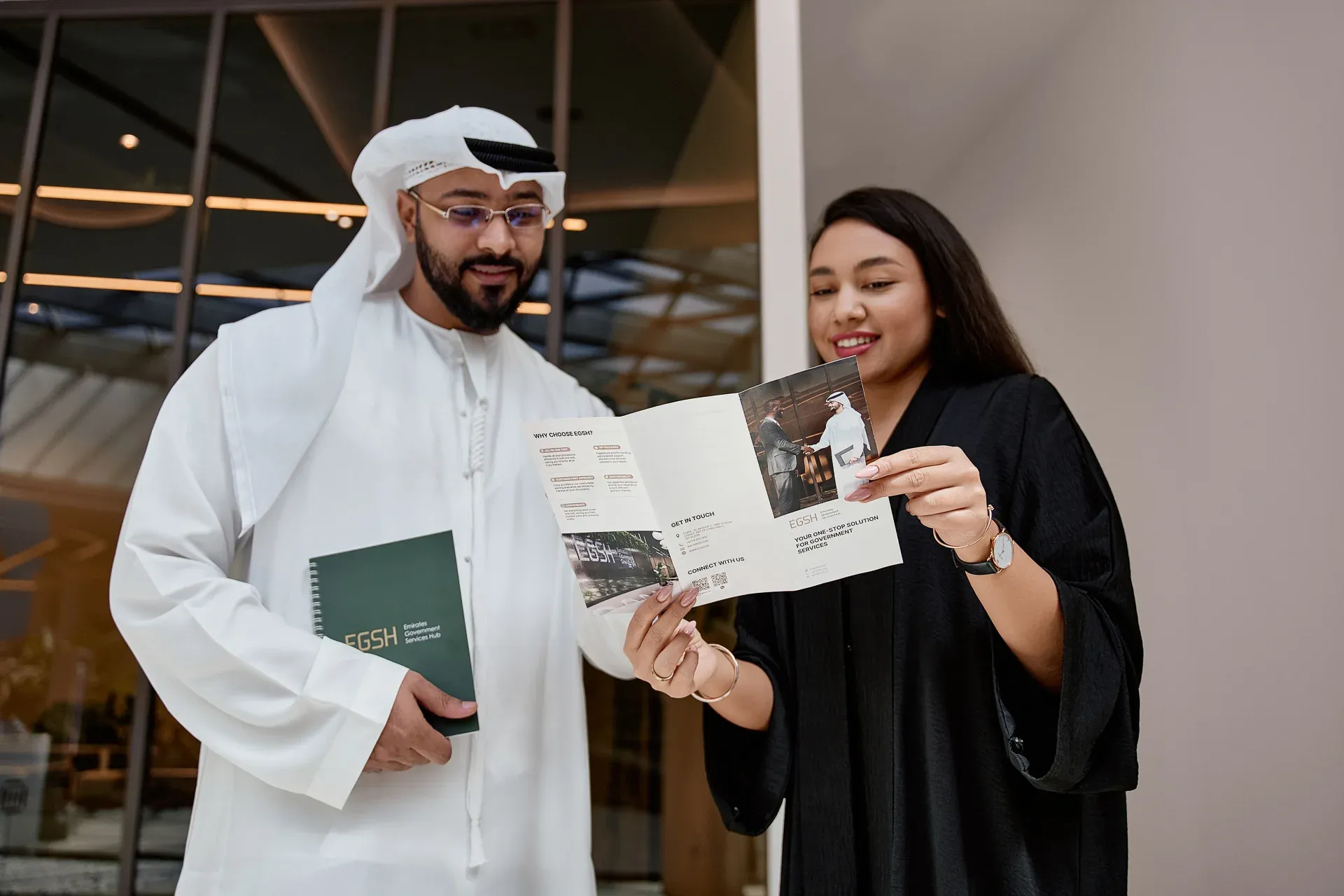
Via the DLD Website
The DLD's online verification service allows users to check the validity of a title deed by entering the required certificate details. The service is available to all users regardless of residency status.
Via an Authorised Trustee Centre
Property owners and prospective buyers can also verify a title deed through EGSH, where a consultant accesses the DLD system directly to confirm the deed's authenticity and provide an immediate confirmation of issuance status.

Visit EGSH for VIP Service Without Queues
You can stop by EGSH during working hours without an appointment or book your visit at a time that suits you best.
Address
Art of Living Mall, Al Barsha 2, Dubai
Operating hours
Monday–Thursday, Saturday: 9:00 am–5:00 pm
Friday: 9:00 am–12:00 pm, 2:00 pm–5:00 pm
Sunday: Closed

Who Can Obtain an Electronic Title Deed?
An electronic title deed is issued to any person or entity that acquires a registrable real property right in Dubai. This includes individual buyers (whether UAE nationals, GCC nationals, or foreign investors in designated freehold areas), corporate entities with a valid trade licence, and investors purchasing through the property ownership transfer process.
The DLD also issues title deeds following inheritance registrations, court orders, property gift transfers, and grant completions. In each case, the title deed is generated electronically and delivered via the same secure email mechanism once the DLD system records the new ownership entry.
Non-residents who do not hold a UAE residence visa may still obtain a freehold title deed in designated areas. The e-deed issued to a non-resident carries the same format, legal validity, and evidentiary force as one issued to a UAE national. If any details on the certificate require correction after issuance — such as name spelling or personal information — the owner can apply for a title deed amendment through the DLD system at EGSH.

The Role of the Dubai REST App and DLD Document Vault
The Dubai REST application has become the primary digital interface between property owners and the DLD. Beyond title deed verification, the app functions as a comprehensive property management platform.
For property owners, the Dubai REST app provides access to a digital portfolio displaying each registered property with indicative pricing, rental yield information, and service charge data. The app integrates services including Ejari tenancy registration and renewal, rental calculator tools aligned with the Smart Rental Index, project status tracking through the Mashrooi service, and the DLD Document Vault — a secure digital storage facility where owners can download, store, and share official documents, including their electronic title deed, with service partners such as banks, legal advisors, and trustee centres.
The DLD Document Vault addresses one of the most common concerns surrounding electronic ownership records: document access and security. Even if the original email containing the e-deed is lost, the owner can retrieve the certificate from the Document Vault at any time. If additional assistance is required, a replacement title deed can be issued through the DLD or via an authorised trustee centre such as EGSH, using the standard title deed issuance service.

Blockchain and Real Estate Tokenisation: The Next Phase of Digital Ownership
The DLD has moved beyond electronic documentation into blockchain-based ownership records. In May 2025, the DLD launched the MENA region's first tokenised real estate investment platform through the PRYPCO Mint platform, developed in partnership with PRYPCO, the Virtual Assets Regulatory Authority (VARA), the Central Bank of the UAE, and the Dubai Future Foundation (DFF) through the Real Estate Sandbox.
The tokenisation project records property title deeds on the XRP Ledger blockchain, synchronising on-chain records with the DLD's official Real Property Register. Each token represents a direct fractional stake in a specific physical property, not a share in a pooled fund. Investors can acquire tokenised shares in ready-to-own Dubai properties starting from AED 2,000, with all transactions conducted in UAE dirhams.
In February 2026, the DLD activated Phase 2 of the Real Estate Tokenisation Project, enabling secondary market trading through the PRYPCO Mint app. Token holders can now buy, sell, and transfer fractional property stakes 24 hours a day, seven days a week, under a regulated framework. Sellers may list tokens within a ±15% range of the current DLD-verified property valuation.
The DLD has also introduced the world's first Property Token Ownership Certificate, which is officially issued to tokenised property investors and carries formal recognition under Dubai's regulatory framework. The initiative aligns with the Dubai Real Estate Sector Strategy 2033, which projects that tokenised assets could represent up to 7% of Dubai's real estate market by 2033 — equivalent to approximately AED 60 billion.
While tokenisation broadens access to property investment, traditional electronic title deeds remain the standard ownership instrument for full property purchases. Owners of whole properties continue to receive their e-deed through the established DLD electronic system, whether the registration is processed at the DLD directly or through an authorised trustee centre.

Step-by-Step Process to Buy Property in Dubai as a Foreigner
The property purchase process in Dubai follows a structured sequence regulated by the DLD and administered through authorised Real Estate Registration Trustee offices. The steps below apply to both resident and non-resident foreign buyers.
Step 1 — Define Budget and Arrange Financing
Determine the total budget, factoring in the 7–10% in fees and transaction costs above the purchase price. If mortgage financing is required, obtain pre-approval from a UAE bank before beginning the property search. Opening a UAE bank account is advisable for managing the transaction, although it is not mandatory in all cases.
Step 2 — Engage a RERA-Certified Real Estate Agent
All real estate agents operating in Dubai must hold a valid licence from the Real Estate Regulatory Agency (RERA) and a Broker Registration Number (BRN). Buyers can verify an agent's credentials through the DLD's licensed brokers directory. Agent commission is typically 2% of the purchase price plus 5% VAT.

Step 3 — Select Property and Conduct Due Diligence
Verify that the property is located within a designated freehold area. Conduct thorough due diligence, including title deed verification through the DLD, developer NOC status, and service charge history. Buyers can verify the title deed through authorised service centres. Negotiation on price is standard practice in Dubai.
Step 4 — Sign the MOU (Form F) and Pay Deposit
The Memorandum of Understanding (MOU), also known as Form F, is a legally binding agreement that outlines the terms of the sale. The standard deposit is 10% of the purchase price, held in escrow. If the buyer withdraws after signing, the deposit is forfeited.
Step 5 — Obtain No Objection Certificate (NOC)
The developer issues an electronic NOC confirming that there are no outstanding fees or service charges on the property. The NOC is obtained through the Dubai REST application. NOC fees typically range from AED 500 to AED 5,000, depending on the developer. The transfer cannot proceed without a valid NOC.

Step 6 — Complete Transfer at DLD or Trustee Office
Both the buyer and the seller — or their legally authorised representatives through a power of attorney — attend the trustee office to complete the transaction. The buyer pays the DLD transfer fee (4%), trustee fee, title deed fee, and any applicable map fees. Upon completion, the DLD issues an electronic title deed in the buyer's name. The transfer process is typically completed within the same appointment, which takes approximately 20 minutes according to the DLD. EGSH facilitates property ownership transfer in Dubai through its authorised trustee offices.
Key Considerations Before Buying Property in Dubai
No annual property tax — Dubai does not impose recurring property tax, capital gains tax, or income tax on individuals. The UAE federal portal confirms that the UAE does not levy income tax on individuals. The absence of annual property taxation is a significant factor for foreign investors comparing Dubai with other global property markets.
Service Charges
Property owners pay annual service charges for the maintenance of common areas and shared facilities. Charges vary significantly by community and property type. RERA publishes a service charge index that buyers can consult before purchasing. Typical ranges fall between AED 10 and AED 30 per square foot for apartments, although premium developments may charge considerably more.

Off-plan Purchases
Properties purchased before completion are registered through the Oqood interim registration system administered by the DLD. Buyer deposits for off-plan purchases are protected under Dubai's escrow law, which requires developers to deposit payments into regulated escrow accounts. Off-plan buyers should verify the developer's RERA registration and project permit before committing.
Due Diligence
Buyers should always verify the title deed through the DLD to confirm ownership and check for existing mortgages, encumbrances, or blocks on the property. Any property listed for sale should have a valid RERA marketing permit. Working with a RERA-certified agent provides an additional layer of regulatory oversight.
Currency and International Transfers
The UAE dirham (AED) is pegged to the US dollar at a fixed rate. International transfers for property purchases can be made through UAE banks. Buyers should plan for transfer fees and any exchange rate considerations when converting from other currencies.

Common Issues with Electronic Title Deeds and How to Resolve Them
Lost Access to the Electronic Title Deed
If the owner can no longer access the email containing the e-deed, a replacement can be obtained through the DLD Document Vault in the Dubai REST app or by requesting a reissuance at an authorised trustee centre. EGSH processes title deed reissuance directly through the DLD system, with the updated certificate delivered electronically within approximately 25 minutes.
Incorrect Information on the Title Deed
If personal details, property descriptions, or ownership records contain errors, the DLD permits corrections through a formal title deed amendment process. The owner must submit a request with supporting documentation (Emirates ID, proof of correct information) through a trustee centre. The DLD reviews the application and, if approved, issues a corrected electronic title deed.

Title Deed Not Received After Property Purchase
In off-plan purchases, the title deed is not issued until the developer obtains a completion certificate from the competent authorities and registers the completed units in the permanent Property Register. The DLD then converts the Oqood entry into a full title deed, either upon the developer's application or upon the purchaser's request, provided the purchaser has fulfilled all contractual obligations. The EGSH guide to Oqood vs title deeds explains this conversion process in detail.
For secondary market purchases, the title deed is generated as part of the sale registration process. If the deed has not been received within the expected timeframe, the buyer should contact the trustee centre that processed the transaction or verify the status through the Dubai REST app.

Frequently Asked Questions
Is an electronic title deed legally valid in Dubai?
Yes. Under Article 6 of Law No. (7) of 2006, all electronically recorded real property documents carry the same evidentiary value as original paper documents. Federal Decree-Law No. (46) of 2021 further confirms that electronic documents do not lose legal force by virtue of being in electronic form. Dubai Courts, banks, and government authorities accept the electronic title deed as conclusive proof of ownership.
How can I verify my electronic title deed?
Verification is available through three channels: the Dubai REST mobile application (by entering the certificate number and year of issuance), the DLD's online verification portal, or in person at an authorised Real Estate Services Trustee Centre such as EGSH. All three methods access the same DLD database and return the registered ownership details.
How much does it cost to issue a title deed in Dubai?
The DLD charges a fixed fee of AED 250 per ownership certificate for title deed issuance, plus a knowledge fee of AED 10 and an innovation fee of AED 10. Additional map fees (AED 100–250, depending on property type and location) apply when the deed is issued as part of a new registration or transfer.
Can I get a physical copy of my title deed?
The DLD's standard issuance format is electronic. The e-deed is delivered via secure email and can be downloaded and printed at any time. It is also stored in the DLD Document Vault within the Dubai REST app. This digital certificate carries full legal validity and is accepted by all courts, banks, and government authorities.
What is the difference between a title deed and an Oqood certificate?
A title deed is the permanent ownership certificate for a completed property, recorded in the DLD's Real Property Register. An Oqood certificate is a registration in the Interim Property Register for off-plan units purchased before completion. The Oqood certificate is converted into a full title deed once the developer obtains the completion certificate and the purchaser has met all contractual obligations.
How long does it take to receive an electronic title deed?
When applying through an authorised trustee centre such as EGSH with all documents in order, the electronic title deed is typically issued and emailed within approximately 25 minutes of DLD system approval.
Can a foreign investor obtain an electronic title deed in Dubai?
Yes. Foreign nationals may obtain a freehold title deed for properties located in designated freehold areas approved by the Ruler of Dubai. The electronic title deed issued to a foreign investor carries the same legal validity and format as one issued to a UAE or GCC national. Non-residents without a UAE visa can also own property and receive a title deed in these designated zones.

Explained by
Omar Abdulaziz Ali Al Qassim
Government Services Center Manager / Legal Consultant
Omar Abdulaziz Ali Al Qassim is a Government Services Center Manager and Legal Consultant with 8 years of experience. He specialises in real estate, licensing, residency, labour, and Ejari services, ensuring accurate and compliant processing across DLD, MOHRE, GDRFA, and DET systems.
Official Sources and References
The following government authorities and legislative sources are cited in this article:
- Dubai Land Department (DLD) — The authority responsible for registering all real property rights and issuing title deeds in Dubai.
Dubai Legislation Portal — Official repository for Dubai-level laws, decrees, and executive council resolutions.
UAE Government Portal — The official platform of the UAE Government, providing consolidated information on federal legislation and digital governance initiatives.
Virtual Assets Regulatory Authority (VARA) — Regulatory authority overseeing virtual asset activities in Dubai, including the real estate tokenisation framework. - Central Bank of the UAE (CBUAE) — Federal regulator overseeing financial transactions, including the monitoring of tokenised real estate payments.
- Dubai Future Foundation (DFF) — Government entity supporting innovation initiatives, including the Real Estate Sandbox under which the tokenisation pilot operates.
Important Notice
This article provides general information about electronic title deeds and digital property ownership in Dubai as of March 2026. Government fees, procedures, eligibility criteria, and regulatory frameworks are subject to change. Final approval of all property registrations and title deed issuances rests with the Dubai Land Department. Applicants should verify current requirements and fees directly with the DLD or an authorised trustee centre before initiating any transaction. This article does not constitute legal or financial advice.



