



About EGSH
Refund Entitlements, Escrow Protections, and DLD–RERA Cancellation Procedures
Off-plan cancellation in Dubai is governed by a layered legislative framework anchored in Law No. (13) of 2008, as amended by Law No. (19) of 2020, which codifies the refund thresholds, deduction caps, and procedural requirements applicable to terminated off-plan sale contracts. The Dubai Land Department (DLD) and the Real Estate Regulatory Agency (RERA) jointly administer the system, with buyer payments held in dedicated escrow accounts under Law No. (8) of 2007.
Whether the cancellation is initiated by the buyer, the developer, or the RERA itself, the financial outcome depends on the project's completion percentage, the party at fault, and the specific provisions of the sale and purchase agreement (SPA) registered in the Interim Real Property Register via the Oqood system.
Register Your Initial Sale in Dubai
Officially regulated fees
No hidden charges
Queue-free service
VIP support at no extra cost
From AED 2,625
Explore EGSH Government Services in Dubai
Legislative Framework for Off-Plan Cancellation in Dubai
Dubai's off-plan property market operates under a set of interlocking laws, decrees, and executive resolutions designed to balance developer flexibility with buyer protection. The applicable instrument — and how the laws interact — determines the legal outcome of any cancellation.
The foundational statute is Law No. (13) of 2008 Regulating the Interim Real Property Register in the Emirate of Dubai. Under Article 3 of this Law, all off-plan sales must be registered with the DLD in the Interim Real Property Register. Any sale or disposition that is not so registered is void. This registration requirement ensures that a buyer's contractual interest in an off-plan unit is formally recorded and enforceable against third parties from the point of contract execution — before a title deed is issued.
Article 11 of the Law, as superseded by Law No. (19) of 2020, sets out the structured procedures applicable when either party defaults. These provisions are a matter of public order — a developer cannot contractually override them, and failure to comply renders the resulting legal act void.

Law No. (8) of 2007 Concerning Escrow Accounts for Real Estate Development underpins the financial architecture of every off-plan transaction. Developers must open a dedicated DLD-registered escrow account for each project. All buyer payments are deposited exclusively into that account and used solely for the construction of the specific project. No attachment may be imposed on escrow funds by the developer's creditors. This ring-fencing mechanism is the primary instrument through which refunds are facilitated in the event of cancellation. For a detailed overview of the escrow framework, see escrow account for off-plan property.
Decree No. (33) of 2020 established the Special Tribunal for Unfinished and Cancelled Real Property Projects in the Emirate of Dubai, granting it exclusive jurisdiction over all claims, applications, and orders whose subject matter is a cancelled or unfinished real property project. Once this Tribunal is seized of a matter, no other court in Dubai — including the Dubai International Financial Centre (DIFC) Courts — may accept the same dispute.
Executive Council Resolution No. (6) of 2010, which approved the implementing bylaw of Law No. (13) of 2008, reinforces developer obligations regarding handover dates and provides for DLD-mediated dispute resolution as a pre-litigation step.

Get DLD Services in Dubai Through EGSH
Authorised One-Stop Government Services Centre
- All government services in one place
- Completed in one visit
- VIP service without queues
- Regulated government fees

Buyer Default and Developer-Initiated Cancellation
The most common cancellation scenario arises when a buyer fails to meet instalment obligations under the SPA. Article 11 of Law No. (13) of 2008, as amended by Law No. (19) of 2020, prescribes a mandatory sequence that a developer must follow before terminating the agreement. These steps are mandatory — departure from them may invalidate the termination.
Mandatory Notice and Mediation Process
The developer must first notify the DLD of the buyer's breach of contractual obligations, using the DLD-prescribed form. Upon receipt and verification of the breach, the DLD must serve a 30-day written notice on the buyer requiring fulfilment of the outstanding obligations. The notice must be delivered in person, by registered mail with acknowledgement of receipt, by e-mail, or by any other means prescribed by the DLD (Law No. (19) of 2020, Article 11(a)).
Where possible, the DLD will mediate an amicable settlement between the developer and the buyer. Any such settlement must be attached as an addendum to the SPA and executed by both parties.
If the 30-day notice period expires and the buyer has neither fulfilled the contractual obligations nor reached a settlement, the DLD issues an official document to the developer confirming two things: that the developer has complied with the statutory procedures, and the project's completion percentage as calculated in accordance with RERA-adopted standards.

For projects above 80% completion, the developer has the broadest range of options: maintaining the agreement while claiming the remaining balance, requesting a DLD-administered public auction, or terminating with a retention of up to 40% of the contractual value. For projects between 60% and 80%, the developer may terminate and retain up to 40%. Below 60%, the retention cap falls to 25% of the unit's contractual value (Law No. (19) of 2020, Article 11(a)(4)).
In all termination scenarios, the developer must refund the excess amount to the buyer within one year from the date of termination or within 60 days from the date of resale of the unit to another purchaser, whichever occurs earlier.
These thresholds are statutory defaults. The SPA may not reduce the buyer's refund entitlement below these levels, as Article 11 provisions are classified as public order rules. A buyer who considers a developer's termination to have been exercised in bad faith retains the right to challenge it before the courts or through arbitration.



Why Choose EGSH for Government Services in Dubai

VIP Service
Personal assistance and priority processing with no queues.

Affordable Fees
Official government rates with transparent, fixed pricing.

All Services in One Place
Comprehensive range of UAE government services under one roof.

One-Visit Completion
Most procedures are completed in a single visit to the centre.
RERA Project Cancellation and Full Refund Entitlement
A fundamentally different legal pathway applies when the RERA issues a final, reasoned decision to cancel an off-plan project. This scenario is distinct from individual contract termination — it affects all buyers in the project simultaneously and triggers the involvement of the Special Tribunal.
Grounds for RERA Cancellation
The RERA may cancel a project for several reasons, including significant unjustified construction delays, the developer's financial inability to complete the project, regulatory non-compliance, or a developer's failure to commence construction within the prescribed timeframe without an acceptable excuse. These cancellation powers derive from the regulatory framework governing off-plan projects, including Law No. (13) of 2008, as amended, and applicable RERA regulations. The RERA does not cancel projects arbitrarily — the decision follows an assessment of construction progress, developer solvency, escrow account status, and regulatory compliance.
The distinction between a project classified as "under cancellation" and one that is officially "cancelled" is critical. A project under cancellation is still being reviewed by the RERA; only after a final ruling does the legal framework for refunds become operative.

Buyer Refund Rights Under Project Cancellation
Where the RERA cancels a project pursuant to a final decision, the developer's obligation is unambiguous: full refund of all amounts paid by purchasers. Law No. (19) of 2020, Article 11(b), states that where the developer has not commenced work for reasons beyond the developer's control, or where the project is cancelled by a RERA-issued final and justified decision, the developer must refund all amounts received from purchasers in accordance with the procedures stipulated in Law No. (8) of 2007. There is no permissible deduction.
The refund is facilitated through the escrow account mechanism. Since buyer payments are ring-fenced and cannot be seized by the developer's creditors, the escrow account serves as the instrument through which recovery occurs — even in cases of developer insolvency.
The Special Tribunal for Cancelled and Unfinished Projects
Decree No. (33) of 2020 restructured the former liquidation committee (established under Decree No. (21) of 2013) into the Special Tribunal for Unfinished and Cancelled Real Property Projects in the Emirate of Dubai. The Tribunal's head office is located at the DLD.

Jurisdiction and Powers
The Tribunal holds exclusive jurisdiction over all claims, applications, and orders arising from cancelled or unfinished real property projects in Dubai. Once a matter falls within the Tribunal's jurisdiction, it cannot be filed at any other court in the Emirate — including the DIFC Courts. Cases that were filed with other courts before a project's cancellation must be referred to the Tribunal (Decree No. (33) of 2020, Article 6).
The Tribunal has broad powers, including the authority to appoint auditors at the developer's expense to verify escrow account balances and amounts paid by purchasers, issue orders to escrow agents regarding refund distribution, propose mediation between parties, and — where feasible — assign project completion to a replacement developer. Awards and decisions of the Tribunal are final and are executed by the Execution Court at Dubai Courts.
Filing a Claim with the Tribunal
Buyers affected by a RERA-cancelled project may submit a claim or grievance directly to the Tribunal. The RERA supports the process by preparing detailed technical reports on project status, construction progress, and financial audits, and by providing recommendations to the Tribunal. The Tribunal examines these reports alongside the developer's response before determining refund entitlements and issuing binding orders.

Visit EGSH for VIP Service Without Queues
You can stop by EGSH during working hours without an appointment or book your visit at a time that suits you best.
Address
Art of Living Mall, Al Barsha 2, Dubai
Operating hours
Monday–Thursday, Saturday: 9:00 am–5:00 pm
Friday: 9:00 am–12:00 pm, 2:00 pm–5:00 pm
Sunday: Closed

Escrow Account Protections for Off-Plan Buyers
The escrow account system established under Law No. (8) of 2007 is the cornerstone of financial protection for off-plan purchasers in Dubai. Its provisions apply directly to every cancellation scenario.
Every developer selling units off-plan must open a dedicated escrow account with a DLD-approved financial institution before marketing the project or accepting buyer payments. Each project must have its own separate account — a developer with multiple projects cannot pool funds across them (Law No. (8) of 2007, Article 6).
Funds in the escrow account are exclusively earmarked for the construction of the specific project. The developer may access these funds only in stages, aligned with verified construction milestones and subject to DLD and RERA oversight. In the event of any emergency situation where the project is not completed, the escrow agent must, after consultation with the DLD, take the required measures to preserve the rights of depositors and ensure that buyers are refunded their payments (Law No. (8) of 2007, Article 15). The escrow agent is also required to retain 5% of the total escrow account value for one year after project completion to cover any defects.
A portion of project funds, typically 5% of the construction value, is retained after completion during the defect liability period to cover potential construction defects. This retention relates to construction and project delivery obligations.

Verifying the existence and details of the project escrow account is part of standard due diligence, available through the Dubai REST app or the DLD website. Any developer who fails to establish a compliant escrow account faces penalties, including fines starting from AED 100,000 and potential suspension of business activity.
Buyer-Initiated Cancellation and Exit Options
Whilst the legislative framework primarily addresses developer-initiated termination and RERA-mandated cancellation, buyers may also seek to exit an off-plan agreement under specific circumstances. The legal outcome depends on whether the buyer has grounds arising from developer default or is seeking a voluntary exit for personal reasons.
Cancellation Due to Developer Breach
Where the developer has materially breached the SPA — for example, through excessive handover delays beyond the contractual grace period, unapproved material changes to the property, or non-compliance with DLD and RERA requirements — the buyer may have legal grounds to terminate the agreement and claim a refund. In such cases, the buyer may file a formal complaint with the DLD, which may initiate mediation under Article 14 of Executive Council Resolution No. (6) of 2010. If mediation fails, the buyer may escalate the matter to the Dubai Real Estate Court or, where applicable, through arbitration as specified in the SPA. The detailed escalation process is covered in delayed property handover in Dubai.

Voluntary Exit Without Developer Fault
A buyer who wishes to cancel for personal reasons, such as changed financial circumstances or relocation, does not benefit from the refund protections applicable in developer-default scenarios. Under standard market practice, a voluntary exit typically results in the developer retaining a percentage of amounts paid, as specified in the SPA's termination clause. The deduction percentages specified in Article 11 of Law No. (19) of 2020 apply as the statutory ceiling — no developer may retain more than the prescribed thresholds, regardless of what the SPA states.
An alternative to cancellation is an assignment or resale of the off-plan contract. The buyer may transfer the SPA to a new purchaser, subject to the developer issuing a no objection certificate (NOC). Most developers require a minimum payment threshold — typically 30% to 40% of the purchase price — before approving an assignment. The transfer must be registered with the DLD, and the new buyer pays the applicable 4% DLD transfer fee. This route often results in a better financial outcome than voluntary termination, particularly in a rising market. Buyers completing a resale or assignment can process the sale registration or initial sale registration through an authorised DLD Trustee Centre. For a comprehensive overview of the registration process, see how to register property in Dubai.
Practical Steps for Buyers Facing Off-Plan Cancellation
Navigating an off-plan cancellation requires a systematic approach, regardless of whether the cancellation is buyer-initiated, developer-initiated, or RERA-mandated.
Step 1 — Review the Sale and Purchase Agreement
The SPA is the primary contractual document. Examine the cancellation clauses, notice requirements, grace periods, penalty provisions, and dispute resolution mechanisms. Confirm that the SPA was registered in the Interim Real Property Register via the Oqood system — an unregistered SPA is void under Article 3 of Law No. (13) of 2008.
Step 2 — Verify the Project Status with RERA
Check whether the project is classified as active, under cancellation, or cancelled through the Dubai REST app or the DLD website. This classification determines which legal pathway applies and whether the Special Tribunal has jurisdiction.
Step 3 — Confirm Escrow Account Compliance
Verify that the developer maintains a compliant escrow account for the project through the DLD or the Dubai REST app. The existence and status of the escrow account directly affects the buyer's ability to recover funds.

Step 4 — File a Complaint with the DLD
If the cancellation relates to a developer breach or handover delay, the buyer may file a formal complaint with the DLD. The DLD may initiate mediation and, if required, issue the official documentation necessary for escalation. For cancelled projects, the complaint is directed to the Special Tribunal. Buyers may also use the DLD's real estate violations reporting service to report regulatory non-compliance by a developer.
Step 5 — Engage Legal Representation
Where the matter cannot be resolved through mediation, engaging a qualified property lawyer familiar with Dubai real estate legislation is the standard next step. Disputes may be escalated to the Dubai Real Estate Court or to the Special Tribunal, depending on whether the project is cancelled or the dispute relates to an individual SPA.
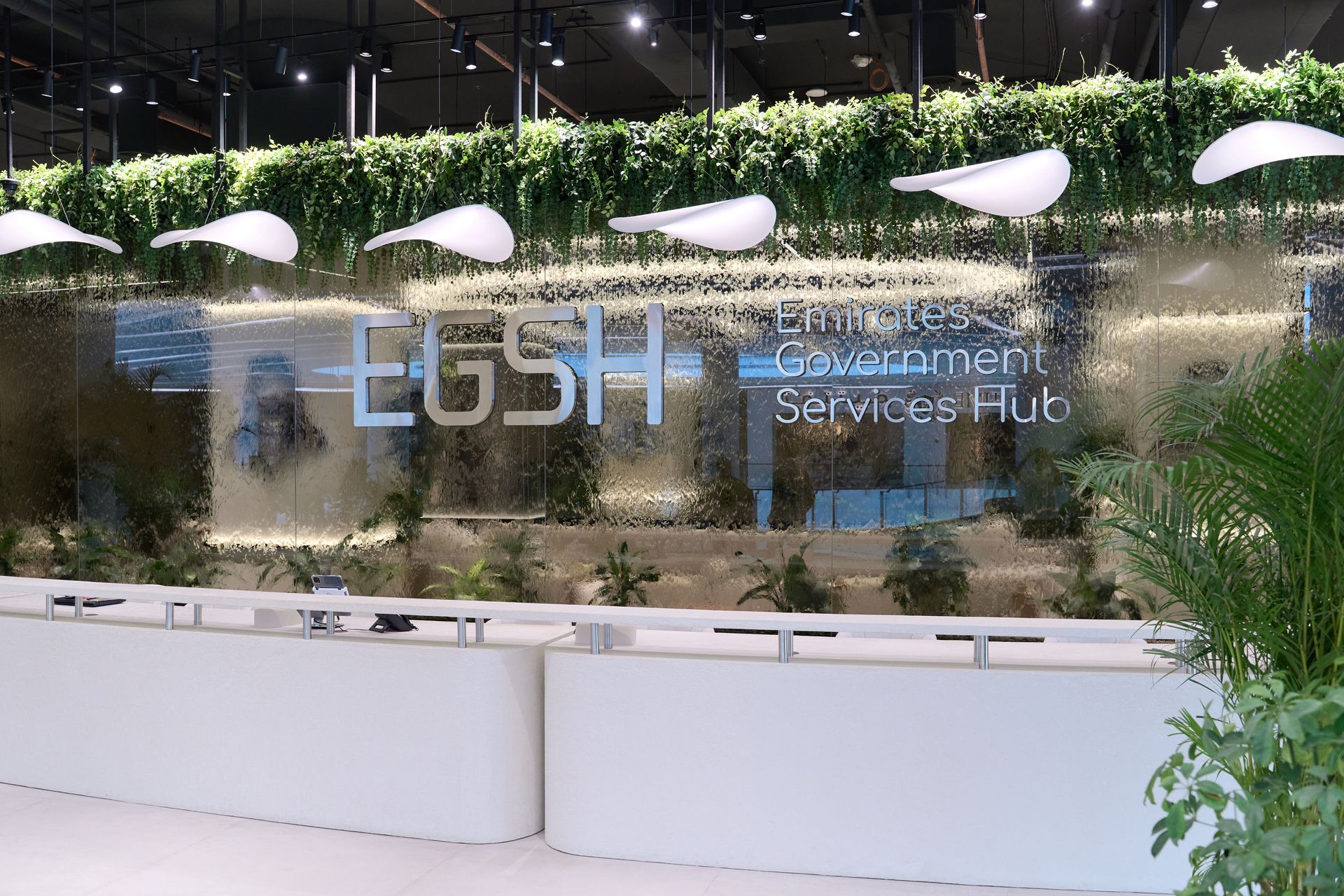
EGSH, as an authorised DLD Real Estate Registration Trustee Centre, assists buyers and property owners with DLD-registered procedures related to off-plan transactions. Whether the matter involves completing an initial sale registration in the Oqood system, processing a sale of mortgaged property following a refinancing event, obtaining a title deed after project handover, arranging a property valuation for legal proceedings, or verifying title deed authenticity, all procedures are handled through the DLD's official systems with full regulatory compliance.

Related Government Services
Frequently Asked Questions
What happens to buyer payments if an off-plan project is cancelled by the RERA in Dubai?
Where the RERA issues a final cancellation decision, the developer must refund all amounts paid by purchasers. The refund is processed through the project's escrow account in accordance with Law No. (8) of 2007. There is no permissible deduction from the buyer's refund in this scenario.
How much can a developer deduct if a buyer defaults on an off-plan contract in Dubai?
The deduction depends on the project's completion percentage. For projects above 80% complete, the developer may retain up to 40% of the unit's contractual value. For projects between 60% and 80%, the cap is also 40%. Below 60%, the cap is 25%. If the project has not commenced for reasons beyond the developer's control, the developer may retain up to 30% of amounts paid. These thresholds are set by Law No. (19) of 2020 and cannot be overridden by the SPA.
What is the role of the Special Tribunal for Cancelled Real Property Projects in Dubai?
The Special Tribunal, established by Decree No. (33) of 2020, holds exclusive jurisdiction over all disputes arising from cancelled or unfinished real property projects in Dubai. It has the power to appoint auditors, issue orders to escrow agents, and assign project completion to replacement developers. Its decisions are final and enforceable through Dubai Courts.
Can a buyer cancel an off-plan purchase due to a delayed handover in Dubai?
A delayed handover does not automatically entitle the buyer to cancel. The buyer must first review the SPA's grace period provisions and then file a complaint with the DLD, which may initiate mediation. If the delay is unjustified and beyond the contractual grace period, the buyer may seek termination and compensation through the Dubai Real Estate Court. The full legal process is covered in delayed property handover.
How does the escrow account protect off-plan buyers in Dubai?
Under Law No. (8) of 2007, developers must deposit all buyer payments into a dedicated escrow account for each project. The funds can only be used for the construction of that specific project and cannot be seized by the developer's creditors. If the project is cancelled, the escrow agent must ensure that buyer refunds are processed. The DLD and the RERA supervise escrow compliance.
Is the sale and purchase agreement for off-plan property in Dubai required to be registered?
Yes. Under Article 3 of Law No. (13) of 2008, all off-plan sales must be registered with the DLD in the Interim Real Property Register via the Oqood system. An unregistered SPA is void and provides no legal protection. SPA registration status can be confirmed through the Dubai REST app or via an authorised DLD Trustee Centre such as EGSH.
Can a buyer transfer an off-plan contract to another purchaser instead of cancelling?
Yes. Assignment of an off-plan SPA to a new buyer is permitted, subject to the developer issuing a no objection certificate. Most developers require the original buyer to have paid a minimum of 30% to 40% of the purchase price before approving the transfer. The new SPA must be registered with the DLD, and the 4% transfer fee applies. This option may result in a better financial outcome than cancellation.
What is the difference between a project marked "under cancellation" and one that is "cancelled" by the RERA?
A project classified as "under cancellation" is still being reviewed by the RERA — no final decision has been issued, and the refund framework is not yet operative. A project classified as "cancelled" has received a final, reasoned RERA decision, triggering the developer's obligation to refund all buyer payments in full and activating the Special Tribunal's jurisdiction.
How long does it take to receive a refund after an off-plan project is cancelled in Dubai?
There is no fixed statutory timeline for the entire refund process. After the RERA issues a final cancellation decision, the Special Tribunal oversees the liquidation and refund distribution. The developer must refund excess amounts within 60 days of contract termination or within one year, depending on the scenario. In practice, the Tribunal process may take several months, depending on the complexity of the case and the developer's financial position.
Where can buyers complete DLD-registered procedures related to off-plan property in Dubai?
Off-plan registration, assignment, sale completion, and other DLD-regulated transactions can be processed at authorised Real Estate Registration Trustee Centres. EGSH operates as an authorised DLD Trustee Centre in Dubai, where buyers and property owners can complete these procedures through the DLD's official systems in a single visit.

Official Sources and References
The following official sources were cited in this article:
- Dubai Land Department (DLD) — Regulates all real property transactions, off-plan project registration, escrow account oversight, and developer compliance in the Emirate of Dubai; also administers RERA functions.
- Dubai Legislation Portal — Official repository of all Dubai laws, decrees, and executive council resolutions.
- Law No. (13) of 2008 Regulating the Interim Property Register in the Emirate of Dubai — Primary legislation governing off-plan registration and cancellation procedures.
- Law No. (19) of 2020 Amending Law No. (13) of 2008 — Current version of Article 11 (refund thresholds and deduction caps).
- Law No. (8) of 2007 Concerning Escrow Accounts for Real Estate Development — Governs mandatory escrow accounts for off-plan projects.
- Decree No. (33) of 2020 Concerning the Special Tribunal — Establishes the Special Tribunal for Unfinished and Cancelled Real Property Projects.
- Executive Council Resolution No. (6) of 2010 — Implementing Bylaw of Law No. (13) of 2008.
Important Notice
The information in this article is current as of the date of publication and is provided for general informational purposes. UAE laws, government fees, and regulatory procedures are subject to change. Final decisions on all property registration and cancellation matters are made by the relevant UAE government authorities. Readers are advised to verify the latest requirements directly with the Dubai Land Department, the Real Estate Regulatory Agency, or an authorised DLD Trustee Centre before taking any action. This article does not constitute legal advice.



