



About EGSH
Why This Matters If You Rent Or Own Property In Dubai
This is especially important if you are renewing a tenancy contract or managing multiple units and need to ensure compliance rather than rely on informal comparisons or advertisements. In practice, the rent index check is most commonly used right before Ejari renewal in Dubai, when the new contract terms are being finalised.
In Dubai’s fast‑moving rental market, it can be difficult to know whether a proposed rent increase is simply “market-driven” or actually allowed under the rules set by the Dubai Land Department (DLD) and its Real Estate Regulatory Agency (RERA). This is especially important if you are renewing a tenancy contract or managing multiple units and need to ensure compliance rather than rely on informal comparisons or advertisements. This is especially important when preparing for lease renewal Dubai, where compliance with the RERA Rental Index directly affects the legality of any rent adjustment.
To bring clarity, the DLD publishes an official RERA rental index for Dubai and provides free digital tools – the Rental Increase Calculator and the Smart Rent Index – which calculate the maximum permitted adjustment using current data on average rents by area and property type. This article explains how these tools work, the legal framework behind them, and how you can use them step by step to check whether a rent increase (or reduction) is supported under Decree No. 43 of 2013 and Dubai tenancy law.
Register Your Ejari in Dubai
Officially regulated fees
No hidden charges
Queue-free service
VIP support at no extra cost
From AED 220
Understanding The RERA Rental Index And Smart Rent Index
Dubai Land Department is the government body responsible for regulating and registering real estate in the Emirate of Dubai. Its regulatory arm, the Real Estate Regulatory Agency (RERA), issues and updates the official residential rent index for Dubai. According to DLD publications, this Dubai Land Department rental index is built from objective market data, including:
- Registered lease contracts (Ejari data)
- Field surveys and inspections
- Real estate advertisements
- Information supplied by real estate companies
The goal is to maintain a transparent benchmark of the average rent by area, property type and building classification, so that landlords and tenants have a shared reference point when renewing contracts.

From Rental Index To Smart Rent Index
DLD has evolved the traditional residential rent index into a more granular Smart Rent Index Dubai system. Official announcements describe this as a digital framework that:
- Classifies buildings and areas
- Analyses rental contract values and area averages
- Uses artificial intelligence and building‑level data from lease contracts
The Smart Rent Index is an internal RERA system that analyses building-level and area-level rental data to support regulatory and Rental Disputes Center assessments. It provides benchmark information but does not, by itself, determine whether a specific tenancy is entitled to a rent increase at renewal.

Where To Find The Official Rental Increase Calculator
Before using the calculator, you may also review applicable government charges through the service fees indicator Dubai service on the DLD platform. The key public‑facing tool is the Dubai rent increase calculator, officially called the Rental Index or Rent Increase Calculator. The DLD’s Tenancy Guide and website show that you can access it in three main ways:
- DLD website. Go to “e‑Services”, select “Rental Index” or “Rent Increase Calculator”. The service then requests your contract and property details.
- Dubai REST app. Available as the DLD’s main real estate services application. Contains the same rent calculation function, allowing you to check the RERA average market rent in Dubai for your unit and see the permitted increase.
- DubaiNow app. A unified government services app that also includes the DLD rental index/calculator service for quick checks on the move.
All of these access points connect to the same official data set. The result screen will show you the comparable average rent and the maximum rent adjustment allowed for your property under the current index.

Get DLD Services in Dubai Through EGSH
Authorised One-Stop Government Services Centre
- All government services in one place
- Completed in one visit
- VIP service without queues
- Regulated government fees

The Rental Increase Calculator automates this process by first obtaining the relevant average rent from the index, then computing the percentage difference, and finally matching that difference to the appropriate band from Decree 43.
90‑Day Notice Rule For Changing Rent
Alongside the index, the RERA tenancy law rent increase rules come from Law No. 26 of 2007 as amended by Law No. 33 of 2008. DLD and the Rental Disputes Center (RDC) emphasise one key requirement: if either party wants to amend any term of the tenancy contract – including the rent – they must notify the other party at least 90 days before the contract expiry date, unless the contract itself specifies a different notice period.
The Smart Rent Index guidance links directly to this rule:
- If the landlord gives at least 90 days’ written notice and the Smart Rent Index confirms eligibility for an increase, the increase may be applied at renewal, within the permitted band.
- If the landlord fails to give the required 90‑day notice, even if the index would allow an increase, that increase cannot be applied for that particular renewal term.
This Dubai 90-day rent increase notice requirement is therefore as important as the percentage bands themselves.

Where The Index Applies – And Key Exceptions
According to DLD, Decree 43 and the RERA rental index Dubai apply to:
- All residential areas in the Emirate of Dubai
- Freehold and leasehold areas
- Free zones and special development zones
The main exception is Dubai International Financial Centre (DIFC), which has its own regulatory framework and dispute mechanisms. If your property is in DIFC, you must follow the specific DIFC rules rather than the DLD/RERA rental cap Dubai system described in this article. The Rental Index and Rent Increase Calculator are the official references for all other Dubai areas covered by the DLD.



Why Choose EGSH for Government Services in Dubai

VIP Service
Personal assistance and priority processing with no queues.

Affordable Fees
Official government rates with transparent, fixed pricing.

All Services in One Place
Comprehensive range of UAE government services under one roof.

One-Visit Completion
Most procedures are completed in a single visit to the centre.
Step By Step: Using The RERA Rental Increase Calculator
Before you start, gather the information that the DLD Rent Increase Calculator will request. Typically, this includes:
- Tenancy contract expiry date
- Property type (e.g., apartment, villa)
- Area or community
- Number of bedrooms
- Current annual rent
- Ejari contract details, as the DLD FAQ recommends basing entries on the registered Ejari data
Having your Ejari certificate and current contract in front of you reduces the risk of incorrect inputs, which could otherwise distort the result. In practice, many tenants rely on professional ejari services in Dubai to ensure that registration and renewal data is accurate before running the calculation.
If the tenancy is new, the same details are typically used right before Ejari registration in Dubai, so it is worth confirming accuracy from the start.

Accessing The Service (Web And Apps)
You can then access the calculator at no cost:
- On the DLD website. Visit dubailand.gov.ae, navigate to “e‑Services”, select “Rental Index”/“Rent Increase Calculator”.
- On Dubai REST or DubaiNow. Open the app and look for the rental index or rent calculation service. Follow the prompts to begin a new calculation.
The DLD’s Tenancy Guide states that this e‑Service is updated on a regular basis, so the calculation you receive should always reflect the latest average rent by area Dubai figures available to RERA.

Entering Details And Reading The Result
Once you open the service, you will:
-
Select the property type and area.
Enter the number of bedrooms and your tenancy expiry date. -
Input your current annual rent as shown on the contract or Ejari.
The system then uses the residential rent index Dubai data to:
- Retrieve the current average rent for similar units in your area
- Calculate the maximum rent increase (if any) permitted under Decree 43.
The output will clearly indicate:
- The average market rent used for comparison
- Whether your current rent is below that average and by how much
- The percentage increase that is allowed, or a statement that no increase can be applied.
The DLD notes that the underlying rental values take into account location, technical classification of the building, services provided, and overall market conditions, not just simple advertised prices.

The Formula Behind The Calculator (For Transparency)
For users who want to understand the mechanics, DLD’s Tenancy Guide explains the formula the calculator uses to compare your rent with the index:
> (Average rent in the official index – current contract rent) ÷ average index rent × 100 = percentage difference from the average.
In practice, this means:
- If your current rent is very close to the average – within 10% – the difference will fall in the 0% band, and the calculator will show that no increase is permitted.
- If your current rent is, for example, more than 20% below the average, the calculator will map that percentage to the corresponding band in Decree 43 and return the permitted maximum increase for your situation.
This transparency allows tenants and landlords to see that the result is not a negotiation tool, but a structured application of the Decree 43 bands to the official RERA rental index data.

Visit EGSH for VIP Service Without Queues
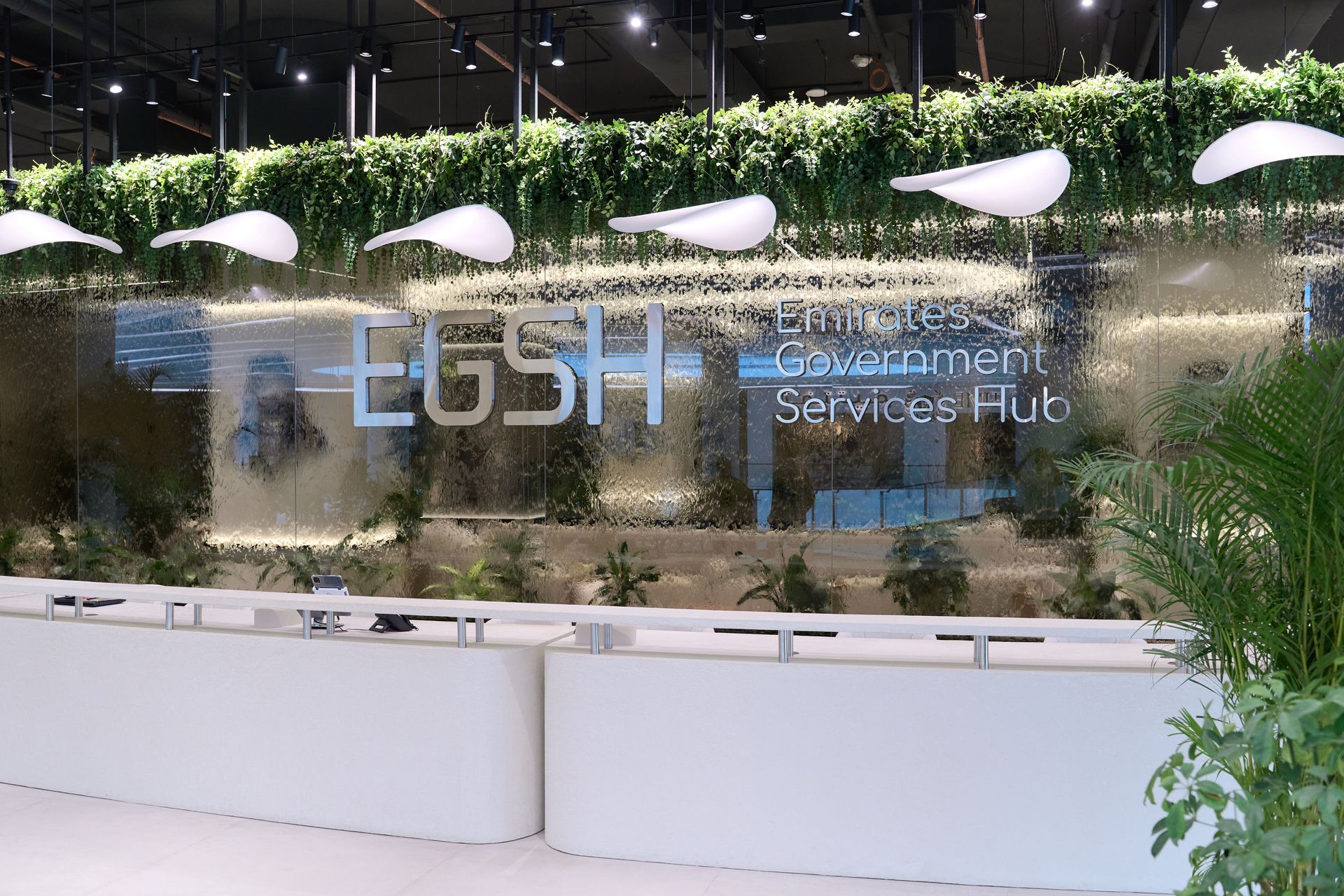
You can stop by EGSH during working hours without an appointment or book your visit at a time that suits you best.
Address
Art of Living Mall, Al Barsha 2, Dubai
Operating hours
Monday–Thursday, Saturday: 9:00 am–5:00 pm
Friday: 9:00 am–12:00 pm, 2:00 pm–5:00 pm
Sunday: Closed

How To Interpret The Result – And What To Do Next
If the landlord’s proposed increase is equal to or lower than the percentage shown by the calculator, and the 90‑day notice requirement has been met, that proposal generally sits within the legal framework applied by DLD and the Rental Disputes Center. DLD FAQs further state that when landlord and tenant disagree over rent at renewal, the Rent Index becomes mandatory as the reference point. In more complex cases, a property status inquiry Dubai can help confirm the official registration details and classification used by DLD when assessing rental compliance.
In some situations, the index result alone is not enough to support negotiations—especially for unique layouts, upgraded units, or buildings with mixed quality levels. In such cases, Property valuation in Dubai can provide an additional objective reference point alongside the RERA benchmarks.
In such a case, you may still negotiate on timing or payment structure, but the percentage itself is supported by the official system.

When The Proposed Increase Is Higher Than Allowed
If the requested increase is higher than what the Dubai rent increase calculator permits, the DLD’s guidance indicates that this is not supported by the Decree No. 43 of 2013 framework or by the approach typically used by the Rental Disputes Center.
In this situation, practical steps may include:
- Sharing a copy or screenshot of the calculator result with the other party and requesting that the proposal be aligned with the permitted band.
- If no agreement is reached, consider an application to the Rental Disputes Center, which the DLD confirms may use the Rent Index/Rental Increase Calculator, along with average rents for similar properties in the area, as statutory criteria when deciding whether to increase or reduce rent.

Requesting A Rent Reduction
The RERA rental index, Dubai, does not only support increases. The DLD states that:
- Landlords may use the Rental Increase Calculator to justify a rent increase
- Tenants may rely on the same tool to request a rent reduction where the current contract rent is above the typical average.
Any such request must still respect the 90‑day notice rule before renewal unless the contract provides otherwise. DLD‑reported RDC cases include examples where the committee reduced the rent of a property after comparing the contract rent with the average rent of similar units in the same area, with the Rental Index forming part of the evidence.

What If The Index Changes Before Renewal
The Smart Rent Index Dubai framework addresses how changes in the index interact with your renewal date and notice:
- If the landlord gave proper 90‑day notice based on an earlier index that allowed an increase, but by the actual renewal date, the updated index no longer shows eligibility, theDLD confirms that **the index applicable on the renewal date prevails**. In other words, no increase may be applied if the latest data does not support it.
- If the Smart Rent Index shows that the property is eligible for an increase, but the landlord did not provide the required 90‑day notice, then **the increase cannot be applied** for that renewal, even though the index would otherwise allow it.
This reinforces that both elements – legal notice and index eligibility – must be satisfied.

How Often Is The Rental Index Updated
The DLD describes slightly different update cycles for the Dubai Land Department rental index:
- In some releases, the DLD notes that the index is generally updated once a year and published around the end of September, giving owners time to notify tenants of any changes in rental values for the coming year.
- In others, the DLD mentions that the Rental Index can be updated approximately every four months, using new lease data and market research to maintain transparency and consistency.
Regardless of the exact frequency in a given year, the DLD’s Tenancy Guide confirms that the Rent Increase Calculator service itself is regularly updated. When you run a calculation, you are therefore using the most recent data available to RERA at that time.

New Leases Versus Renewals
The DLD explains an important distinction:
- For new leases, the Rental Index is indicative. Parties often negotiate initial rent freely, but may use the index as an objective reference to understand prevailing market levels.
- At renewal, especially when the landlord and tenant are in disagreement over the rent, the index becomes mandatory as the benchmark. In disputes, the RDC may then look at the index result and comparable market evidence to decide a fair rent adjustment within the Decree 43 bands.
Understanding this difference helps manage expectations when comparing your existing rent to current offers for new units in the same area.
FAQ about RERA Rental Index in Dubai
How To Check If My Rent Increase Is Legal In Dubai?
To check if your rent increase is legal in Dubai (excluding DIFC), you should:
- Confirm that your landlord sent a written notice of any proposed change at least 90 days before the tenancy expiry date, unless your contract sets a different period.
- Visit dubailand.gov.ae → e‑Services → Rental Index/Rent Increase Calculator, or use the same service through Dubai REST or DubaiNow.
- Enter your Ejari‑based contract details: property type, area, number of bedrooms, current annual rent and contract expiry date.
- Review the result, which will show the average rent for similar properties and the maximum permitted increase.
- Compare this permitted percentage with your landlord’s proposal. If the proposal exceeds the calculator result, it is generally out of the official framework used by DLD and RDC.
By What Percentage Can a Landlord Increase Rent In Dubai?
The maximum percentage a landlord can increase rent in Dubai is governed by Decree 43 of 2013, rent increase bands and depends on how far your current rent is below the average index rent for your area and property type. The bands are:
- 0% increase if your current rent is equal to or up to 10% below the average.
- Up to 5% if it is 11%–20% below.
- Up to 10% if it is 21%–30% below.
- Up to 15% if it is 31%–40% below.
- Up to 20% if it is more than 40% below the average.
The Dubai rent increase calculator applies these bands automatically using current RERA rental index data.
How Does the RERA Rent Increase Calculator Work?
To use the RERA rent increase calculator:
- Gather your Ejari certificate and tenancy contract.
- Access the Rental Index / Rent Increase Calculator via dubailand.gov.ae, Dubai REST or DubaiNow.
- Select the property type and area, then enter the number of bedrooms.
- Input your contract expiry date and current annual rent.
- Submit the form to see the official average rent and the allowed percentage change.
- Use this outcome when discussing rent with the other party or, if needed, as part of your documentation to the Rental Disputes Center.
Can My Landlord Increase Rent Without 90 Days Notice in Dubai?
Under Dubai tenancy law, a landlord cannot usually increase rent without giving at least 90 days’ prior notice before contract expiry, unless your tenancy contract specifies a different notice period.
Does the RERA Rent Index Apply To Free Zones In Dubai?
Yes. According to the DLD, the RERA rent index applies to all residential areas of Dubai. The main exception is the Dubai International Financial Centre (DIFC), which has its own tenancy framework. Certain free zones may apply additional local rules.
What To Do If Rent Increase Is Higher Than RERA Index?
If your landlord’s proposed adjustment is higher than what the RERA rental index and Rent Increase Calculator allow:
- Run the calculation yourself using Ejari‑based data to confirm the permitted percentage.
- Share the official result with your landlord and request that the proposal be aligned with the Decree 43 band.
- If agreement is not reached, you may consider filing a case with the Rental Disputes Center.
The RDC may use the Rental Index and average rents for similar properties in the area as statutory criteria when deciding whether to increase or reduce rent.
How Smart Rent Index Affects Dubai Rent Increases?
The Smart Rent Index affects Dubai rent increases by:
- Using building‑level contract data, area averages and artificial intelligence to determine the typical rent for each building and area.
- Ensuring that increases are based on up‑to‑date, standardised data rather than isolated listings or informal comparisons.
- If the Smart Rent Index shows no eligibility for an increase at the time of renewal, a rent hike should not be applied, even if earlier or outdated information suggested otherwise.

Explained by
Omar Abdulaziz Ali Al Qassim
Government Services Center Manager / Legal Consultant
Omar Abdulaziz Ali Al Qassim is a Government Services Center Manager and Legal Consultant with 8 years of experience. He specialises in real estate, licensing, residency, labour, and Ejari services, ensuring accurate and compliant processing across DLD, MOHRE, GDRFA, and DET systems.
This article is provided for general information only, based solely on publicly available DLD and RERA materials. It does not constitute legal advice. For case‑specific guidance, you should consult an EGSH adviser or contact the Rental Disputes Center.



