


About EGSH
Asset Sale vs Share Sale: Legal Structure and DLD Registration
Selling property owned by a company in Dubai requires registration with the Dubai Land Department (DLD) regardless of the transaction route chosen. In an asset sale, the standard DLD transfer fee is 4% of the sale value.
In a company shares sale, the 4% fee structure applies to the value of the shares being transferred. Both routes are processed at authorised Real Estate Registration Trustee Centres, such as EGSH, and the transaction is not legally effective until it is recorded in the DLD's official property register. This article explains the legal framework, the practical differences between the two sale methods, the documents and fees involved, and the role of corporate tax under Federal Decree-Law No. 47 of 2022 on the Taxation of Corporations and Businesses.
Register a Company Shares Sale in Dubai
Officially regulated fees
No hidden charges
Queue-free service
VIP support at no extra cost
From AED 550
Explore EGSH Government Services in Dubai
Legal Framework for Corporate Property Ownership in Dubai
The legal basis for corporate real estate ownership in Dubai is established by Law No. 7 of 2006 Concerning Real Property Registration in the Emirate of Dubai. Under this law, the DLD is the sole authority responsible for maintaining the real property register and issuing title deeds. All real estate transactions — including sales, transfers, and changes to ownership — must be registered with the DLD to be legally valid. Any disposition that is not recorded in the register has no legal effect.
Companies registered in the UAE may own property in Dubai. Where the shareholders include non-UAE nationals, the property must be located in an area designated for foreign ownership under Regulation No. 3 of 2006 Determining Areas for Ownership by Non-UAE Nationals of Real Property in the Emirate of Dubai. Corporate sellers must comply with the same area restrictions that apply to foreign buyers — see the legal requirements for foreigners buying property for the latest designated zone list. UAE and GCC nationals, and companies wholly owned by them, may own property anywhere in the emirate without restriction. Free zone companies, mainland limited liability companies, sole establishments, and joint-stock companies may all hold real estate, subject to their respective licensing conditions and any requirements set by the relevant free zone authority.
The DLD requires every company that owns or intends to own property in Dubai to be registered in its system. If the company is not yet registered with the DLD, its authorised representative must complete the company registration procedure before any sale transaction can be processed. This applies equally to mainland entities, free zone companies, and offshore vehicles such as those registered with the Jebel Ali Free Zone Authority (JAFZA) or the Dubai International Financial Centre (DIFC).

Get DLD Services in Dubai Through EGSH
Authorised One-Stop Government Services Centre
- All government services in one place
- Completed in one visit
- VIP service without queues
- Regulated government fees

Two Routes to Selling Company-Owned Property
When a company decides to sell real estate it holds in Dubai, there are two legally distinct routes: an asset sale and a company shares sale. Each has different legal, procedural, and tax implications.
H3: Asset Sale — Direct Property Transfer
In an asset sale, the company transfers the property itself from its name to the buyer's name. The DLD cancels the seller's existing title deed and issues a new one to the buyer. This follows the same property sale registration process used for any standard transaction in Dubai, with the added requirement that the seller must present corporate documents — such as the trade licence, Memorandum of Association (MOA), and Articles of Association (AOA) — in addition to the standard identification and property documents.
An asset sale is straightforward from the buyer's perspective: the buyer acquires the property directly and receives a clean title deed in their own name. However, for the selling company, an asset sale may trigger corporate tax on the capital gain, as explained in the tax section below.

Company Shares Sale — Transfer of Ownership in the Entity
In a company shares sale, the property remains registered under the company's name, but the ownership of the company itself changes hands through the transfer of shares from the existing shareholder(s) to the buyer. The DLD provides a dedicated Company Shares Sale service for this purpose. This route is often chosen by investors who wish to acquire the company and its property portfolio as a going concern, or where there are tax, licensing, or structural advantages to retaining the corporate vehicle.
The DLD must be notified of any change in the shareholding of a company that owns property in Dubai, and a proportionate transfer fee applies. Failure to inform the DLD of a shareholding change can result in a fine. The free zone authority (where applicable) will typically not finalise the share transfer procedure unless a No Objection Certificate (NOC) from the DLD has been obtained first.

Required Documents for Each Transaction Route
The documentation requirements differ depending on whether the seller opts for an asset sale or a company shares sale.
Documents for an Asset Sale (Direct Property Transfer)
The standard documents required for a property sale registration at the DLD include the signed sale and purchase agreement, valid identification of both parties (Emirates ID or passport for non-residents), an electronic No Objection Certificate (e-NOC) from the developer in freehold areas obtained via the Dubai REST application, and manager's cheques for the applicable fees and the purchase price. The developer NOC fees apply regardless of whether the seller is an individual or a company — the fee is charged per unit.
When the seller is a company, the following corporate documents must also be provided: the valid trade licence (or Certificate of Incorporation for free zone entities), the MOA and AOA with any amendment annexes, the passport, residence visa, and Emirates ID of the authorised signatory, and a board resolution or power of attorney authorising the sale. Free zone companies must additionally provide a No Objection Certificate from the licensing authority permitting the property transaction.



Why Choose EGSH for Government Services in Dubai

VIP Service
Personal assistance and priority processing with no queues.

Affordable Fees
Official government rates with transparent, fixed pricing.

All Services in One Place
Comprehensive range of UAE government services under one roof.

One-Visit Completion
Most procedures are completed in a single visit to the centre.
Corporate Tax Considerations
The introduction of Federal Decree-Law No. 47 of 2022 on the Taxation of Corporations and Businesses has created an important distinction between an asset sale and a company shares sale for tax purposes.
Asset Sale — Capital Gains Are Taxable
When a company sells a property directly (an asset sale), any capital gain, calculated as the sale price minus the net book value of the property, forms part of the company's taxable income. Under the UAE corporate tax regime, taxable income exceeding AED 375,000 is subject to corporate tax at a rate of 9%. The Participation Exemption, which can exempt gains from the sale of qualifying shareholdings, does not apply to the direct sale of real estate.
Free zone companies holding Qualifying Free Zone Person (QFZP) status may benefit from the 0% corporate tax rate on qualifying income, but specific conditions must be met, and professional tax advice is strongly recommended before structuring a transaction on this basis.

Share Sale — Participation Exemption May Apply
When the transaction is structured as a sale of shares in the property-owning company, the tax treatment differs. Under Article 23 of Federal Decree-Law No. 47 of 2022, gains from the sale of a qualifying participation may be exempt from corporate tax, provided certain conditions are met: the seller must have held at least 5% of the shares for an uninterrupted period of at least 12 months, and the participation must be subject to a minimum effective tax rate of 9% in its jurisdiction, among other requirements.
This exemption makes a share sale potentially more tax-efficient than a direct asset sale, although the specific circumstances of every transaction must be assessed individually. Sellers are advised to consult a licensed tax adviser or the Federal Tax Authority (FTA) before finalising the transaction structure.
VAT Treatment
The VAT treatment depends on the property type. The sale of residential property is either zero-rated (for the first sale of a new residential property within three years of completion) or exempt from VAT (for subsequent sales). The sale of commercial property is subject to 5% VAT under the standard rate. These rules apply to asset sales. A share sale is typically treated as exempt from VAT, as the subject of the transaction is the transfer of securities rather than a supply of goods or services.

Visit EGSH for VIP Service Without Queues
You can stop by EGSH during working hours without an appointment or book your visit at a time that suits you best.
Address
Art of Living Mall, Al Barsha 2, Dubai
Operating hours
Monday–Thursday, Saturday: 9:00 am–5:00 pm
Friday: 9:00 am–12:00 pm, 2:00 pm–5:00 pm
Sunday: Closed

Step-by-Step Process for Selling Company-Owned Property
The practical steps differ slightly depending on the route chosen, but both are completed through DLD sale registration at a Real Estate Registration Trustee Centre.
Step 1 — Pre-Transaction Preparation
The selling company should ensure that all corporate documents are current and valid: the trade licence must be active, the MOA/AOA must reflect the correct shareholding, and the title deed should be confirmed through title deed verification. Outstanding service charges, developer obligations, and any registered mortgages must be settled or discharged before the transaction can proceed. If the property is in a freehold area, an e-NOC must be obtained from the developer via the Dubai REST application.
Step 2 — Agreement Between the Parties
The seller and buyer negotiate and sign a sale and purchase agreement (for an asset sale) or a share purchase agreement (for a share sale). The agreement should specify the transaction value, payment terms, the allocation of DLD fees between the parties, and any conditions precedent — such as mortgage discharge, NOC issuance, or regulatory approvals.
Step 3 — Attendance at the Trustee Centre
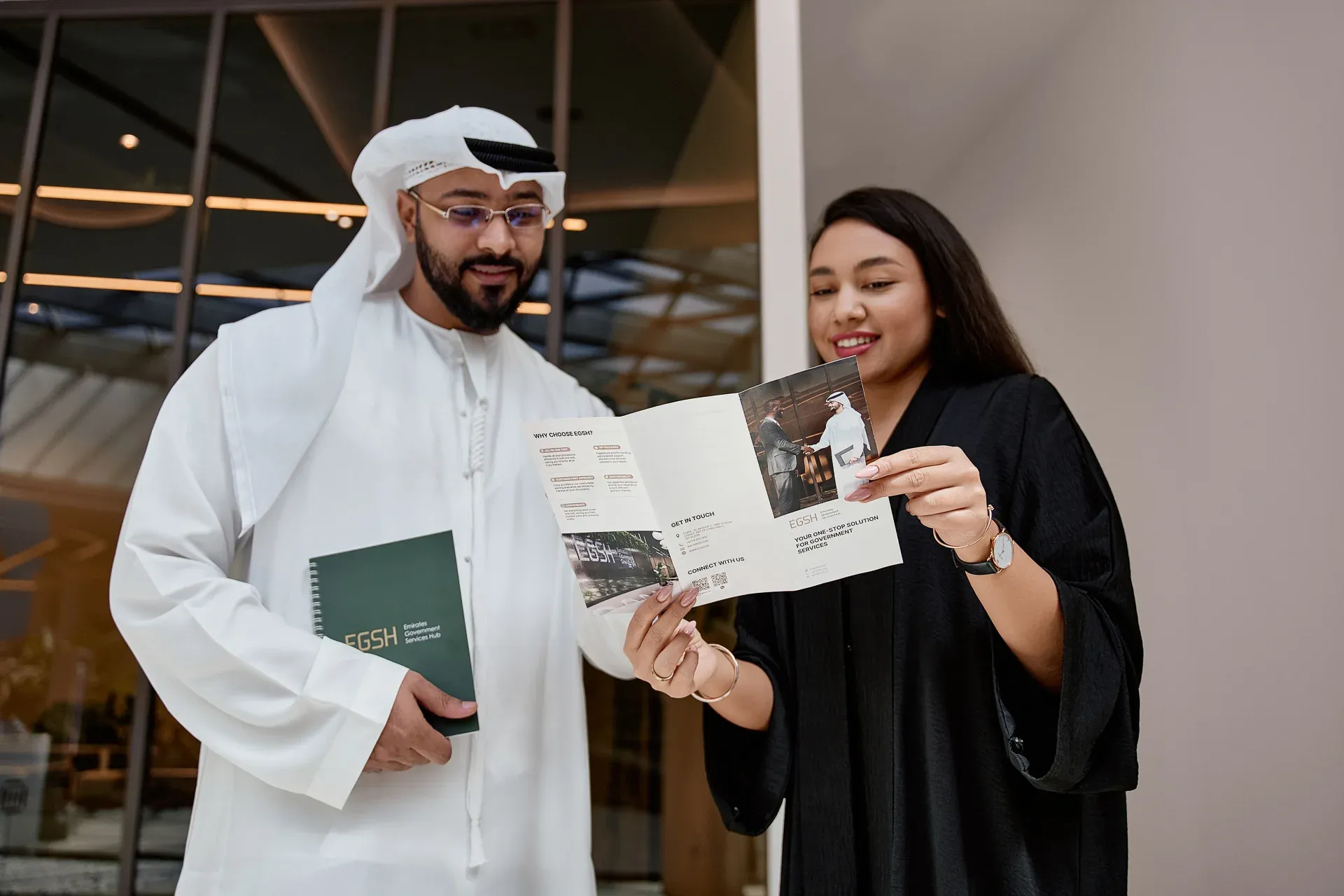
Both parties, or their authorised representatives, attend the Real Estate Registration Trustee Centre, such as EGSH, with the complete set of required documents. The consultant verifies the documents, confirms that the property data matches the DLD record, and checks for any encumbrances or outstanding liabilities.
Step 4 — Data Entry, Audit, and Fee Payment
The transaction details are entered into the DLD system by the consultant and subjected to an internal audit. Once verified, the applicable fees are calculated and the parties make payment by cheque, credit card, or ePay. EGSH manages the fee calculation and payment submission, ensuring that all amounts align with the DLD's published schedule.
Step 5 — Issuance of Updated Ownership Documents
Upon successful completion, the DLD issues the updated certificate of title or title deed and payment receipts. For an asset sale, a new title deed is issued in the buyer's name. For a company shares sale, an updated certificate reflecting the new shareholder structure is issued. All outputs are delivered electronically via email. The entire process at the Trustee Centre typically takes 25 to 30 minutes for a company shares sale and a comparable timeframe for a standard asset sale.

Special Considerations for Free Zone and Foreign Companies
Free zone companies and foreign-incorporated entities face additional procedural requirements when selling company-owned property in Dubai.
The DLD's "Know Your Rights" investor guide states that foreign companies cannot directly own real estate in Dubai. A foreign entity must establish a company within a recognised UAE free zone, such as JAFZA, the Dubai Multi Commodities Centre (DMCC), or the DIFC, and register the property in the name of that free zone entity. Any subsequent sale of the property or shares in that entity must follow the standard DLD procedures.
For free zone companies, the licensing authority must issue a No Objection Certificate before a share transfer can be finalised. The free zone authority will not process the share transfer until the DLD has issued its own NOC confirming that the appropriate transfer fees have been paid. Where the shareholders of a property-owning company include a company incorporated in a foreign jurisdiction, the DLD requires prior approval of the proposed transaction structure and the buyer's corporate documentation before the sale can proceed.
The nationality of the incoming shareholder must also be considered. If the property is located in an area not designated for foreign ownership under Regulation No. 3 of 2006, a share transfer that introduces a foreign shareholder to a locally owned company could render the company ineligible to hold the property. Independent legal advice should be sought before completing any such transaction.
Related Government Services
Role of EGSH in Company Property Transactions
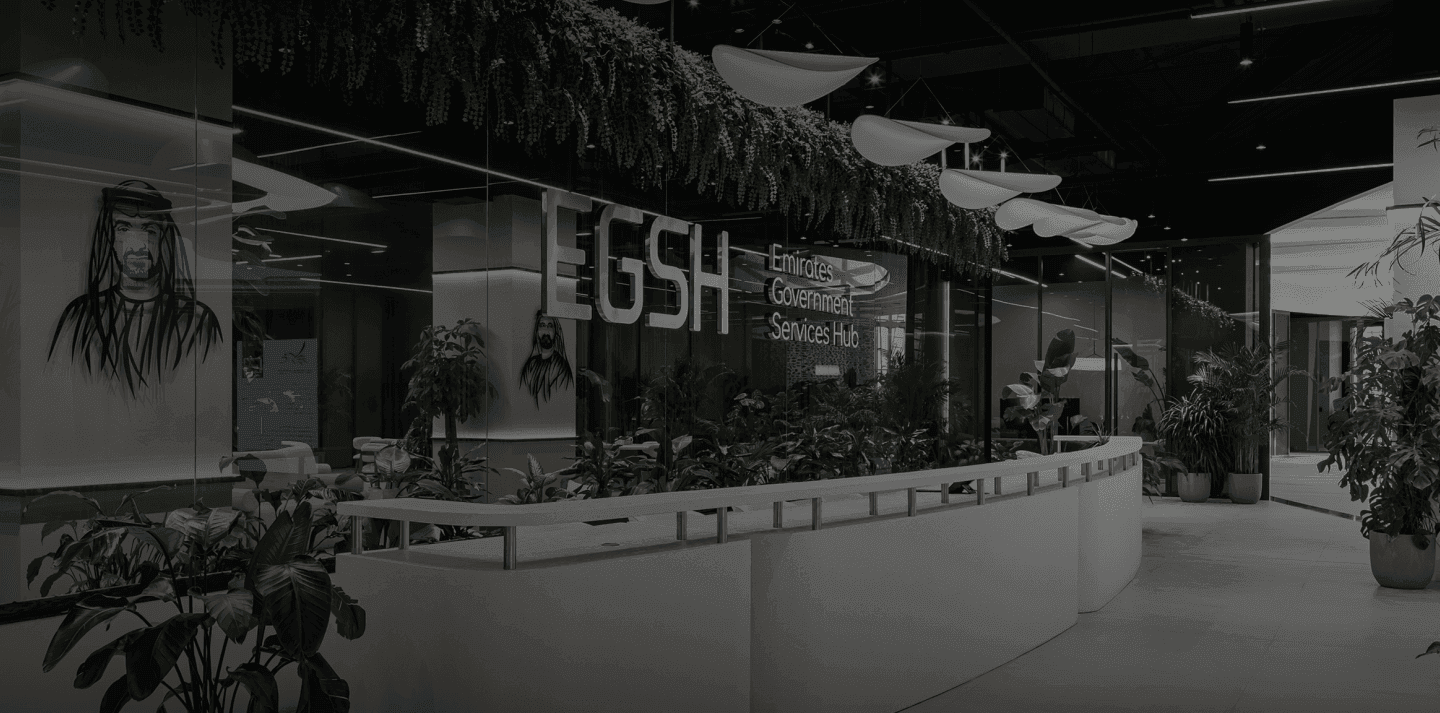
EGSH (Emirates Government Services Hub) is an authorised Real Estate Registration Trustee Centre operating under the Dubai Land Department. All DLD property transactions, including property ownership transfers, company shares sales, and related services such as trade licence amendments, can be completed at EGSH.
At EGSH, a dedicated consultant reviews all corporate documents, verifies the title deed and shareholding data against the DLD record, calculates applicable fees, and submits the transaction through the official DLD system. The service typically takes 25 to 30 minutes, after which the updated ownership documents and payment receipts are delivered electronically. EGSH does not approve transactions or issue government decisions; final approval rests with the DLD.
For sellers and buyers involved in corporate property transactions, EGSH offers a structured, single-visit process that covers document verification, fee calculation, and DLD submission. Further guidance on the general property registration process in Dubai is also available. Appointments can be booked in advance, or clients may visit during working hours without prior arrangement.

Frequently Asked Questions
What is the difference between an asset sale and a company shares sale for Dubai property?
In an asset sale, the property is transferred directly from the company to the buyer, and a new title deed is issued in the buyer's name. In a company shares sale, the property remains under the company, but the ownership of the company changes hands through a share transfer registered with the DLD. Both routes incur a 4% DLD registration fee.
What DLD fees apply to a company shares sale in Dubai?
The DLD charges 4% of the share sale value from the buyer. Additional fixed fees include AED 250 for the title deed or certificate issuance, AED 10 knowledge fee, and AED 10 innovation fee per drawing. Service partner fees of AED 4,000 plus VAT apply where the sale value is AED 500,000 or more, or AED 2,000 plus VAT for lower values.
Is corporate tax payable when a company sells property in Dubai?
Yes. Under Federal Decree-Law No. 47 of 2022, capital gains from a direct property sale (asset sale) form part of the company's taxable income and are subject to 9% corporate tax on profits exceeding AED 375,000. A share sale may qualify for the Participation Exemption under certain conditions. Professional tax advice is recommended.
Can a free zone company sell property it owns in Dubai?
Yes. A free zone company that owns property in a designated freehold area may sell it through either an asset sale or a company shares sale. The company must provide a No Objection Certificate from its licensing authority, and the DLD must approve the transaction before registration can proceed.
What documents does a limited liability company need to sell property at the DLD?
A limited liability company must present its valid trade licence, Memorandum of Association and Articles of Association (with any amendment annexes), and the passport, residence visa, and Emirates ID of the owner or authorised signatory. For an asset sale, the e-NOC from the developer and the sale and purchase agreement are also required.
How long does a company property sale take at a Trustee Centre?
The DLD lists the service time for a company shares sale as 25 to 30 minutes at a Real Estate Registration Trustee Centre. An asset sale follows the standard property sale registration timeline, which is comparable. Pre-transaction preparation, including obtaining NOCs and settling any outstanding liabilities, typically takes longer than the registration itself.
Does the DLD need to be notified when shares in a property-owning company change hands?
Yes. The DLD requires that any change in the shareholding of a company holding Dubai property be registered through the Company Shares Sale service. The DLD charges a proportionate transfer fee, and failure to notify the DLD can result in a fine.
Can I sell only part of the shares in a property-owning company?
Yes. The DLD's Company Shares Sale service permits the registration of both total and partial share transfers. A shareholder may sell a portion of their ownership while retaining the remainder, and the DLD will update the ownership record accordingly.

Official Sources and References
The following government authorities and official sources are cited in this article.
-
The Dubai Land Department (DLD) — The government authority responsible for real estate registration, title deed issuance, and all property transaction services in the Emirate of Dubai.
-
Dubai Legislation Portal — The official repository for Dubai emirate-level legislation, including Law No. 7 of 2006 and Regulation No. 3 of 2006.
-
The Federal Tax Authority (FTA) — The federal authority responsible for the administration and enforcement of corporate tax under Federal Decree-Law No. 47 of 2022.
-
UAE Government Portal — The official platform of the UAE Government providing information on corporate tax, property ownership, and foreign investment regulations.
-
The UAE Ministry of Finance — The ministry responsible for the UAE's fiscal and tax policy framework, including the publication of the Corporate Tax Law.
Important Notice
The information provided in this article is current as of March 2026 and is intended for general guidance only. UAE legislation, government fees, and administrative procedures are subject to change without prior notice. All property-related approvals, registrations, and ownership transfers are ultimately issued by the Dubai Land Department or the relevant competent authority. Tax treatment depends on individual circumstances, and readers should consult a licensed tax adviser or the Federal Tax Authority for advice specific to their situation. EGSH facilitates government transactions through its authorised departments but does not issue approvals, guarantee outcomes, or provide legal or tax advice. Readers are advised to verify all applicable requirements, fees, and procedures directly with the relevant government authority before making decisions related to the sale of company-owned property.



