


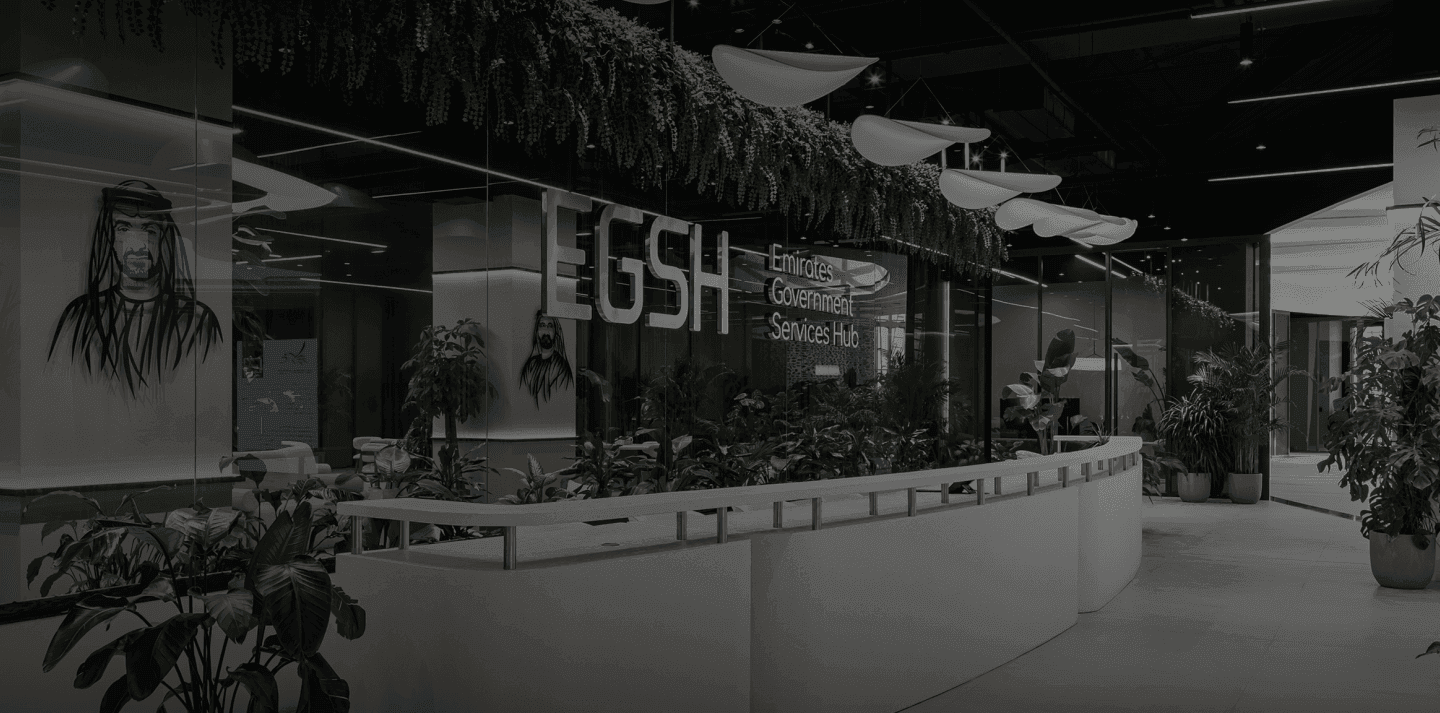
About EGSH
Dubai Property Service Charges: Legal Obligations, Rates, and Verification Through the DLD Index
Service charges in Dubai range from AED 3 to AED 30 per square foot per year, regulated by the Real Estate Regulatory Agency (RERA) and published through the Dubai Land Department (DLD) Service Charge Index. The approved rate for any jointly owned property is set per building, reviewed annually against officially submitted budgets, and verified through Mollak — the e-platform RERA uses to govern service charge accounts across Dubai's residential and commercial communities. Rates vary materially by community, property type, and amenity level; the DLD tool allows owners and investors to confirm the approved figure for any specific project before committing to a purchase.
Service charges are not discretionary costs. Under Dubai Law No. 6 of 2019 Concerning Ownership of Jointly Owned Real Property, all owners of units in jointly owned developments are legally obligated to pay approved service and usage charges. This guide explains what service charges cover, how rates break down across major communities, how to calculate the annual amount, and how to access the official DLD Service Charge Index tool using three distinct lookup methods.
Check Service Fees in Dubai
Officially regulated fees
No hidden charges
Queue-free service
VIP support at no extra cost
0
starting from
What Are Service Charges in Dubai?
Service charges are the mandatory annual fees that owners of units in jointly owned properties pay towards the management, operation, and maintenance of common areas and shared facilities. The legal framework is established by Law No. 6 of 2019, which repealed the previous Law No. 27 of 2007 and fundamentally restructured how charges are regulated and collected across Dubai's jointly owned property developments.
Under Article 25 of the Law, each owner is obligated to pay service charges to the management entity, with amounts calculated by reference to the location of the development and the standard of services provided. The liability for payment rests with the owner: under Article 16(b) of the same Law, the owner may not be discharged from this liability even if the tenant fails to pay, unless the lease agreement explicitly provides otherwise. The DLD, acting through RERA, publishes approved rates in the Service Charge Index, which serves as the benchmark for every building registered under Mollak.
A management company or Owners' Association must submit its proposed annual budget to RERA for review and approval via Mollak before any charges are levied on owners. Management entities issue invoices to unit owners based on the budget approved through Mollak. Charges that have not received RERA approval are not legally enforceable, and RERA may take action against management entities that attempt to collect unapproved amounts.

Get DLD Services in Dubai Through EGSH
Authorised One-Stop Government Services Centre
- All government services in one place
- Completed in one visit
- VIP service without queues
- Regulated government fees

How to Calculate Service Charges in Dubai
The calculation method is straightforward. The DLD Service Charge Index publishes an approved annual rate per square foot for each registered building. The owner multiplies that rate by the unit's built-up area.
Formula: Annual service charge = Unit area (sq ft) × Approved rate (AED per sq ft)
Two worked examples illustrate the practical application.
Example 1 — Apartment in Jumeirah Lake Towers A 1,200 sq ft apartment in JLT with an approved rate of AED 15 per sq ft produces an annual service charge of AED 18,000. Paid in quarterly instalments, the amount due each quarter would be AED 4,500.

Example 2 — Villa in Arabian Ranches A 3,500 sq ft villa in Arabian Ranches with an approved rate of AED 3 per sq ft produces an annual service charge of AED 10,500 — a lower per-square-foot rate that reflects the reduced shared infrastructure in a villa community, though the total figure remains material given the larger unit size.
One critical point that affects both calculations: the approved rate is set per building or project, not per community as a whole. Two towers standing side by side in the same master community may carry different approved rates depending on the age of the building, the scope of amenities, and the management company operating the facility. Obtaining the project-specific figure from the DLD tool is therefore essential for accurate budgeting. EGSH assists clients with service fees indicator inquiries when verification is required as part of a property transaction.



Why Choose EGSH for Government Services in Dubai

VIP Service
Personal assistance and priority processing with no queues.

Affordable Fees
Official government rates with transparent, fixed pricing.

All Services in One Place
Comprehensive range of UAE government services under one roof.

One-Visit Completion
Most procedures are completed in a single visit to the centre.
How to Check Service Charges Using the DLD Service Charge Index
The DLD provides a free, publicly accessible online tool that returns the RERA-approved service charge for any registered building or project. The tool offers three lookup methods, and the same data is accessible via the Dubai REST App for mobile users.
Method 1 — By Title Deed Number
This method is the most precise option for existing owners who hold a registered title deed.
Step 1: Visit the DLD Service Charge Index and select "Access this Service."
Step 2: Choose the title deed number lookup option.
Step 3: Enter the certificate number, the certificate issuance year, and the property type (residential, commercial, or retail).
Step 4: Select the budget year for which you are enquiring.
Step 5: Complete the captcha verification and select "Calculate."
Step 6: The system displays the approved service charge rate for that specific unit.

Method 2 — Inquiry About Service Fees Indicator
This method is suitable for buyers researching a property before purchase, without yet holding a title deed. It corresponds to the service formally listed by the DLD as the Inquiry About Service Fees Indicator.
Step 1: Choose the project name lookup option.
Step 2: Select the project name from the dropdown menu.
Step 3: Select the property usage type (residential, office, retail, etc.).
Step 4: Select the budget year.
Step 5: Complete the captcha verification and select "Calculate."
Step 6: The approved rates for all registered units in that project are displayed.
For clients who prefer to have this inquiry submitted professionally as part of a transaction, authorised trustee offices such as EGSH can submit the inquiry on the client's behalf.

Method 3 — Select on Map
This method provides a visual interface for exploratory comparison across areas.
Step 1: Choose the map selection option.
Step 2: Navigate the interactive map to the project location.
Step 3: Select the project from the map.
Step 4: Choose the property usage type and budget year.
Step 5: Complete the captcha verification and select "Calculate."
The Dubai REST App replicates this functionality on mobile and is accessible to all users regardless of residency status. Buyers engaged in property valuation in Dubai will typically access the DLD tool alongside official valuation data to build a complete picture of annual ownership costs, including verifying title deed details before completing the purchase.

Visit EGSH for VIP Service Without Queues
You can stop by EGSH during working hours without an appointment or book your visit at a time that suits you best.
Address
Art of Living Mall, Al Barsha 2, Dubai
Operating hours
Monday–Thursday, Saturday: 9:00 am–5:00 pm
Friday: 9:00 am–12:00 pm, 2:00 pm–5:00 pm
Sunday: Closed

What to Do If Service Charges Appear to Exceed the DLD Index
Under Law No. 6 of 2019, only RERA-approved charges are legally enforceable. If an owner receives a demand for service charges that exceeds the amount reflected in the DLD Service Charge Index, or that has not been issued through Mollak, the following steps apply.
First, verify the approved rate for the specific building using the DLD Service Charge Index tool. RERA-approved invoices issued via Mollak are the primary reference point for determining what is lawfully due.
Second, raise the discrepancy in writing with the management company or Owners' Association, attaching the DLD index output as supporting documentation.
Third, if no resolution is reached, owners may submit a formal complaint to RERA through the DLD portal. RERA holds supervisory authority over all registered management entities and may investigate compliance with approved budgets.
Disputes over service charge amounts — including disagreements over the allocation or application of funds — fall under the jurisdiction of the Rental Disputes Settlement Centre (RDC), which was given explicit competence over jointly owned property matters under Law No. 6 of 2019.

How to Pay Service Charges in Dubai
Service charges must be paid into RERA-approved escrow or trust accounts opened specifically for each jointly owned property community. Under Law No. 6 of 2019, management entities are required to deposit all collected service charges into these designated accounts within seven working days from the date of collection.
Official payment channels approved through the DLD and Mollak include Noqodi — the payment gateway linked directly to DLD systems, supporting credit card, net banking, and wallet payments — as well as the DEWA Smart App, EasyPay, Empay UAE, and direct bank transfer to the RERA-approved escrow account stated on the Mollak invoice.
Owners should verify that the bank account referenced on any service charge invoice matches the RERA-approved escrow account registered for the community. Payments made to accounts that have not been approved by RERA may not be credited correctly and could expose the owner to liability for non-payment.

Frequently Asked Questions
How do I check service charges for my property in Dubai?
Use the DLD Service Charge Index. The tool provides three lookup methods: by title deed number, by project name (inquiry about service fees indicator), and by selecting the location on an interactive map. The same data is accessible via the Dubai REST App. All results reflect the RERA-approved rate for the selected building and budget year.
Who determines service charges in Dubai?
The management company or Owners' Association proposes an annual budget and submits it through Mollak for RERA review and approval. RERA assesses the budget against established benchmarks before authorising it. The resulting approved rate is then published in the DLD Service Charge Index. Management entities cannot levy charges that have not received RERA approval.
Are service charges in Dubai mandatory?
Yes. Under Article 25 of Dubai Law No. 6 of 2019, all owners of units in jointly owned property developments are legally obligated to pay approved service and usage charges. Under Article 16(b) of the same Law, the owner remains liable even if the tenant fails to pay. Non-payment can result in denial of access to shared facilities, restriction of title deed transactions through the DLD, and enforcement action.
How are service charges calculated in Dubai?
Annual service charge = unit area in square feet × the approved rate per square foot per year. The approved rate for any specific building is available from the DLD Service Charge Index. The rate is set per building, not per community, so two towers in the same area may carry different approved rates depending on amenities and management.
Do tenants pay service charges in Dubai?
The owner is the legally liable party under Article 16(b) of Law No. 6 of 2019. A lease agreement may contractually pass some or all of the service charge cost to the tenant. Even in such cases, the owner remains ultimately responsible to the management entity — the owner's liability is not extinguished by the tenant's failure to pay. The full legal framework — who pays service charges in Dubai buildings.
What is the sinking fund in Dubai real estate service charges?
The sinking fund — also referred to as the reserve fund — is a mandatory component of the annual service charge budget required by RERA. It consists of contributions set aside specifically for major future capital repairs and replacements: lifts, façade refurbishment, fire suppression systems, roof works, and similar large-scale maintenance items. A consistently low reserve fund balance is a risk indicator for investors, as it increases the likelihood of a future special levy being required to fund necessary infrastructure works.
Can service charges change every year?
Yes. Management companies must submit a new budget annually. RERA reviews the proposed budget against its benchmarks before granting approval. Any increase must be justified and approved through Mollak; management entities cannot raise charges unilaterally. Once the budget is approved, the revised rate is published in the DLD Service Charge Index and applies for that budget year.
What if my building's service charges are higher than the DLD index shows?
Only charges approved through Mollak and invoiced by the management entity are legally enforceable. If a demand exceeds the approved index figure, owners should confirm the discrepancy using the DLD tool, then raise it formally in writing with the management company. If unresolved, the matter may be submitted as a complaint to RERA via the DLD portal, or referred to the Rental Disputes Settlement Centre (RDC), which holds jurisdiction over jointly owned property service charge disputes under Law No. 6 of 2019.

Explained by
Reem Alsaadi
Customer Happiness Consultant
Reem Alsaadi is a Customer Happiness Consultant in the Registration Trustee department with 3 years of experience. She specialises in Title Deed Transfer, supporting clients in completing property ownership transactions through DLD with accurate and compliant processing.
Official Sources and References
The following government authorities and official systems were consulted in the preparation of this article.
- Dubai Land Department (DLD) — Property registration authority in Dubai; publisher of the Service Charge Index and administrator of real estate governance across the emirate.
- Real Estate Regulatory Agency (RERA) — Regulatory arm of the DLD; reviews and approves annual service charge budgets, oversees jointly owned property management, and administers Mollak.
- Mollak — RERA's official e-platform for managing service charge budgets, issuing RERA-approved invoices, and monitoring escrow accounts for jointly owned property communities in Dubai.
- Dubai REST Application — Mobile platform providing access to DLD services, including the Service Charge Index, title deed verification, and project status enquiries.
- Rental Disputes Settlement Centre (RDC) — Holds jurisdiction over disputes relating to jointly owned property, including service charge disagreements, under Law No. 6 of 2019.
- Dubai Law No. 6 of 2019 Concerning Ownership of Jointly Owned Real Property in the Emirate of Dubai — Primary legal framework governing service charge obligations, management entity responsibilities, and dispute resolution for jointly owned properties.
Important Notice
The information in this article is provided for general guidance only and reflects the regulatory framework and indicative rate data available at the time of publication in March 2026. Service charge rates in the DLD Service Charge Index are revised annually and are subject to change following RERA review and budget approval. All community rate figures presented in this article are indicative ranges drawn from DLD-published data and should not be relied upon as the definitive approved rate for any specific building or budget year.
Owners and buyers must verify the current approved service charge for any specific property directly through the DLD Service Charge Index or Mollak before making any financial commitment or legal decision. Final determinations on service charge amounts, budget approvals, and enforcement are the responsibility of RERA and the relevant management entity, not EGSH or any other service provider.



