


Published 26.03.2026
Updated 09.06.2026
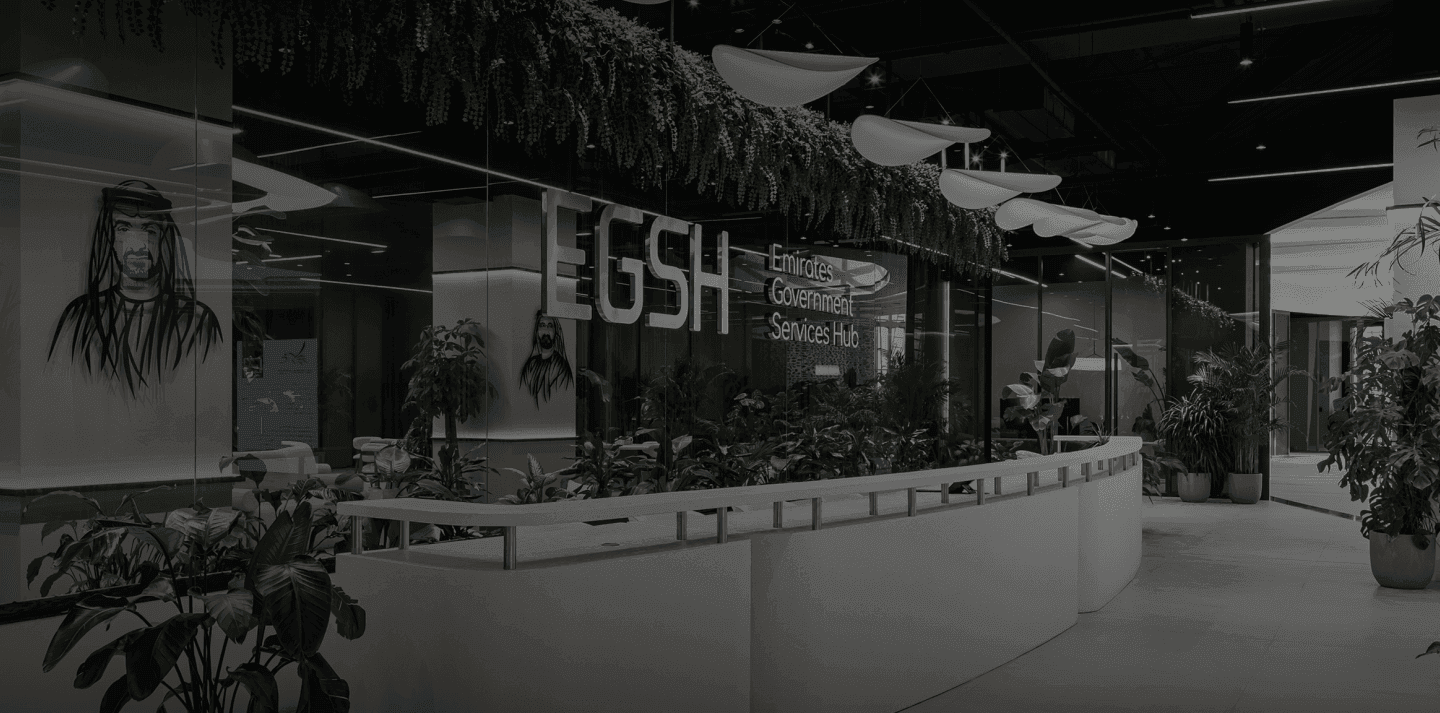
About EGSH
Legal Framework and Conditions for Dividing Jointly Owned Property in Dubai
Partners property division in Dubai is a formal registration procedure administered by the Dubai Land Department (DLD) that allows co-owners of real estate to divide jointly held property so that each partner receives an individually titled asset. The DLD charges a registration fee of 1% of the value of the disassociated shares in each property, plus fixed charges for the issuance of new title deeds and maps.
Division may proceed on the basis of a consensual agreement between the partners or pursuant to a judicial order issued by the Dubai Courts. This article sets out the full legal framework, eligibility requirements, documentation, fees, and step-by-step procedure for registering a partners division in the Emirate of Dubai.
Register a Partners Division in Dubai
Officially regulated fees
No hidden charges
Queue-free service
VIP support at no extra cost
From AED 2,660
Explore EGSH Government Services in Dubai
What Is Partners Property Division and When Does It Apply?
Partners property division is the process through which two or more co-owners of a single real estate asset in Dubai separate their undivided shares into distinct, individually registered properties. The DLD formally refers to this procedure as "partners division registration." The result is that each former co-owner holds a separate title deed for a specific property or portion of a property, rather than an undivided percentage interest in a shared asset.
This procedure applies in a range of practical scenarios. Business partners who purchased a land plot or building together may decide to split it once a development is complete. Family members who inherited or jointly acquired property may wish to formalise individual ownership. Investors who co-own multiple units may agree to allocate specific units to each party. In each case, the objective is to convert shared, undivided ownership into clearly delineated individual ownership registered in the DLD's Real Property Register.
It is important to distinguish partners' divisions from a standard property ownership transfer. A transfer involves one party conveying its interest to another party, typically a buyer, and attracts the standard 4% DLD transfer fee. Partners division, by contrast, is a reorganisation of existing co-ownership into separate titles and carries a lower fee of 1% on the disassociated shares. It also differs from property separation (subdivision), which involves physically splitting a single plot into two or more cadastral units regardless of how many owners are involved.

Get DLD Services in Dubai Through EGSH
Authorised One-Stop Government Services Centre
- All government services in one place
- Completed in one visit
- VIP service without queues
- Regulated government fees

Legal Framework Governing Co-Ownership and Division in Dubai
The right of co-owners to demand the division of jointly held property is established at both the federal and emirate level.
Federal Law No. (5) of 1985 — UAE Civil Transactions Law
The UAE Civil Transactions Law sets out the general principles governing co-ownership (al-shuyuu'). This law is commonly referred to as the UAE Civil Code. Under its provisions, each co-owner holds an undivided share in the whole property and is entitled to use and benefit from the jointly owned asset in proportion to that share. Crucially, the Civil Code grants every co-owner the right to request partition of the common property, either by consensual agreement or, failing that, through the courts. The court may order division in kind by physically partitioning the property. Where physical division would cause significant loss of value, the court may instead order a sale and distribution of proceeds among the co-owners on a pro-rata basis. These provisions, as amended by Federal Decree-Law No. (30) of 2020, continue to form the baseline for co-ownership disputes. The amended law also preserves the rule that a sale request shall not be accepted where it would result in greater damage to other co-owners.

Dubai Law No. (7) of 2006 — Real Property Registration
Law No. (7) of 2006 Concerning Real Property Registration in the Emirate of Dubai requires that all transactions creating, transferring, amending, or extinguishing real property rights in the Emirate be recorded in the DLD's Property Register. A partners division must therefore be registered with the DLD for the resulting separate ownership to be legally effective against third parties. The law also provides rules for situations where a property unit encumbered by a mortgage or other in-rem right is divided: the encumbrance persists on each resulting unit unless the beneficiary agrees to a redistribution.
Dubai Law No. (6) of 2019 — Jointly Owned Real Property
Law No. (6) of 2019 Concerning Ownership of Jointly Owned Real Property in the Emirate of Dubai replaced the earlier Law No. (27) of 2007. It primarily regulates the management of common areas within multi-unit developments by defining roles for developers, management entities, and owners' committees. While it does not directly govern the division of co-owned assets between partners, it is relevant where the property being divided is a unit within a jointly owned development. In such cases, common-area obligations and service charges attach to each resulting unit after division.



Why Choose EGSH for Government Services in Dubai

VIP Service
Personal assistance and priority processing with no queues.

Affordable Fees
Official government rates with transparent, fixed pricing.

All Services in One Place
Comprehensive range of UAE government services under one roof.

One-Visit Completion
Most procedures are completed in a single visit to the centre.
Types of Partners Division: Consensual vs. Judicial
The DLD recognises two legal bases for registering a partners division.
Consensual Division (Agreement-Based)
A consensual division occurs when all co-owners voluntarily agree on how the jointly held property will be allocated. The partners prepare a division agreement specifying which property or portion each party will receive. This agreement must be certified by an official competent entity, such as a notary public or the Dubai Courts, and then further certified by the DLD before the registration can proceed. A consensual division is faster, less costly, and avoids litigation, but it requires the unanimous consent of every registered co-owner.
Judicial Division (Court-Ordered)
Where co-owners cannot reach agreement, any partner may petition the Dubai Courts to order division. The court will determine whether the property can be divided in kind by allocating specific land parcels or units to each co-owner. If physical division is impracticable or would significantly diminish the property's value, the court may order a forced sale instead. Once the court issues a final, enforceable judgment, the parties present the court order to the DLD for registration. The DLD treats a court order as equivalent to a certified agreement and proceeds with the registration accordingly.

Eligibility Requirements
Not every co-ownership situation qualifies for the partners division registration service. The following conditions must be met.
All parties must be registered co-owners of the property on the existing title deed. The property must be located in the Emirate of Dubai and recorded in the DLD's Real Property Register. A written division agreement certified by an official competent entity must exist, or alternatively a final court order must have been issued. Where the property is subject to a mortgage or other encumbrance, the consent of the lender or beneficiary may be required before the DLD will process the division. This requirement is consistent with the provisions of Law No. (7) of 2006. All outstanding service charges and fees related to the property must be settled prior to the transaction.
UAE citizens, residents, and non-residents are all eligible to apply for partners division registration, provided they hold a valid ownership interest in the property.

Visit EGSH for VIP Service Without Queues
You can stop by EGSH during working hours without an appointment or book your visit at a time that suits you best.
Address
Art of Living Mall, Al Barsha 2, Dubai
Operating hours
Monday–Thursday, Saturday: 9:00 am–5:00 pm
Friday: 9:00 am–12:00 pm, 2:00 pm–5:00 pm
Sunday: Closed

Step-by-Step Registration Process
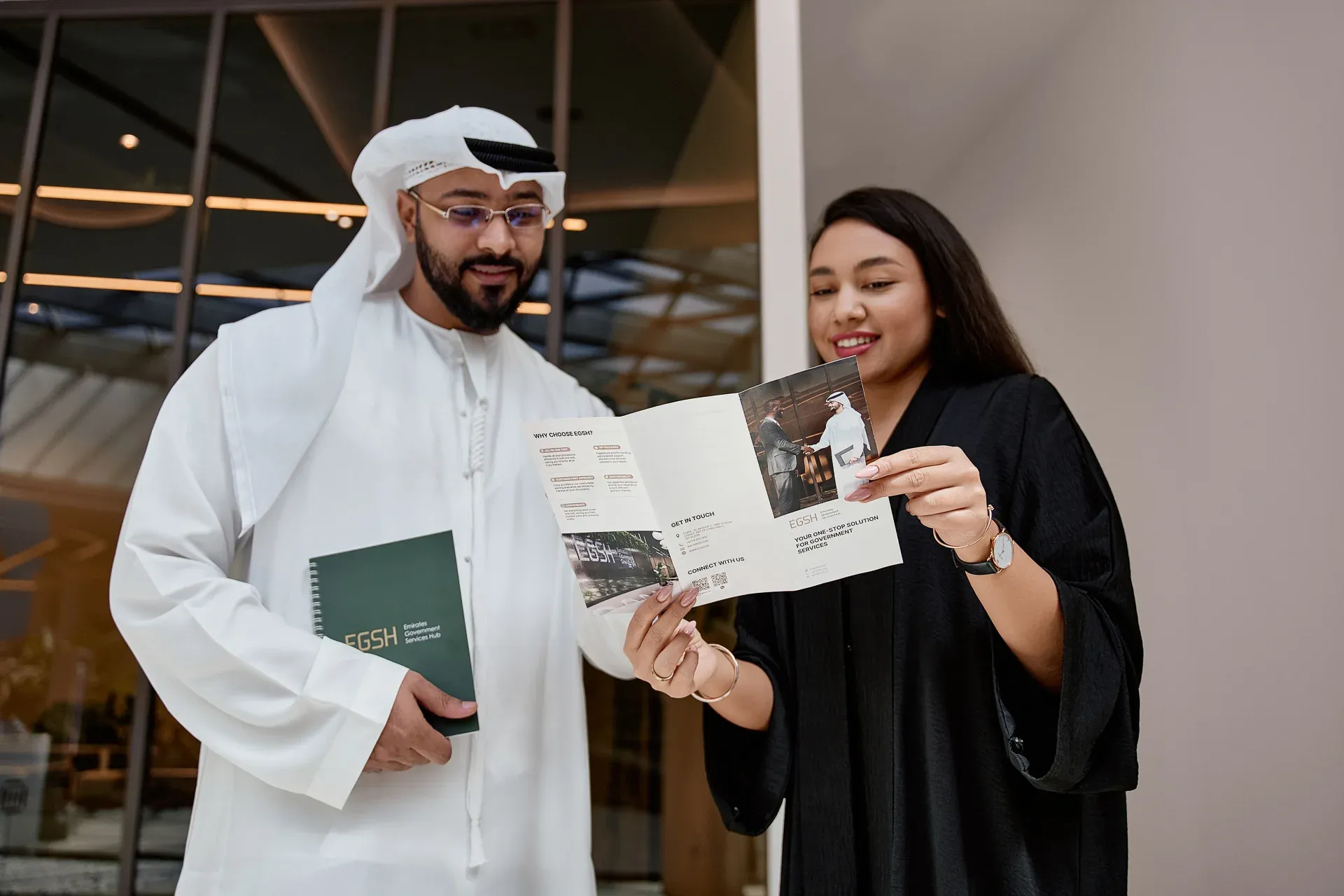
The partners division registration is processed at the DLD's Customer Happiness Centre (main building) or through an authorised Real Estate Registration Trustee centre. The Emirates Government Services Hub (EGSH) is one such authorised trustee centre operating under the DLD. EGSH processes partners division registrations and provides guidance on the documentation and fee requirements. The procedure follows these steps.
Step 1 — Prepare and Certify the Division Agreement
All co-owners must agree on the division terms and execute a written agreement. The agreement must then be certified by an official competent entity, such as a notary public or the Dubai Courts. In cases of judicial division, the court order itself serves as the division instrument.
Step 2 — Gather the Required Documents
Collect all documentation listed in the requirements section above, including UAE IDs or passport copies for all parties, the existing title deed, and any NOC or mortgage-related clearances.

Step 3 — Submit the Application at the DLD or Trustee Centre
Visit the DLD Customer Happiness Centre or an authorised trustee centre such as EGSH. An employee will review the submitted documents to ensure completeness and verify that no documentation is missing.
Step 4 — Data Entry and Fee Payment
The transaction data will be entered into the DLD's system by a registration officer. The applicant then pays the applicable fees, including the 1% registration fee, title deed issuance charges, map fees, and knowledge and innovation fees. A payment receipt is issued upon completion. Payment may be made by cash, cheque, credit card, or e-pay.
Step 5 — Audit, Approval, and Title Deed Issuance
The transaction undergoes an internal audit and approval process at the DLD. Once approved, each resulting owner receives a link via e-mail to download their new electronic title deed and the corresponding property map. The DLD's standard processing time for this service is approximately one hour. This may vary depending on the complexity of the division and the number of resulting titles.

What Happens to a Mortgage When Property Is Divided?
If the jointly owned property is subject to a registered mortgage, the division cannot proceed without addressing the encumbrance. Under Law No. (7) of 2006, when a property unit encumbered by a collateral right in rem is divided into two or more units, each resulting unit will be encumbered by the entire right unless the new owners reach an agreement with the lender to apportion the mortgage across the resulting units.
In practice, this means one of three outcomes must occur before the DLD will register the division. The mortgage may be fully discharged prior to the division. The lender may consent to the division and agree to redistribute the mortgage across the new titles. Alternatively, one party may assume the full mortgage obligation with the lender's written consent, allowing the other parties' new title deeds to be issued free of encumbrance. Co-owners contemplating a division of mortgaged property should engage with their bank early in the process to understand the lender's requirements and timeline.
Related Government Services
Financial Considerations: Tax Implications and Service Charge Settlement
The UAE does not impose capital gains tax or stamp duty on property transactions. However, co-owners should be aware of several financial considerations when completing a partners division.
The 1% DLD registration fee is a transaction cost that must be budgeted for in advance. All outstanding service charges for the property must be settled before the DLD will process the division. After the division is registered, each new owner becomes individually responsible for the service charges on their specific property or unit.
Where the property is within a jointly owned development governed by Law No. (6) of 2019, the management entity may need to be notified of the ownership change. The service charge account should also be updated to reflect the new title structure.
Co-owners should also consider whether the division triggers any contractual obligations. For instance, a co-ownership agreement may include a right of first refusal or a buy-out clause. Such terms do not affect the DLD registration itself but may have consequences under private contract law.
Common Scenarios Requiring Partners Division
Business Partners Splitting a Joint Investment
Two or more investors who purchased a building, land plot, or portfolio of units jointly may decide to allocate specific assets to each partner after a period of joint ownership. This is common when investment objectives diverge or when one partner wishes to sell while the other intends to hold. A consensual division agreement, combined with a property valuation, allows the parties to formalise the split and obtain individual title deeds.
Family Members Dividing Jointly Held Property
Family members, particularly siblings or extended family, who hold property jointly may wish to formalise individual ownership. The property may have been acquired through a joint purchase or as a result of a property division during divorce. A partners division ensures that each family member's ownership is clearly delineated in the Property Register, reducing the potential for future disputes.

Co-Owners Resolving a Deadlock
Where co-owners cannot agree on the management or disposition of shared property, any party may petition the Dubai Courts for a judicial division. The court's involvement provides a binding resolution. Once the judgment is registered with the DLD, each party receives a separate title deed reflecting the court's allocation.
The Role of a DLD-Authorised Trustee Centre
Partners division registration may be completed either at the DLD's Customer Happiness Centre or at an authorised Real Estate Registration Trustee centre. Trustee centres operate under the DLD's regulatory framework and are empowered to process property registration transactions, including partners division applications.
EGSH (Emirates Government Services Hub) is an authorised DLD trustee centre that processes partners division registrations, including document preparation, fee calculation, and submission of the registration application.

Practical Considerations
Co-owners should address several practical matters before commencing the division process. The division agreement should clearly specify the valuation methodology, as the 1% fee is calculated on the assessed value of the disassociated shares. Having the property professionally valued through the DLD's valuation service in advance can prevent disagreements at the registration stage.
Co-owners should also confirm that the property is physically divisible if division in kind is intended. Not all properties can be physically subdivided, particularly individual apartment units. In such cases, the division may involve allocating different units within a portfolio to different partners, rather than splitting a single unit.
All parties should verify that their identification documents are valid and current. Expired UAE IDs or passports will cause the DLD to reject the application. Where a power of attorney is used, it must be specific enough to authorise the agent to execute the division registration. A general power of attorney may not suffice and should expressly reference the property and the division transaction.
Finally, if the property is subject to any DLD-registered blocking order or court injunction, the division cannot proceed until the restriction is lifted. Co-owners should request a property status inquiry through the DLD or a trustee centre to confirm that the property is free of encumbrances before initiating the division.

Frequently Asked Questions
What is the DLD fee for partners property division in Dubai?
The DLD charges a registration fee of 1% of the value of the disassociated shares in each property. Additional charges include AED 250 for each title deed issued, map fees ranging from AED 100 to AED 250 depending on the property type, and AED 10 each for the knowledge fee and innovation fee per drawing. The fee is calculated based on the DLD's assessed value of the property at the time of the transaction.
Can co-owners divide property without going to court?
Yes. If all co-owners agree on the terms of the division, they may execute a consensual division agreement, have it certified by an official competent entity such as a notary public or the Dubai Courts, and then submit it to the DLD for registration. Court proceedings are only necessary when the co-owners cannot reach a mutual agreement.
How long does the partners division registration take at the DLD?
The DLD's standard processing time for partners division registration is approximately one hour from the point of submission, provided all documents are complete and in order. Delays may occur if documentation is incomplete, if additional verification is required, or if the property is subject to an unresolved mortgage or other encumbrance.
Is a property valuation required before dividing jointly owned property?
The 1% registration fee is calculated on the value of the disassociated shares as assessed by the DLD. A property valuation is therefore part of the process. Co-owners may request a formal valuation through the DLD or an authorised valuation provider to establish the property's value before commencing the division.
What happens if one co-owner refuses to agree to the division?
Under the UAE Civil Transactions Law, any co-owner has the right to demand partition of jointly held property. If the other co-owners refuse to agree, the requesting party may file a case with the Dubai Courts seeking a judicial division. The court may order division in kind or, where physical division is not feasible, order a sale of the property and distribution of proceeds among the co-owners.
Can non-residents register a partners division in Dubai?
Yes. UAE citizens, residents, and non-residents are all eligible to apply for partners division registration, provided they are registered co-owners of the property. Non-residents must provide copies of valid passports. If they cannot attend in person, a notarised and attested power of attorney may be used.
Does the 1% fee apply to the entire property value or only to the shares being separated?
The 1% fee applies specifically to the value of the disassociated shares being separated from the original joint title, not to the total value of the property. The DLD calculates this based on the assessed value of the property at the time of the division.
Where can I register a partner's property division in Dubai?
Partners division registration can be completed at the DLD's Customer Happiness Centre or at an authorised Real Estate Registration Trustee centre. EGSH (Emirates Government Services Hub) is an authorised trustee centre operating under the DLD that processes partners division registrations.

Explained by
Omar Abdulaziz Ali Al Qassim
Government Services Center Manager / Legal Consultant
Omar Abdulaziz Ali Al Qassim is a Government Services Center Manager and Legal Consultant with 8 years of experience in the UAE. He specialises in real estate transactions, business licensing, residency, labour services, and Ejari procedures. Omar works closely with key authorities including DLD, MOHRE, GDRFA, and DET, ensuring compliance and accurate processing of government transactions. He supports individuals, corporate clients, and investors in completing complex procedures efficiently and in line with UAE regulations.
Official Sources and References
The following government authorities and legal sources were referenced in this article.
- Dubai Land Department (DLD) — The government authority responsible for overseeing all real property registration, regulation, and transactions in the Emirate of Dubai.
- Dubai Legislation Portal — Official repository of Dubai emirate-level legislation, including property registration and jointly owned property laws.
- UAE Legislation Portal — Federal government portal hosting the UAE Civil Transactions Law and other federal legislation.
- UAE Ministry of Justice — Publisher of Federal Decree-Law No. (30) of 2020 amending the Civil Code.
- Real Estate Regulatory Agency (RERA) — Regulatory arm of the DLD responsible for supervising jointly owned property management entities, owners' committees, and service charge compliance.
Important Notice
The information provided in this article is current as of the date of publication and is intended for general guidance only. Government fees, procedures, and regulatory requirements are subject to change without prior notice. Final approval of any property division is at the discretion of the Dubai Land Department and, where applicable, the Dubai Courts. Readers are advised to verify all information directly with the relevant government authority before commencing any transaction. This article does not constitute legal advice.



