


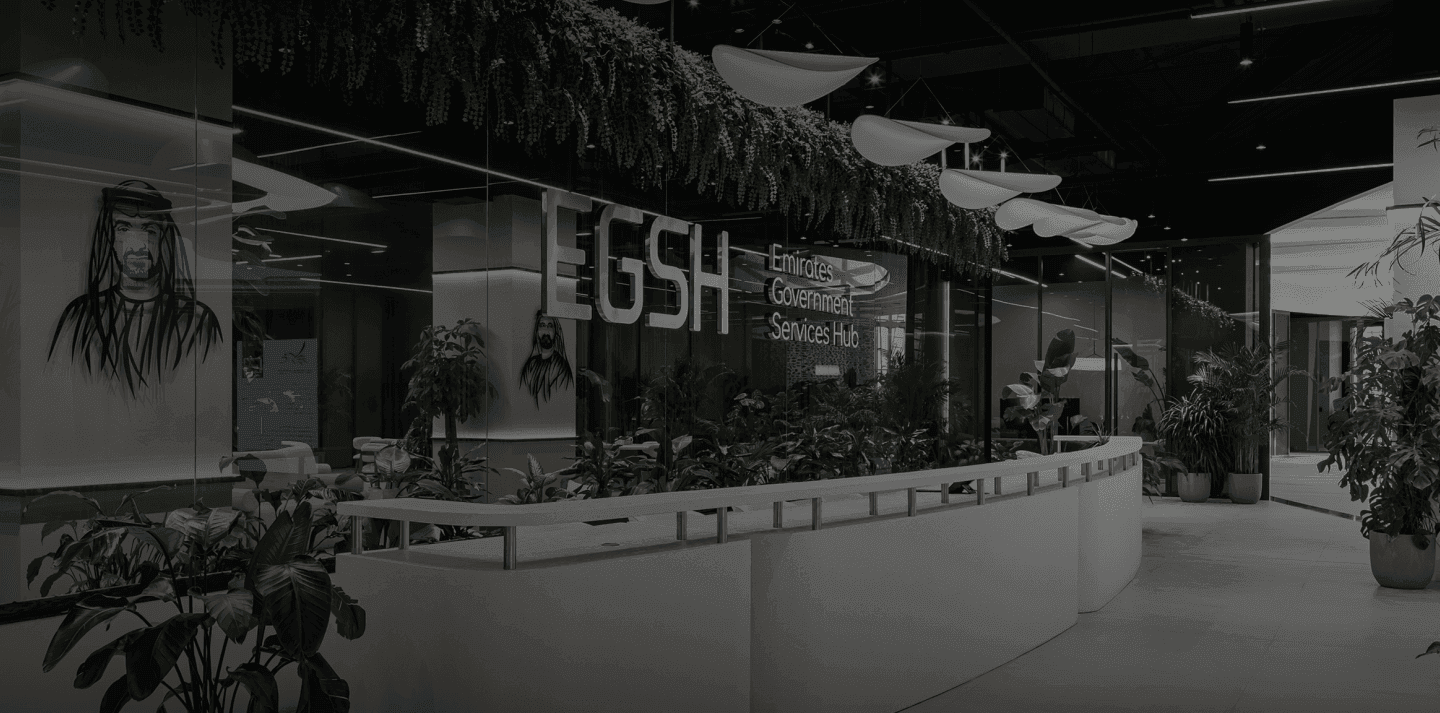
About EGSH
Readers will find verified fee tables, required documents, step-by-step procedures, eligibility rules, and answers to common questions about dividing co-owned real estate in the Emirate of Dubai. This guide covers every stage of registering split ownership, dividing co-owned property, and separating real estate units through the Dubai Land Department (DLD) or a Real Estate Services Trustee Centre such as EGSH.
What Split Ownership Registration Means in Dubai
Split ownership registration is the official process through which co-owners of a property in Dubai divide their ownership shares into separately recorded interests with the DLD. The DLD charges AED 250 per electronic title deed certificate issued for each ownership share, plus applicable map and knowledge fees. The procedure is governed by Law No. (7) of 2006 Concerning Real Property Registration in the Emirate of Dubai. This law requires all changes to real property rights to be recorded in the Real Property Register.
This article explains three distinct DLD services for co-owner property division. These include split ownership registration, partners division registration, and property separation or annexation. Each section covers fees, documents, eligibility, and the step-by-step process. The article also addresses common situations that require a formal division, restrictions that apply to mortgaged or off-plan properties, and how the title deed records co-ownership in Dubai.
Register a Property Ownership Split in Dubai
Officially regulated fees
No hidden charges
Queue-free service
VIP support at no extra cost
From AED 1,000
Explore EGSH Government Services in Dubai
Legal Framework for Co-Ownership in Dubai
Co-ownership of real property in Dubai operates under two primary legislative instruments.
Law No. (7) of 2006 establishes the DLD as the sole authority for registering real property rights. Article 4 authorises the DLD to determine surveying rules, issue property maps, and maintain the Real Property Register. Article 8 requires all transactions that create, transfer, amend, or extinguish real property rights to be recorded. A transaction not registered in the Property Register is not legally valid.
Law No. (6) of 2019 Concerning Ownership of Jointly Owned Real Property in the Emirate of Dubai regulates co-ownership structures in jointly owned developments. It covers the management of common parts, service charges, and the roles of the Real Estate Regulatory Agency (RERA) and owners' committees. This law replaced the earlier Law No. (27) of 2007 and expanded the regulatory scope to cover hotel projects, master developments, and designated common facilities.
For co-owners who wish to divide their interests rather than sell, the DLD provides specific registration services. These services formalise the division and issue separate ownership certificates. The choice of service depends on whether the division involves ownership shares on an existing title deed, a physical partition of land, or a restructuring of real estate units.

Get DLD Services in Dubai Through EGSH
Authorised One-Stop Government Services Centre
- All government services in one place
- Completed in one visit
- VIP service without queues
- Regulated government fees

Types of Co-Owner Division Services at the DLD
The DLD offers three distinct services for dividing co-owned property. Each applies to a different scenario and carries separate fee structures.
Split Ownership Registration
This service applies when co-owners hold a single title deed with defined percentage shares and wish to receive individual title deeds for their respective portions. The DLD issues a separate electronic title deed certificate for each ownership share, along with an updated electronic map. No physical division of the property occurs. The land or unit remains a single registered entity. Each co-owner holds an individually recorded title deed.
This is the most common option for co-owners who acquired property jointly and later wish to formalise individual interests. Common reasons include separate mortgage registration, gifting, resale, or estate planning.

Partners Division Registration
This service applies when co-owners of a land plot wish to physically divide the property so that each partner receives a separate, independently registered plot. According to the DLD, the division may be carried out by consensual agreement or by judicial order. After registration, each resulting plot carries its own title deed and property map.
The registration fee is generally calculated as a percentage of the assessed property value. The exact calculation may vary depending on the property type, subdivision parameters, and applicable Dubai Land Department (DLD) regulations. This fee is calculated on the assessed property value. Additional fees include AED 250 for each title deed certificate, map fees of AED 100 to AED 250 depending on the property type, and AED 10 each for knowledge and innovation fees per transaction.
Property Separation or Annexation
This service allows the owner to separate a registered property into two or more distinct units or to merge multiple units into one. It covers both land plots and real estate units. According to the DLD, the application fee is AED 500. Additional charges include AED 250 for each title deed issued, applicable map fees, and AED 10 each for knowledge and innovation fees per drawing. The service is available through the Dubai REST app, the DLD website, or at Real Estate Services Trustee centres such as EGSH.



Why Choose EGSH for Government Services in Dubai

VIP Service
Personal assistance and priority processing with no queues.

Affordable Fees
Official government rates with transparent, fixed pricing.

All Services in One Place
Comprehensive range of UAE government services under one roof.

One-Visit Completion
Most procedures are completed in a single visit to the centre.
Required Documents for Each Division Service
Each co-owner division service requires specific documentation. Documents must be submitted in original form or as certified copies.
Documents for Split Ownership Registration
Co-owners must present the existing title deed showing the joint ownership structure. Each co-owner must provide an Emirates ID (for UAE citizens and residents) or a valid passport (for non-residents). A notarised power of attorney is required if a co-owner is represented by a legal proxy. Corporate co-owners must provide a valid trade licence and company registration documents.
Documents for Partners Division Registration
According to the DLD, the required documents are:
- A division agreement certified by a competent authority and submitted to the DLD for certification
- Emirates ID for all owners who are UAE citizens or residents
- Valid passport copies for non-resident owners
The division agreement must specify how the land will be divided and the resulting allocation for each partner. The agreement may be consensual or judicial.

Documents for Property Separation or Annexation
The DLD requires real estate maps showing the post-separation or post-annexation configuration, approved by the relevant planning authority. The maps must reflect the new boundaries, areas, and plot references after the division or merger.
Step-by-Step Registration Process
Split Ownership at a Trustee Centre
1. Gather the current joint title deed, Emirates ID or passport for each co-owner, power of attorney (if applicable), and company documents for corporate owners.
2. Visit the DLD or an authorised Real Estate Registration Trustee Centre. All co-owners or their legal representatives must attend.
3. The DLD officer or trustee consultant reviews the ownership records, confirms the co-ownership structure, and verifies all identification documents.
4. The DLD system calculates the applicable charges, and payment is collected. Accepted methods include cash, cheque, and credit card.
5. The applicable registration fee (calculated based on the assessed property value) and all additional charges are collected.

Partners Division at the DLD Main Branch
1. All partners must agree on the division terms and have the agreement certified by a competent official entity. A court order may substitute for a consensual agreement.
2. Visit the DLD Customer Happiness Centre at the main branch. Partners division registration is currently processed at this location.
3. Present the certified agreement, Emirates IDs or passports, and any supporting documentation to the DLD officer.
4. The DLD officer enters the transaction data into the system. The application undergoes an internal audit and approval process.
5. The 1% registration fee and all additional charges are collected.
6. A link to the electronic title deed and property map for each resulting plot is sent via email. The DLD indicates that processing may take approximately one hour.

Property Separation via the Dubai REST App
1. Sign up or log in to the Dubai REST app and select the appropriate user type.
2. Select the separation or annexation service, fill in the required details, and attach the approved real estate maps.
3. Select the payment method and pay the applicable fees.
4. Receive the electronic map via the system upon approval.
This service is also available at Real Estate Services Trustee centres and via the DLD website.
When Co-Owners Should Consider Division
Several common situations prompt co-owners to pursue a formal split or division of their property.
Independent sale or transfer. A co-owner who wishes to sell their share independently benefits from holding a separate title deed. Without individual registration, selling a share typically requires the consent of all co-owners. Remaining partners may hold a right of first refusal.
Estate planning. Co-owners may formalise individual title deeds to simplify future inheritance registration. A separate title deed allows heirs to inherit a defined share without requiring coordination with unrelated co-owners.
Gift registration. A co-owner who wishes to gift their share to a first-degree relative must hold a registered title deed for the specific portion being gifted. The DLD applies a reduced transfer fee of 0.125% for gift transfers between first-degree relatives.
Mortgage financing. Banks require a clear title deed to register a mortgage against a specific property interest. Co-owners seeking individual mortgage arrangements may need separate title deeds before approaching lenders.
Divorce or dissolution of a partnership. When co-owners separate due to personal or business reasons, dividing the title deed protects each party's legal rights and enables independent decision-making on the property.

Visit EGSH for VIP Service Without Queues
You can stop by EGSH during working hours without an appointment or book your visit at a time that suits you best.
Address
Art of Living Mall, Al Barsha 2, Dubai
Operating hours
Monday–Thursday, Saturday: 9:00 am–5:00 pm
Friday: 9:00 am–12:00 pm, 2:00 pm–5:00 pm
Sunday: Closed

Mortgaged Properties and Co-Owner Division
If the property subject to division is encumbered by a mortgage, additional steps apply. The lender (mortgagee) must provide written consent to the division before the DLD will process the registration.
Under Law No. (7) of 2006, if a property encumbered by a collateral right is divided into two or more units, each resulting unit remains encumbered by the entire collateral right. This applies unless the new owners and the lender agree to allocate the charge among the resulting units.
Co-owners should obtain written confirmation from the bank and present this to the DLD as part of the application. The DLD will not process the registration without resolving the mortgage status.

Co-Ownership Records on the Title Deed
The Dubai title deed records each co-owner's name and respective ownership percentage. For jointly held properties, the deed displays all owners and their shares. Common examples include 50%–50% or 70%–30%.
The DLD does not issue joint title deeds without specifying ownership percentages. If the shares are not stated on an existing deed, the record must be corrected before proceeding. The error must be corrected through a title deed amendment before any split can proceed.
After split ownership registration, each co-owner receives an individual electronic title deed reflecting only their portion. Title deed records can be verified through the Dubai REST app or through the DLD's official verification services. Electronic title deeds carry the same legal validity as paper certificates and include a digital signature authenticated through the DLD's blockchain-based registry.
Co-owner names, Emirates ID or passport numbers, and ownership percentages must be accurate before initiating a division. Any discrepancy should be resolved through a title deed amendment before submitting the application.

Eligibility and Restrictions
Split ownership registration, partners division, and property separation are available to UAE citizens, residents, and non-residents. This is confirmed by the DLD. Non-GCC nationals may co-own and divide property only within designated freehold areas, as established in Article 4 of Law No. (7) of 2006.
The following restrictions apply:
Granted land cannot be divided without prior approval from the relevant authority. Conditions attached to the original grant decree remain binding.
Off-plan properties registered in the Oqood interim register must first be converted to a full title deed before a split ownership or partners division can be processed. The Oqood-to-title-deed conversion occurs after project completion and handover.
Properties under legal dispute or court-imposed blocks cannot be divided until the restriction is lifted.
Mortgaged properties require the lender's written consent before any division proceeds.

Related Government Services
Frequently Asked Questions
What is the difference between split ownership and partners division in Dubai?
Split ownership issues separate title deeds for existing co-owner shares without physically dividing the property. Partners division physically divides a co-owned land plot into independent registered properties, each with its own title deed and map. Split ownership maintains the property as a single unit. Partners division creates multiple distinct plots.
How much does split ownership registration cost at the DLD?
The DLD charges AED 250 per electronic title deed certificate for each ownership share. Additional charges include map fees ranging from AED 100 to AED 250 depending on the property type, plus AED 10 each for knowledge and innovation fees per drawing.
What documents are needed for partners division registration?
According to the DLD, the required documents include a division agreement certified by a competent official entity, Emirates ID for all UAE citizen and resident owners, and valid passport copies for non-resident owners. The agreement must be certified by the DLD before the transaction can proceed.
Can co-owners divide a mortgaged property in Dubai?
A co-owned property with an active mortgage can only be divided with the written consent of the mortgagee. Under Law No. (7) of 2006, the collateral right continues to encumber each resulting unit unless the co-owners and the bank agree to allocate the charge differently.
How long does partners division registration take?
The DLD estimates a processing time of approximately one hour for partners division registration at the main branch. All required documents must be complete and verified.
Can non-residents apply for split ownership registration?
Yes. Split ownership and partners division registration are available to UAE citizens, residents, and non-residents. Non-GCC nationals must hold property in designated freehold areas to be eligible.
Is split ownership registration available through the Dubai REST app?
Split ownership registration is processed at the DLD or through an authorised Real Estate Registration Trustee Centre. Property separation or annexation, a different service, is available through the Dubai REST app for certain transaction types.
What happens to the original joint title deed after split ownership?
The DLD cancels the original joint title deed and issues individual electronic title deed certificates for each co-owner's share. Each new certificate reflects the owner's name, ownership percentage, and the property details.
Can I sell my share of a co-owned property without completing a split?
A share may be sold under a tenancy-in-common arrangement. However, remaining co-owners typically hold a right of first refusal. Completing split ownership registration before a sale simplifies the property transfer process and provides the buyer with a standalone title deed.
Do I need a property valuation for split ownership registration?
A property valuation is not a standard requirement for split ownership registration. For partners division registration, the fee is calculated based on the assessed property value. In practice, this may require a valuation or assessment accepted by the Dubai Land Department (DLD), depending on the property type and the specifics of the division.

Official Sources and References
Dubai Land Department (DLD) — Government authority responsible for all real estate registration, title deed issuance, and property regulation in the Emirate of Dubai.
Law No. (7) of 2006 Concerning Real Property Registration in the Emirate of Dubai — Principal legislation governing the registration of real property rights, title deeds, and dispositions in Dubai.
Law No. (6) of 2019 Concerning Ownership of Jointly Owned Real Property in the Emirate of Dubai — Regulates co-ownership structures, common parts management, service charges, and owners' committees in jointly owned developments.
DLD Partners Division Registration Service — Official DLD e-service page for partners division registration, including procedures, documents, and fees.
DLD Separation or Annexation Service — Official DLD e-service page for property separation and annexation, including fees and required documents.
Important Notice
The information in this article is current as of the date of publication and is based on official sources published by the Dubai Land Department, the Dubai Legislation Portal, and related UAE government authorities. Fees, document requirements, and procedures are subject to change at the discretion of the relevant authority. Final approval of any registration application rests with the DLD. Applicants are encouraged to confirm the latest requirements directly with the DLD or through an authorised Real Estate Registration Trustee Centre before submitting their application.



